Perfecting the Immersive Mix: Sound Designers Refine L-ISA Approach for The Impossible Trial Musical Perfecting the Immersive Mix: Sound Designers Refine L-ISA Approach for The Impo...
Sound designers Jeffrey Yue and Ha Yan-pui refine their spatial audio approach for the musical’s third staging, deploying an extensive L-Acoustics L-ISA immersive sound configuration at WestK’s Xiqu Centre Grand Theatre
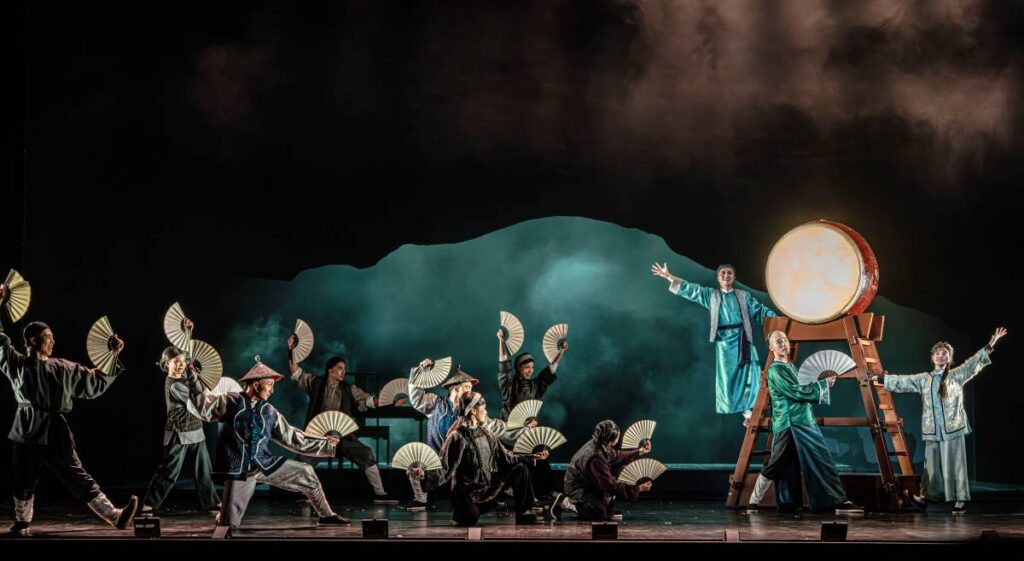
HONG KONG, China – February 2026 – When “The Impossible Trial” returned to the Xiqu Centre Grand Theatre for a 30-performance run last October, it marked the musical’s third staging since 2019—and its most ambitious sonic realisation yet. The production was co-presented by WestK and the Hong Kong Repertory Theatre. Sound designers Ha Yan-pui and Jeffrey Yue revisited their immersive audio concept with renewed intent, evolving lessons from the 2022 production into a far more deeply integrated L-ISA experience, shaped in close collaboration with L-Acoustics application engineers and tuned precisely to the venue’s challenging acoustics.
The three-hour musical brings together a 21-member cast and 12-piece live ensemble performing on traditional Chinese pipa, strings, winds, keyboards, and drums. Director Fong Chun Kit’s theatrical vision and composer Leon Ko’s richly layered score inspired the sound designers to create an immersive audio design that would elevate the storytelling.
Collaborative Design Process Drives System Refinements
For the 2025 production, the sound team invited L-Acoustics APAC application engineers Chung Wah Khiew and Daniel Lee to join early in the design phase—a decision that proved transformative. “We realized that to take the next step from our 2022 production, we needed deeper collaboration with the L-Acoustics team,” explains Yue. “Their technical support allowed us to deliver all our creative ideas and system design improvements within a tight deadline. We would have ‘improved’ upon the system regardless – it was a factor of budgetary concerns and availability of the team from L-Acoustics. Instead, we were able to push the design significantly further.”
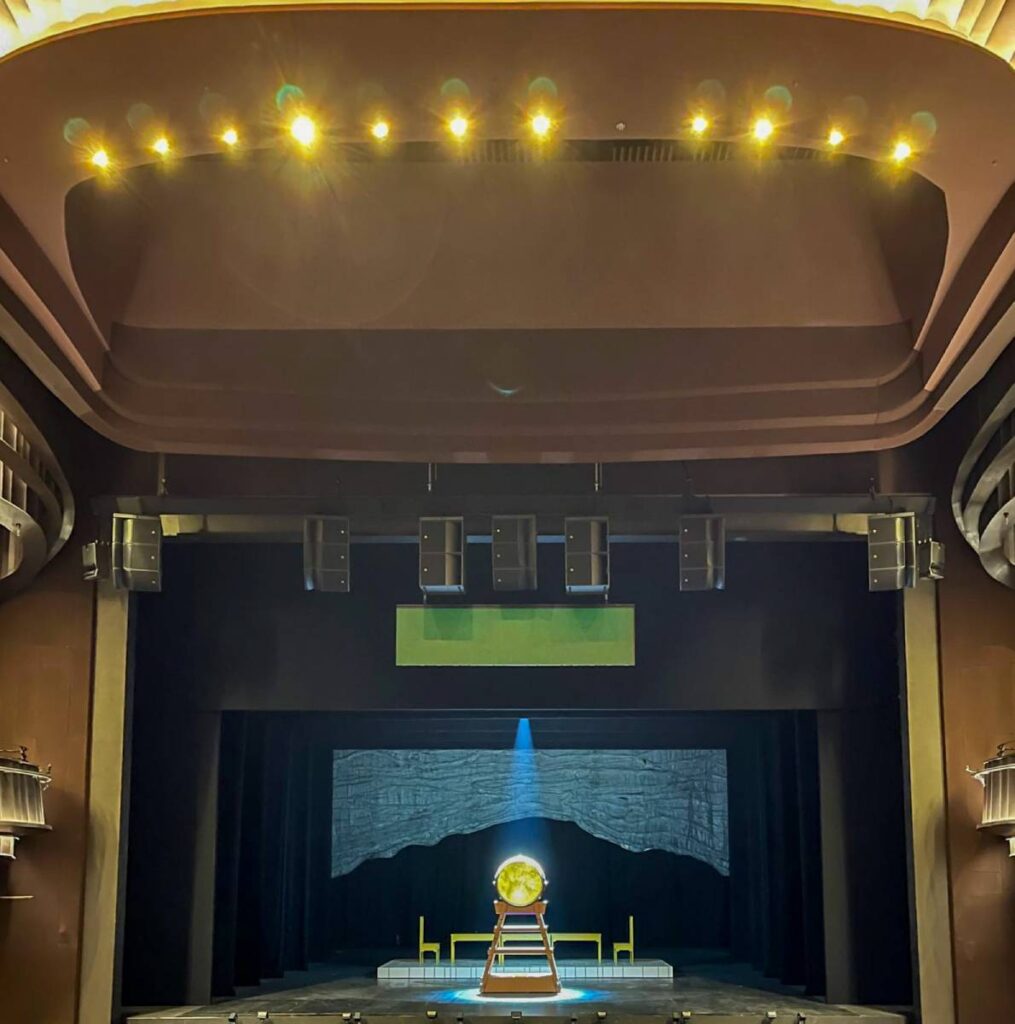
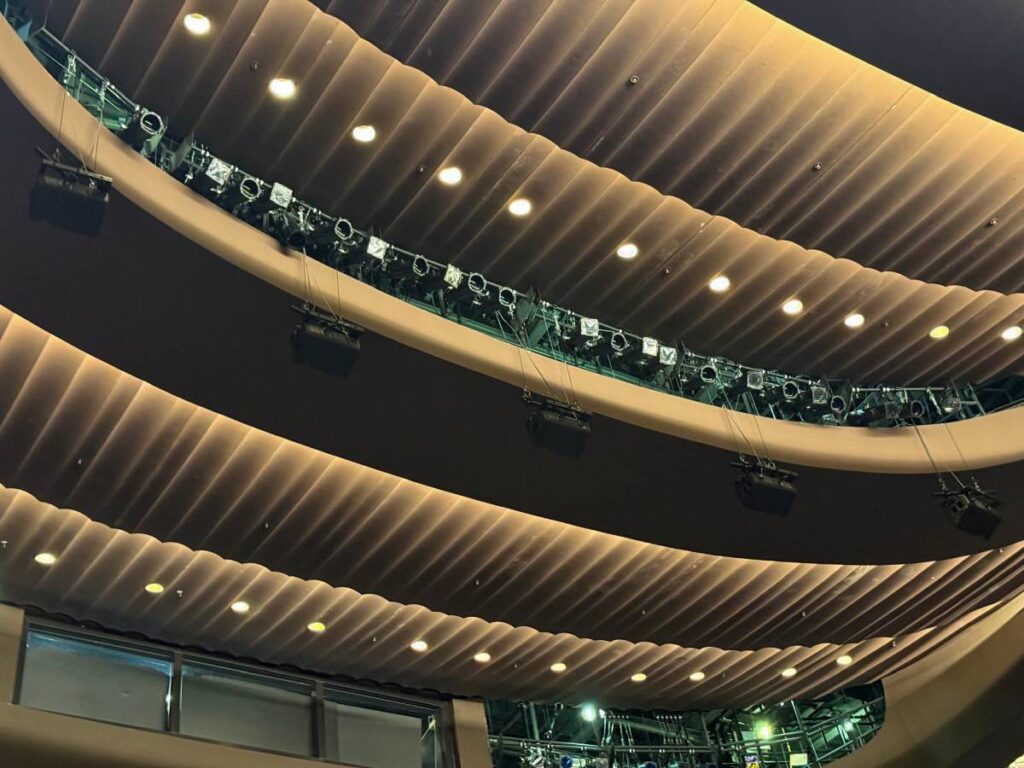
This collaboration addressed specific acoustic challenges that had emerged during the 2022 run. The venue’s back wall created significant slapback echo, particularly affecting the circle level. Between productions, WestK added acoustic treatment—curtains and absorbing materials—to minimize reflections. The sound team responded by expanding the delay system from two A10 enclosures to five A10 Wide enclosures used as L-ISA spatial fill for the circle level, delivering substantially improved spatial coherence for those seats.
“In our previous production, the main system needed to throw farther into the space, which excited the room considerably,” Ha notes. “This year, the expanded delay system, combined with the venue’s acoustic improvements, made a dramatic difference in controlling those reflections.”
Story-Focused Spatial Audio Design
Yue and Ha approached the immersive mix with careful consideration for the narrative, using spatial audio to enhance specific dramatic moments rather than applying effects broadly. The designers created distinct sonic identities for specific characters, particularly important when one cast member portrayed multiple roles such as a Lord of the Netherworld, The Narrator, and several Judge characters across different trial scenes throughout the production.
“When he performs as the narrator, we position his voice more localised on either downstage ends to create an intimate storytelling feel,” Ha explains. “When he plays other characters, we adjust the spatial characteristics—sometimes narrower, sometimes spreading the image wider to create a different presence for each role.”
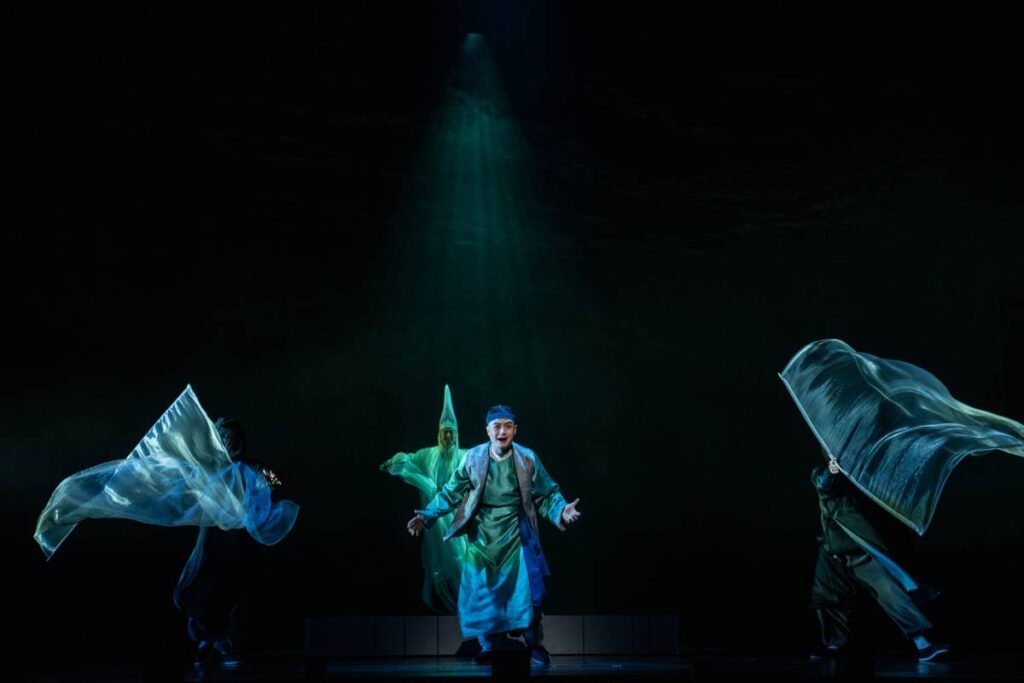
A ghost character’s vocal received dynamic spatial treatment, with varying reverb and delay effects that moved through the 360-degree system and intensified during key dramatic scenes. For the musical’s emotional finale, the design employed intentionally expansive chorus vocal reverb sent to the full surround system for maximum emotional impact.
Musically Derived Effects Create Cohesive Sonic Texture
Composer and Musical Director Leon Ko eliminated conventionally deployed sound effects in favor of musically derived effects created by the live ensemble. A door knock, for example, was performed rhythmically by a musician, then sent around the hall’s 360-degree system. This approach created a more cohesive sonic texture while maintaining the narrative function of sound effects.
The ensemble’s varied repertoire—pop ballads, jazz numbers, rock compositions—required mix treatments tailored to each genre’s characteristics. “The score is incredibly layered and textured, which gave us significant scope in crafting the mix,” Yue says. “We focused on appropriate sonic enhancement for each piece—sometimes very detailed, sometimes subtle—but always in service of the story.”
One particularly intimate piece featured only four musicians positioned to one side of the ensemble pit. “We used object-based mixing to deliver more natural-sounding localization in the three-dimensional sound field,” Yue explains. “Contemporary theatre audiences bring expectations from their previous listening experiences, so we needed to be thoughtful in how we applied spatial audio to serve the music.”
L-ISA Sound Spaces Addresses Theatre-Specific Challenges
The Sound Spaces function in L-ISA proved essential for addressing a challenge unique to musical theatre with live musicians in an orchestra pit. In the Xiqu Centre Grand Theatre’s intimate configuration, the first three rows of audience seating sit directly adjacent to the orchestra pit.
“When audience members in the first two rows of the auditorium stand, they can see—and clearly hear— the musicians acoustically,” Yue explains. “To deliver an accurate mix in those positions, we needed to reduce certain instruments for the L-ISA spatial front-fill and let other elements come through more prominently. However, that same balance wouldn’t work for seats fifteen rows back, which required a different mix entirely. The Trim functions for each fill system allow for an eloquent solution.”
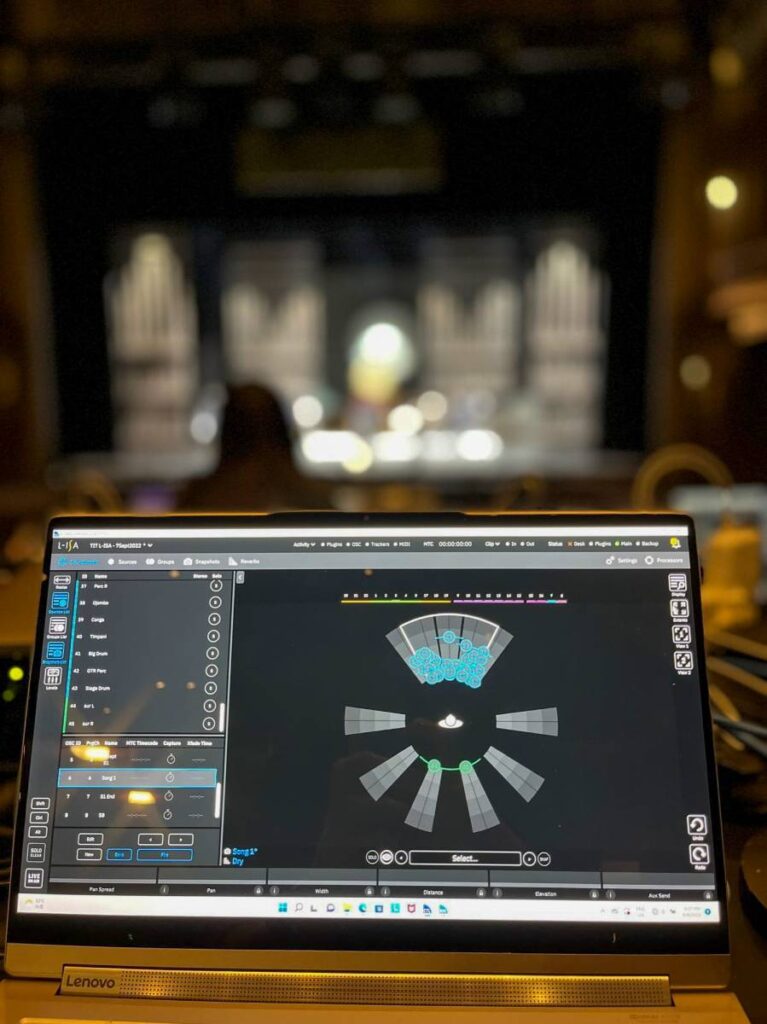
The soundscape feature allows for object-based mixing for the team to create zone-specific mixes. “The level of care required for each sound in an immersive audio mix for musical theatre is considerably greater than traditional approaches,” Yue shares. “In this production, we deployed up to 56 mono objects going to the main spatial audio mix.”
Clear Roles Enable Complex Collaborative Workflow
The production’s technical and creative complexity required clear role definition and close collaboration. FOH engineer Kiki Yu, who has been with the production since 2019 and also serves as assistant musical director, worked closely with Yue and Ha during intensive pre-opening preparation. Her deep familiarity with the music cues, script, and vocal performances made her an invaluable link between the creative and technical teams.
Yue focused primarily on system management and technical implementation. “My role centered on supporting Ha and implementing the system,” he says. “From Soundvision design to working with the L-Acoustics team on networking and L-ISA configuration, this collaborative approach allowed Ha to focus on the immersive audio mix with Kiki while I ensured the various L-ISA outputs matched our design specifications.”
Ha brought two decades of experience working with composer Leon Ko and deep understanding of Hong Kong theatre audiences to the production. “After the second staging in 2022, I asked Jeff to join the team,” she recalls. “I wanted to approach this musical more methodically—to apply immersive sound principles thoughtfully rather than conventional pop-style music treatment. We wanted to use L-ISA to deliver and enhance a storytelling-focused sound design.”
The system was provided by the WestK Xiqu Centre, along with Rightway Audio Consultants for system design support, additional tuning by Chung Wah Khiew, while RAC Hong Kong and Showbros supplemented WestK’s in-house inventory to realise an L-ISA Hyperreal Immersive configuration. The scene system comprised five hangs of one A15 Focus and two A15 Wide each, with two centre-flown hangs of KS21 subwoofers, complemented by extensive front-fill, deck-fill, surround and delay systems built around 5XT, Syva, X8 and A10 Wide enclosures.Rightway Audio Consultants (RAC) Hong Kong provided a preliminary system design, with tuning support provided by L-Acoustics Application Engineer, Chung Wah Khiew. The RAC Hong Kong team had supported the 2022 production and recognized The Impossible Trial’s potential as a showcase for L-ISA in musical theatre applications. “RAC Hong Kong shows consistent interest in advancing L-ISA projects and has been particularly supportive in pushing adoption for productions like these,” Yue notes.
Extensive L-ISA Configuration Delivers Complete Coverage
The system was provided by the WestK Xiqu Centre, along with Rightway Audio Consultants for system design support, additional tuning by Chung Wah Khiew, while RAC Hong Kong and Showbros supplemented WestK’s in-house inventory to realise an L-ISA Hyperreal Immersive configuration. The scene system consisted of five hangs with one A15 Focus and two A15 Wide each, with two centre-flown hangs of KS21, complemented by extensive front-fill, deck-fill, surround and delay systems built around 5XT, X8, and A10 Wide enclosrues.
Production Timeline and Audience Response
After a China tour with pre-recorded music, the cast returned to Hong Kong for two weeks of live orchestra rehearsals before the month-long run. The production team had ten days of setup: four days for set build, three days of technical rehearsal, and two days with live musicians before opening night.
The Impossible Trial generated substantial social media attention and strong audience reception throughout its run. “It’s a hugely popular show,” Yue notes. “The sound design and music support an engaging story that audiences easily connect with, even over its three-hour runtime.”
Lessons for Immersive Theatre Audio
Reflecting on the production’s evolution across three stagings, Yue offers perspective for others approaching immersive audio in theatrical contexts: “Immersive audio for musical theatre requires a different mindset than conventional buss-based approaches. With the right equipment, technical support, and adequate time, the technology thrives on accuracy and careful attention to detail. A measured, thoughtful approach ultimately leads to a more refined sound design.”
He emphasizes the importance of understanding the technology’s capabilities within theatrical constraints. “If you’re adopting this technology, you need to respect its potential—what it can do for what you’re trying to achieve. It’s not simply about having more speakers; it’s about how thoughtfully you use them. When adopted and applied correctly, immersive audio technology yields genuinely rewarding results in musical theatre.”
Ha adds: “The difference between live theatre with immersive audio and recorded media is significant. When audiences experience live performers with optimal spatial audio design, they’re receiving better dynamism and more dimensionality than they would from recorded content. The materials are real, the performances are happening in the moment, and immersive audio can enhance those elements in ways that give the storytelling unprecedented emotional impact.”
Learn more about Rightway Audio Consultants at www.racpro.net and the Hong Kong Repertory Theatre at www.hkrep.com.
To download images, click here.
Subscribe to Our Newsletter
Get the lastest news and find out about listening events.