 |
WST® Technology - Variable Curvature
L-ACOUSTICS® pioneered the field of modern line source array as early as 1993 with the introduction of Wavefront Sculpture Technology on the legendary V-DOSC® system.
Based on physical rules developed by Heil and Urban (AES 1992) the WST® theory defines five criteria for design and use of true line source arrays.
At the heart of Wavefront Sculpture Technology is the internationally-patented DOSC® waveguide, which morphs the spherical wavefront of the HF driver into a cylindrical, isophasic wave.
In combination with WST®, coplanar symmetry - the equivalent of coaxial assembly for HF, MF and LF drivers in vertical arrays - provides a coherent wavefront over the entire horizontal coverage at all frequencies. This behaves as if the sound was radiated by a single, continuous and articulated ribbon.
Any line source featuring L-ACOUSTICS® elements respects the coplanar symmetry and all WST®criteria on the entire sonic spectrum. This allows an exceptionally coherent sonic signature in very long throw applications, beyond the limits of other systems. L-ACOUSTICS® has been designing reference line array systems for more than 15 years.
|
|

|
Variable curvature, modular (KIVA and KARA)
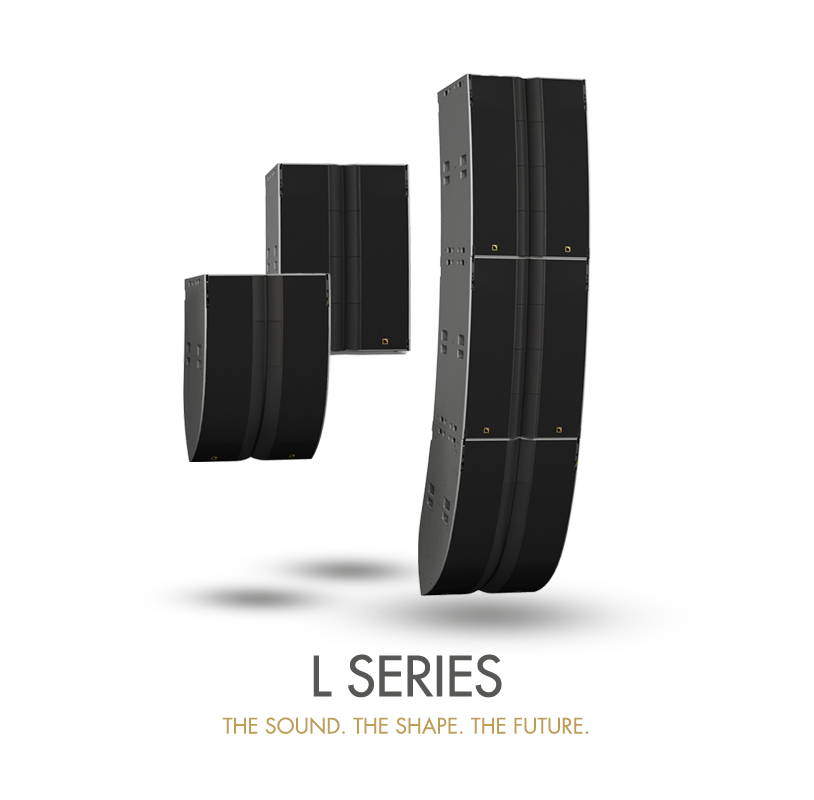
Modular line sources offer tremendous flexibility for both the installation market and rental applications. Both KIVA and KARA® systems are designed to combine a compact, high performance and lightweight enclosure with a dedicated companion LF extension (KILO, SB15m, SB18) delivering the necessary LF resources when a reinforced contour is desired.
Variable curvature, large format (KUDO, V-DOSC and K1)
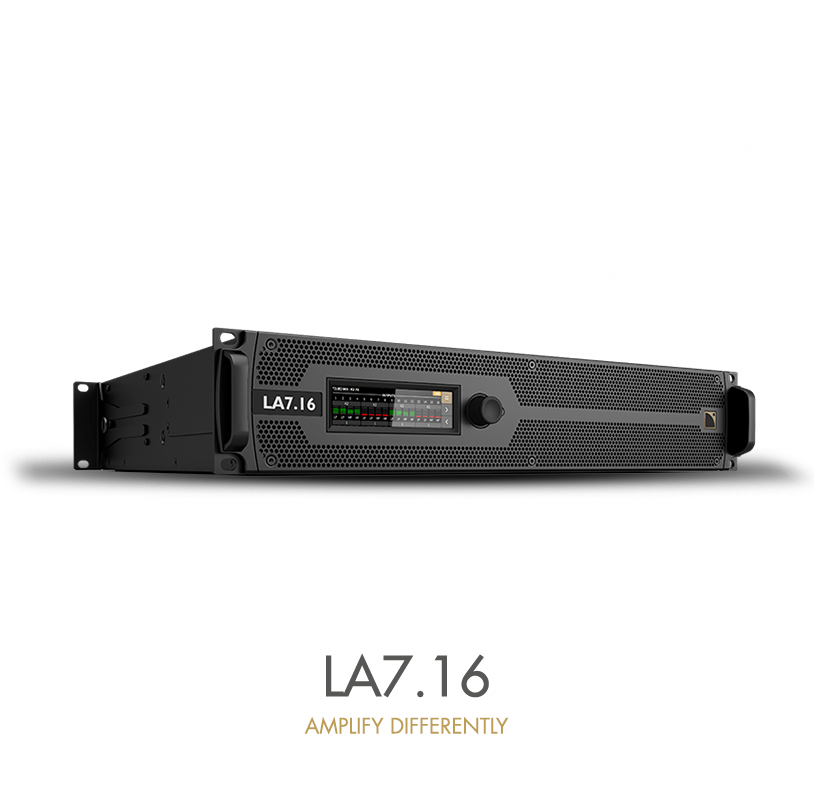
These systems are particularly suited to large format installations and touring applications for which a reinforced LF contour is desirable. The touring systems rely on the Rental Network K platform featuring the LA-RAK plug-and-play amplification, signal processing and signal distribution rack. The amplified controllers and Network Manager deliver a “right out of the box” contour adjustable with Array Morphing to obtain an homogeneous signature in complex system configurations.
|