How Adaptive Sound Design Honors Historic Architecture How Adaptive Sound Design Honors Historic Architecture...
When cultural landmarks decide to upgrade their professional sound systems, they face a monumental challenge: how do you introduce cutting-edge sonic power and digital clarity without visually or acoustically compromising centuries of history? The ideal solution must be powerful, invisible, and respectful of the venue’s heritage. This pursuit of seamless integration requires specialized technology and sound design with surgical precision.
“From the ornate halls of Central Asia to the Art Deco masterpieces of Brussels and the protected landmarks of Hamburg, honoring these spaces demands a tailored approach. By prioritizing advanced sound design, these three venues successfully integrated professional sound systems that meet modern demands while blending into the historic architecture..
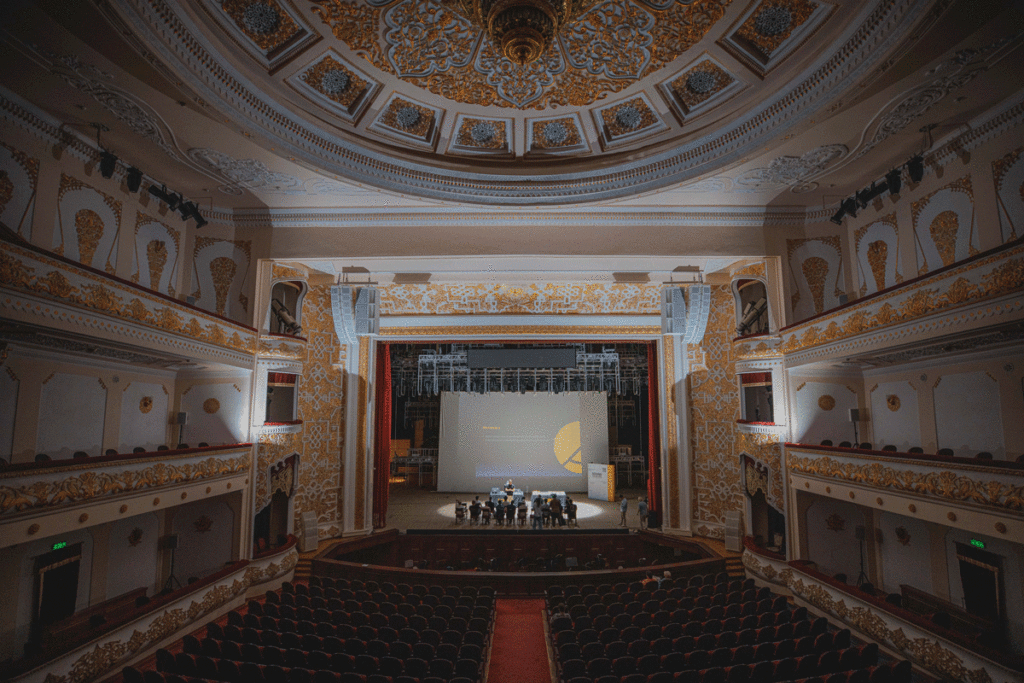
The Alisher Navoi State Academic Bolshoi Theatre, Tashkent
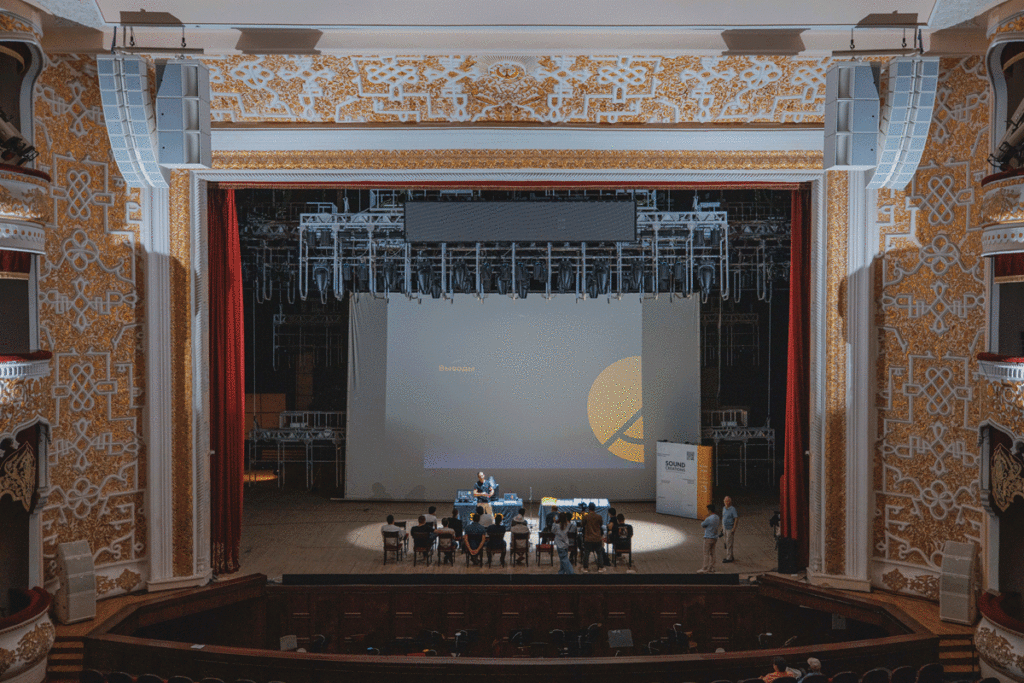
The Bolshoi Theatre, inaugurated in 1947, is a premier cultural landmark in Uzbekistan, featuring an architectural synthesis of traditional Eastern ornamentation and classical European theater design. Its main auditorium, seating 1,440 guests, is famed for its ornate interior and natural acoustics.
The Challenge of Preservation
The goal was clear: implement a world-class sound reinforcement system while maintaining the venue’s visual and acoustic integrity. The equipment needed to deliver uniform audience coverage for everything from opera and ballet to complex touring shows, all without altering the hall’s acoustic character or disrupting its symmetrical sightlines.
The Sound Design Solution
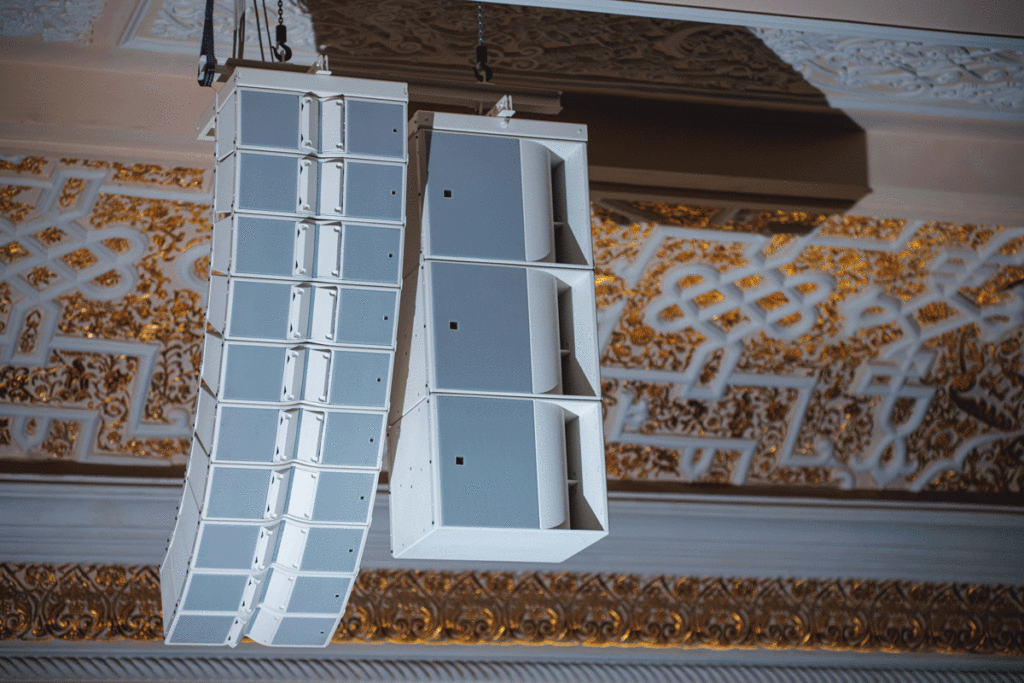
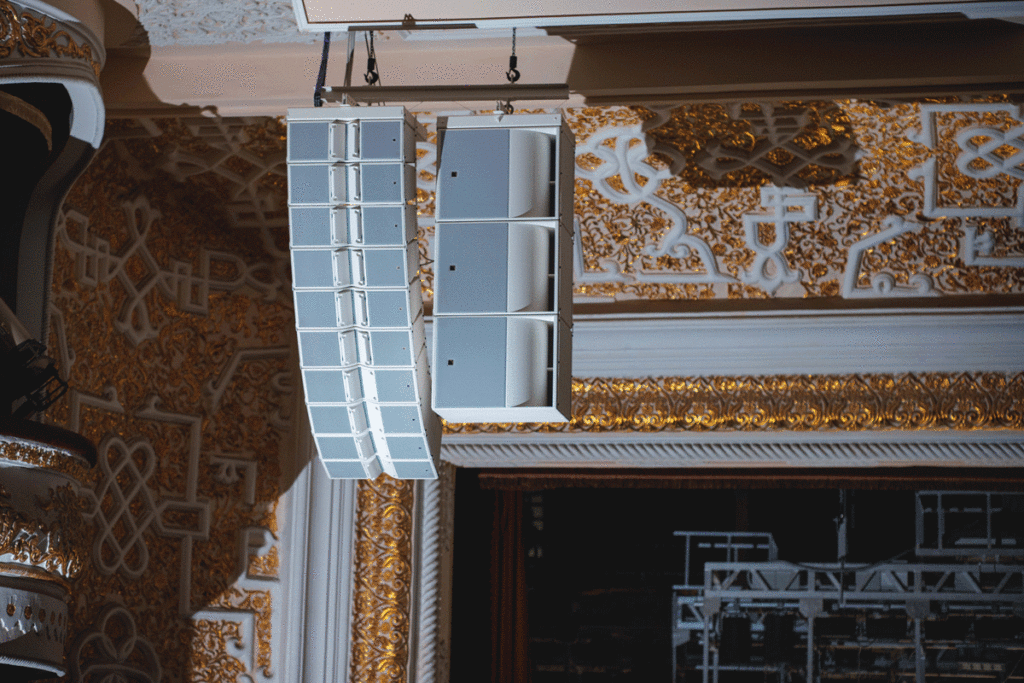
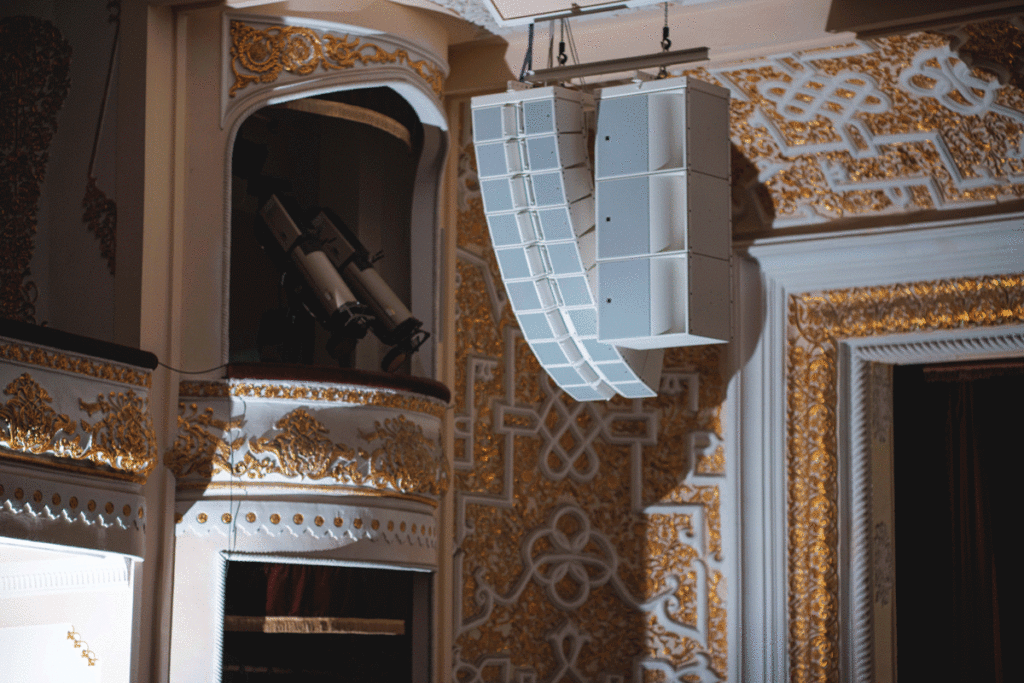
The integrator achieved this balance by deploying an L-Acoustics K Series system. The main FOH arrays (Kara IIi line arrays) and supporting subwoofers (KS21i) were supplied in a custom white finish to blend seamlessly with the auditorium’s palette. Coaxial loudspeakers were used for fill positions—5XT for near-field and X8 for under-balcony—ensuring that the sound reached every seat without the visual distraction of large cabinets. Crucially, the system was meticulously modeled in Soundvision to ensure consistent sound pressure levels (SPL) while preserving the space’s natural reverberant response.
The Result: Clarity Without Compromise
As Vladislav Zhurakovsky, Head of the Lighting Department, noted, “The most important thing is that we achieved this without compromising the theater’s historical appearance.” The result is exceptional vocal intelligibility and even coverage, eliminating the need for supplemental acoustic treatment and allowing the theater to host modern productions while effortlessly honoring its past.
Henry Le Bœuf Hall at Bozar, Brussels
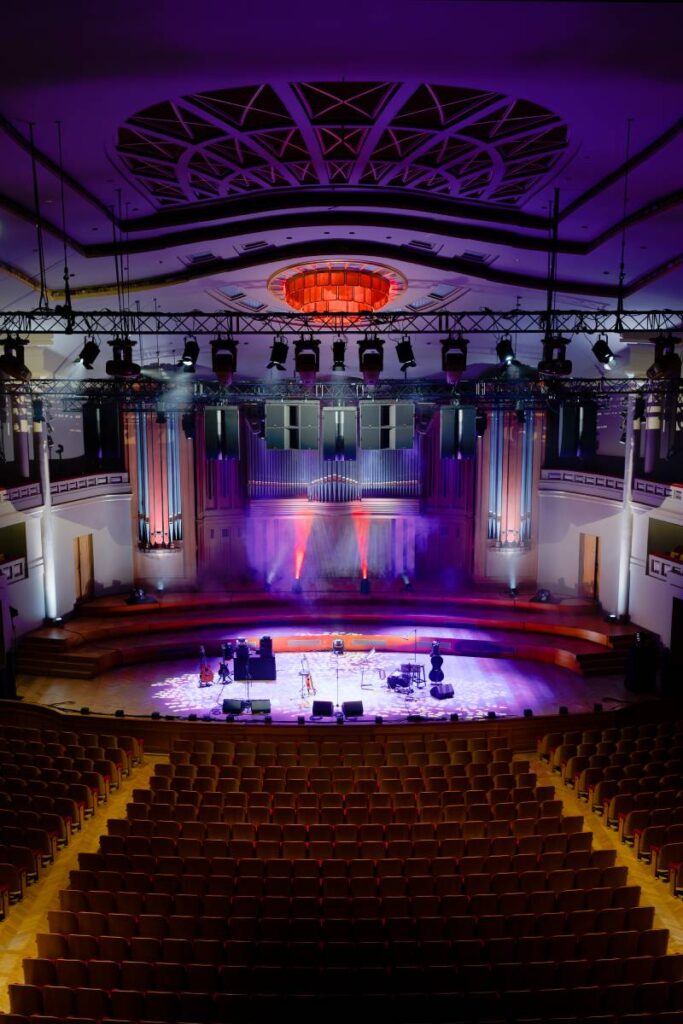
Designed by the renowned Victor Horta and nearing its centennial, the Henry Le Bœuf Hall is an Art Deco masterpiece and one of Europe’s most prestigious cultural venues. While visually stunning, the hall’s lively acoustics have historically challenged sound engineers, particularly for amplified non-classical performances.
The Challenge of Immersion
The venue needed a permanent professional sound system to replace rental systems that couldn’t match its artistic ambitions. With a lineup featuring diverse acts like Sigur Rós and Bob Dylan, Bozar required a professional sound system that could deliver pinpoint accuracy and “uncompromising tonal balance” without overwhelming the hall’s natural acoustics or cluttering Horta’s soaring design.
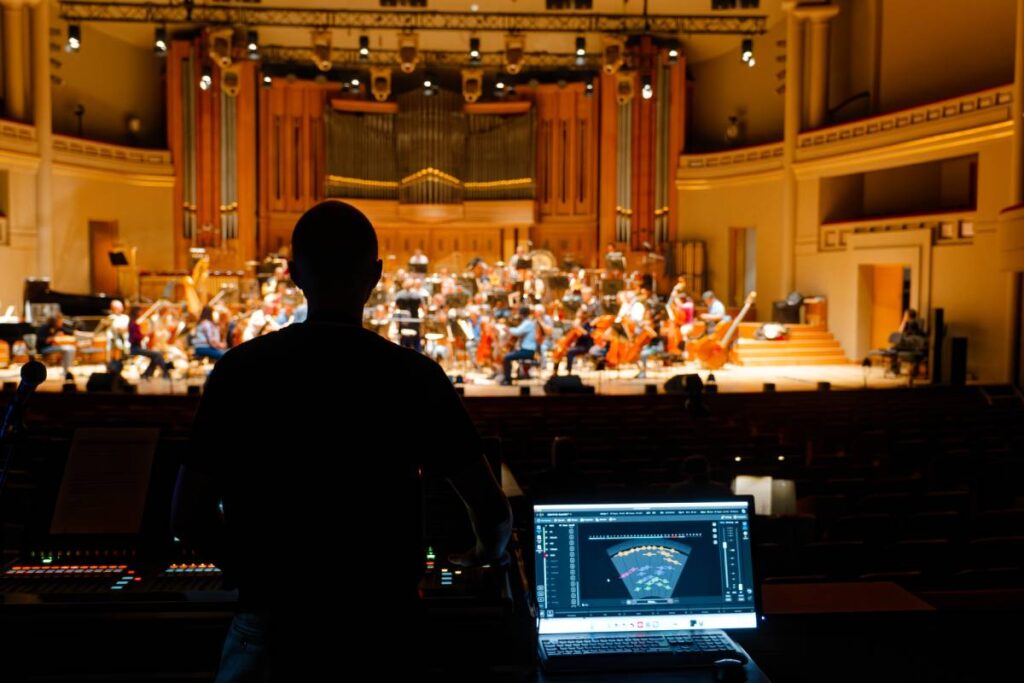
Rather than a traditional stereo setup, Bozar leaped into the future with L-ISA Hyperreal Sound technology. The team installed an L-Acoustics L Series system, featuring five precisely positioned hangs of L2D loudspeakers. This Hyperreal configuration allows engineers to position instruments spatially, creating a natural, frontal soundscape. The system was modeled to provide surgical coverage, ensuring sound reaches the back rows without triggering excessive reverberation in the room.
The Result: Taming the Acoustics
“The L-ISA spatial audio technology allows us to create a truly frontal, realistic soundscape where every detail of the performance is delivered with stunning clarity and depth,” says Technical Production Manager Nicolas Bernus. The installation successfully tamed the hall’s difficult acoustics, offering a modern, immersive experience that respects the Art Deco environment.
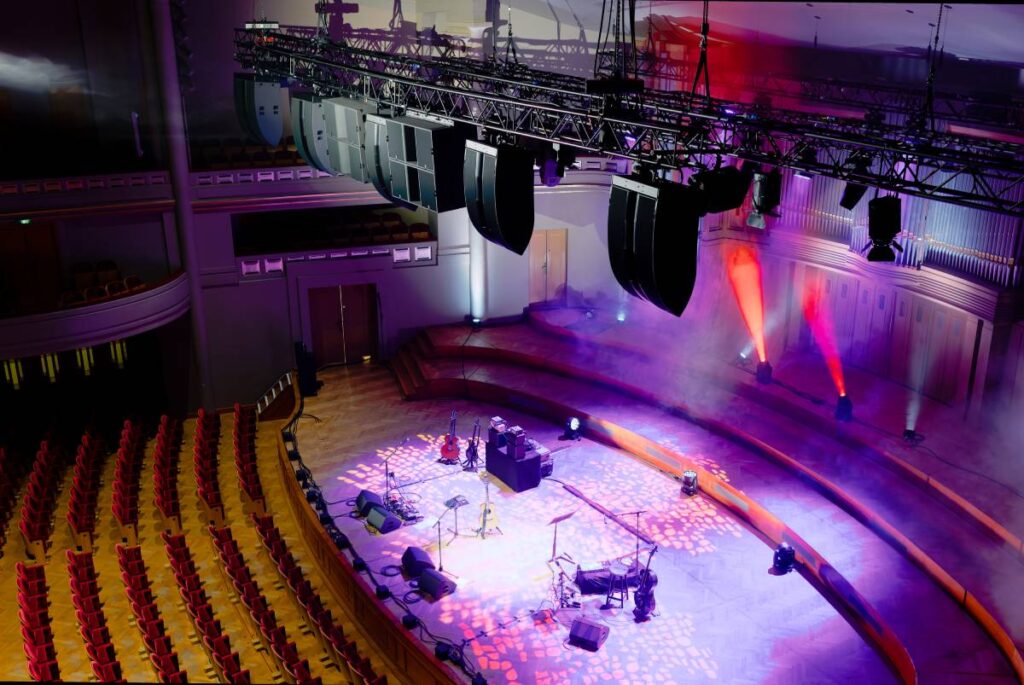
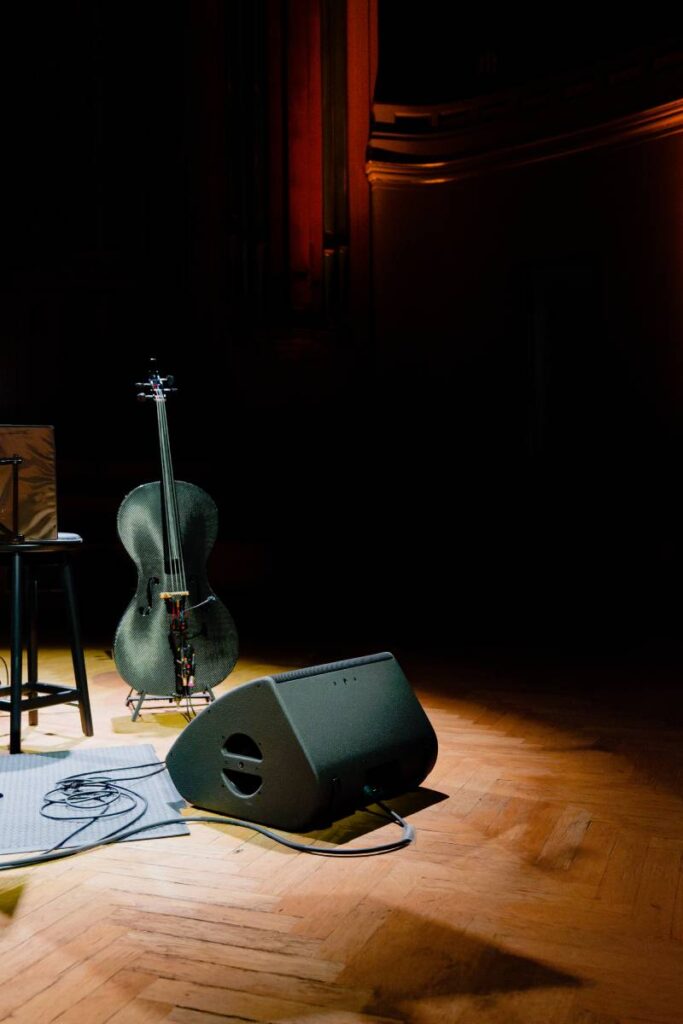
Congress Center Hamburg (CCH)
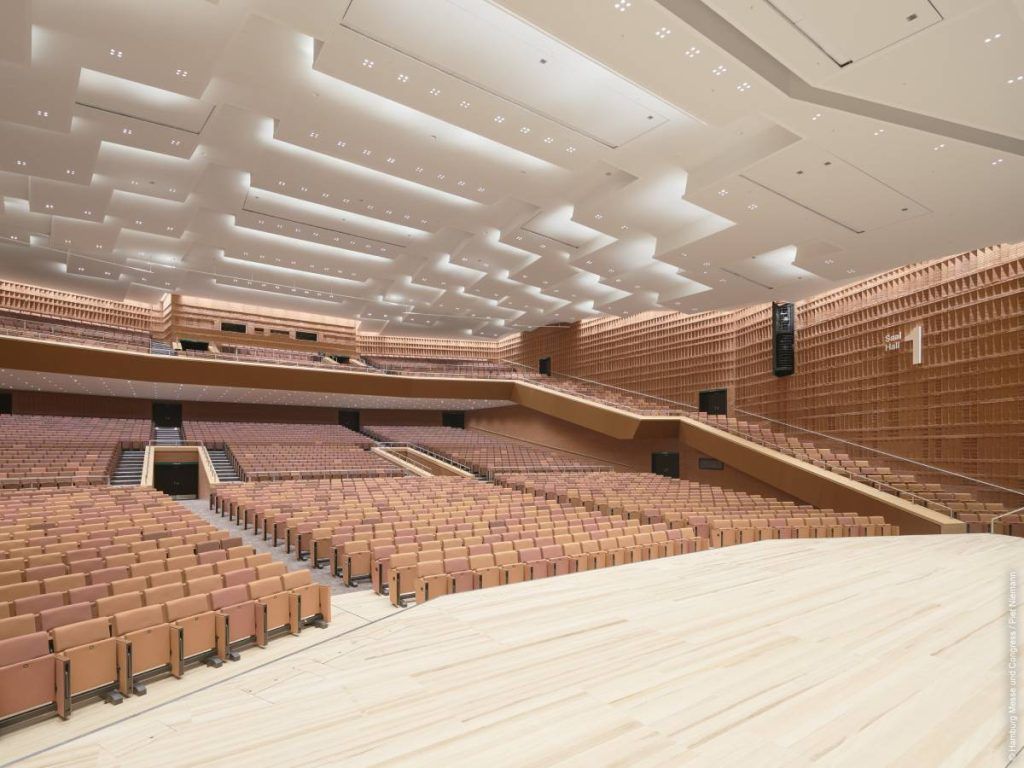
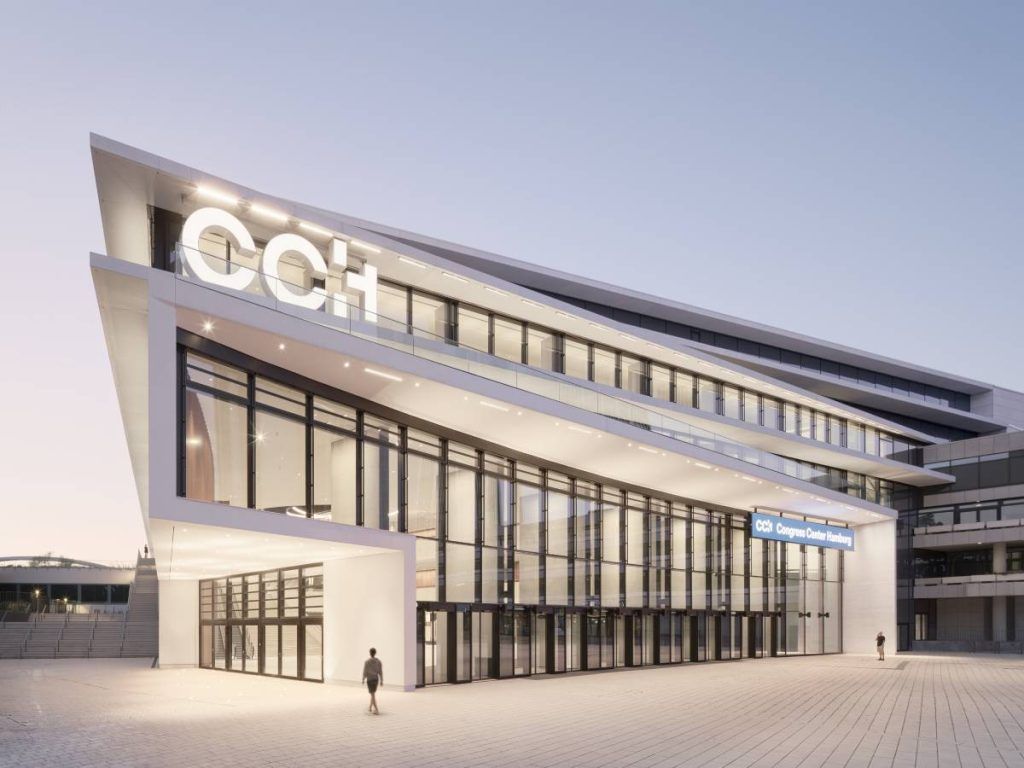
Built in 1973 and protected as a historic landmark, the Congress Center Hamburg (CCH) is a cornerstone of the European convention scene. Following a massive five-year renovation, the venue faced a dual challenge: modernizing its audio systems to accommodate a new 12,000-person capacity while adhering to strict environmental standards to achieve Gold Certification from the German Sustainable Building Council.
The Challenge of Sustainability
The renovation aimed to marry “cutting-edge technology with sustainability.” The CCH needed a professional sound system that offered superior speech intelligibility for conventions and high-quality audio for events, but also a partner aligned with its eco-friendly goals. Heavy, power-hungry, or material-intensive systems would not fit the brief.
The Eco-Conscious Choice
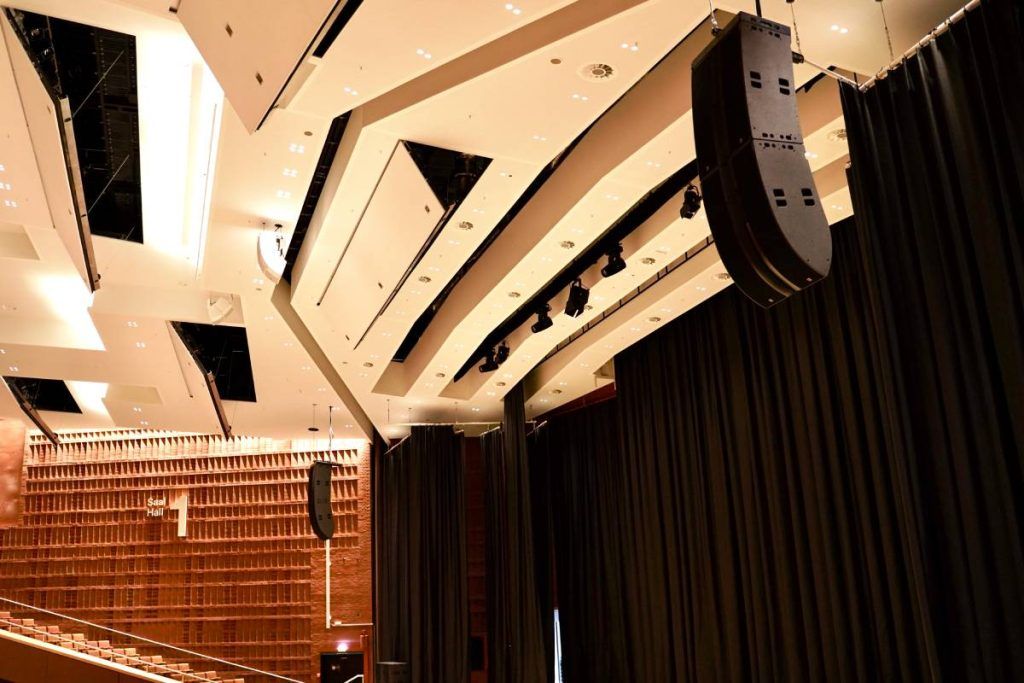
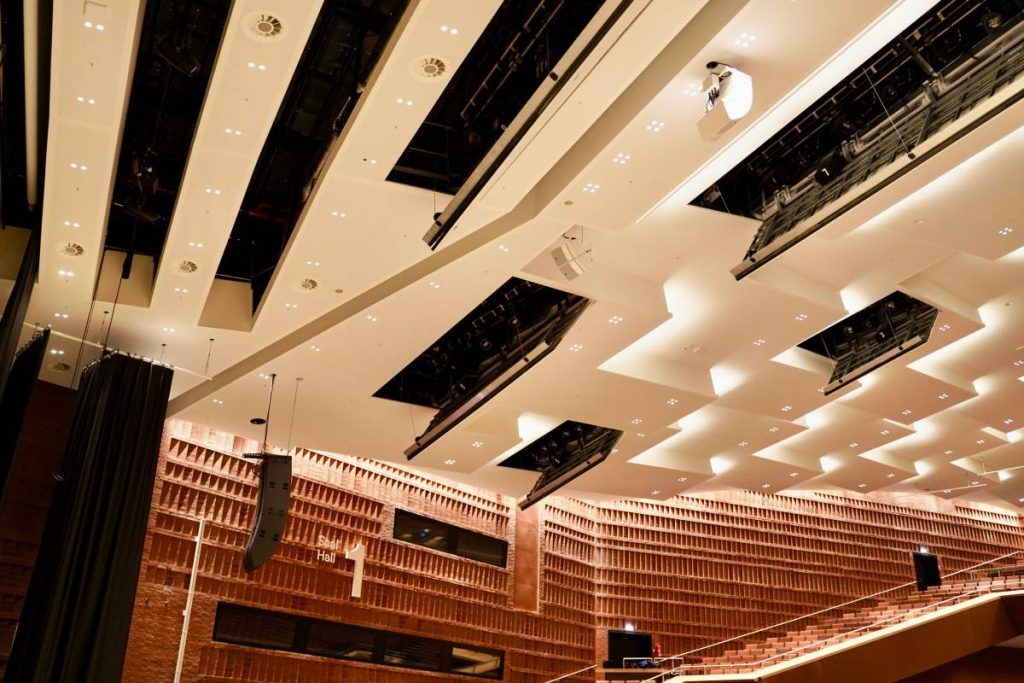
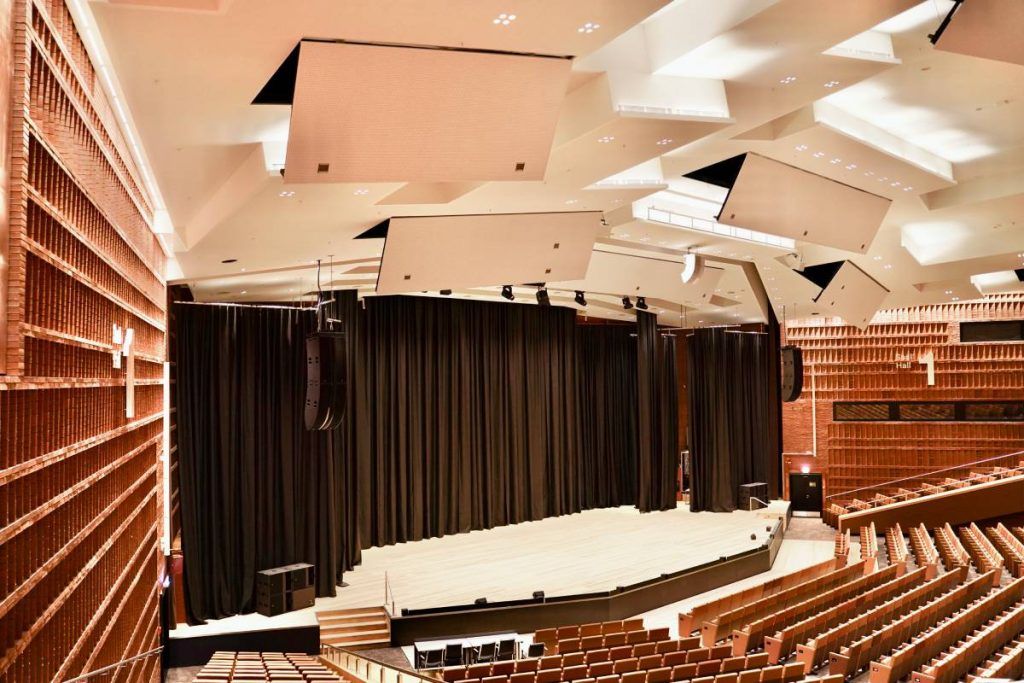
The CCH selected the L-Acoustics L Series (L2 and L2D) primarily for its impressive environmental credentials. Compared to traditional line arrays, the L Series offers significant material savings—using 56% less paint, 30% less wood, and 60% less steel. It also occupies 30% less volume and weighs 25% less, which fits perfectly into the renovated architecture while reducing the carbon footprint of transportation and installation.
The Result: Future-Proofing History
“The L-Acoustics L Series breathes new life into the building,” says consultant Dominik Schenke. The discreet system delivers amazing output, meeting the diverse requirements of modern clients while securing the venue’s status as a sustainable, forward-thinking historic landmark.
The Takeaway: Precision and Respect
These three projects demonstrate a crucial truth in modern audio integration: legacy and cutting-edge technology are not mutually exclusive. Whether it’s using custom colors to blend into 1940s ornamentation in Tashkent, deploying immersive hyperreal audio to tame Art Deco acoustics in Brussels, or selecting eco-efficient designs to modernize a 1970s landmark in Hamburg, the answer lies in precision, utilizing the specialized technology and adaptive design tools that L-Acoustics provides.
When preserving historic architecture, the key is leveraging precise modeling software like Soundvision and discreet, high-performance technology to deliver powerful audio that remains visually and acoustically deferential to the venue’s original sound design. The best sound system in a historic venue is often the one you don’t even realize is there.
Subscribe to Our Newsletter
Get the lastest news and find out about listening events.