The Deeper Impact: Emotion, Bass, and the Future of Sound Design The Deeper Impact: Emotion, Bass, and the Future of Sound Design...
Sound design has evolved from being the art of filling a room to the craft of stirring the soul. In a world where music is both memory and movement, a new scientific study has illuminated what many artists and audio visionaries have long felt in their bones: the true power of a concert lies not in its volume, but in its vibration. In its ability to reach beneath the skin and awaken something deeper.
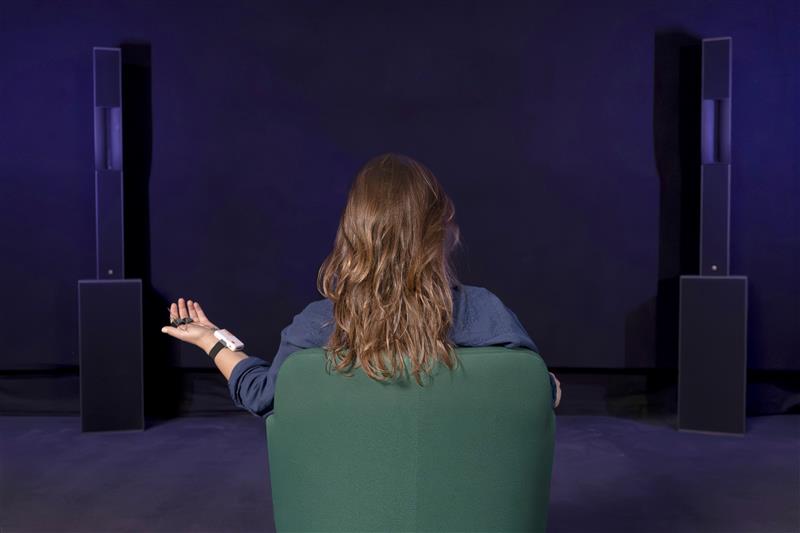
A 2025 ground-breaking study published in Applied Acoustics by authors Nicolas Epain, Samuel Moulin, Camille Mingam, Mérové Wallerich, Etienne Corteel, and Luc H. Arnal, confirms that amplified bass significantly increases emotional arousal. The study reveals a truth that resonates far beyond the lab: low-frequency sound, especially bass, plays a profound role in shaping our emotional and physical experience. For sound designers, performers, and audiences alike, this marks a shift toward a more immersive, emotionally intelligent, and human-centered approach to live events.
Sound Design as a Living Language
Sound is our first language. It’s the lullaby of childhood, the rhythm of conversation, the pulse of a crowd. It directs our attention, triggers emotion, and binds us together. At concerts, festivals, and immersive installations, sound becomes a shared heartbeat and collective experience that transcends words.
These moments aren’t just about spectacle. They’re about sensation. About how sound moves through us, connects us, and leaves its imprint long after the final note fades. Sound design, in this context, becomes a kind of choreography that dances with emotion, space, and memory.
Whether in controlled lab settings or the wild pulse of a live show, the findings were clear: bass deepens immersion, heightens engagement, and strengthens connection.
Bass as a Bridge Between Worlds
In today’s diverse event landscape where concerts, immersive installations, and hybrid performances blur boundaries, bass emerges as a universal language. It speaks across genres, cultures, and even sensory abilities. It’s not just heard; it’s felt. It travels through the body, engaging systems beyond the ears: the vestibular system, which governs balance and motion, and the tactile system, which responds to vibration.
This is the magic of bass. It creates that “in-the-body” sensation that makes live music unforgettable. And it does so without demanding more volume. *The study found that amplifying low frequencies below 150 Hz can intensify emotional response even when listeners aren’t consciously aware of the change.
For musicians and audiences, this opens a new frontier. It’s not about making music louder. It’s about making it more alive.

Designing Sound That Cares
This is an artistic shift that’s also an ethical one. Responsible sound design is about crafting experiences that are immersive and impactful, while safeguarding human health and the environment. Exceedingly high sound pressure levels (SPLs) can come with potential risks: hearing damage, fatigue, and noise pollution.
The study shows that targeted bass amplification can evoke the same emotional intensity at lower SPLs. It’s a technique rooted in psychoacoustics using the physical and emotional properties of sound to shape experience. It’s a win-win: audiences are moved, not overwhelmed. The environment is respected. The artistry is elevated.
This approach also aligns with findings that acoustic features like bass modulation affect emotional response more effectively than simply increasing volume. It’s a shift from “louder is better” to “smarter is better”—a new principle for sound design that honors both the listener and the space.
Beyond Volume: Reshaping the Live Sound Experience
For decades, the recipe for a high-energy show was simple: turn up the volume. But the Applied Acoustics study offers a more nuanced path. It shows that artists and engineers can achieve the same emotional impact by sculpting the sound spectrum—especially the bass—rather than relying on brute loudness.
This insight invites a reimagining of how we approach live sound. It’s not just about technical specs or decibel levels but about designing experiences that resonate with the full spectrum of human emotion. It’s about understanding that sound is not a one-dimensional force, but a multi-sensory language that speaks to our bodies, our memories, and our shared moments.
Sound design becomes a kind of storytelling. Each frequency, each vibration, each pause is a brushstroke in a larger emotional canvas. And when done with intention, it can transform a venue into a vessel for connection, a concert into a collective heartbeat, and a performance into something unforgettable.

Toward a More Resonant Future
For music lovers, this research signals the dawn of a new generation of live experiences. Ones that are both spectacular and deeply resonant. It’s a celebration of sound design as an art form, one that honors emotion, connection, and the shared joy of music.
The future of sound isn’t just louder. It’s deeper. It’s smarter. It’s more human. It’s a future where concerts are crafted not just to impress, but to embrace. Where sound design becomes a bridge between artist and audience, between sensation and soul. Where every note, every beat, every breath of bass reminds us that we are not just listeners—we are participants in something beautifully alive. It’s a future that invites us to feel more, connect more, and listen not just with our ears, but with our whole selves.
Click on the following links to learn more about this topic:
Applied Acoustics: Bass amplification impacts emotional, neural and physiological responses to music
L-Acoustics White Paper: Enhanced Low-Frequency Contours Drive Stronger Emotional Responses to Music
Subscribe to Our Newsletter
Get the lastest news and find out about listening events.