Deep Dive: L‑Acoustics DJ and Real-Time Stem Separation for Spatial Sound Deep Dive: L‑Acoustics DJ and Real-Time Stem Separation for Spatial Sound ...
L‑Acoustics DJ is a real‑time spatial audio system that transforms a DJ’s stereo output into a fully immersive performance using machine learning and stem‑based spatial processing. It separates drums, bass, vocals, and other instruments and gives Djs the ability to place them in space and add effects.
Spatial audio has reshaped concerts, immersive installations, and large-scale touring productions. The nightclub remained outside that evolution workable solutions weren’t given to DJs and clubs. A DJ’s stereo output ‑‑t be broken into clean, usable stems fast enough to support spatialization without latency or artifacts. L‑Acoustics DJ resolves that limitation. It introduces a lowlatency machine learning engine that separates ‑in real time, then routes those stems through the L‑ISA Processor II Core to position and animate them throughout a venue. The system allows DJs to perform spatial effects without changing their workflow, equipment, or mixing technique.
The result is a new category of performance. A DJ can now treat space as a creative playground shaping movement, depth, and immersion with the same immediacy as any effect. This shift has implications for club design, festival staging, and the future of electronic music and performance.
Historical Context – From Stereo to Spatial
DJ culture emerged in the 1970s in New York and Kingston, where disco, dub, and early hip hop pioneers treated the turntable as an instrument. House in Chicago and techno in Detroit expanded that instrument’s expressive range. Despite these innovations, the output remained stereo. The PA projected forward, and the audience listened from the floor. Immersive audio existed in other domains, but separating a finished stereo track into stems without latency remained out of reach.
L‑Acoustics entered the audio landscape in 1984, founded by physicist Christian Heil. The introduction of V‑DOSC in 1992 established coherent line array theory as a foundation for modern sound reinforcement. Later, L‑ISA brought spatial audio to live sound with L-ISA Hyperreal and L-ISA Immersive in 2016. L‑Acoustics DJ brings that lineage into the club and festival DJ booth, applying decades of spatial research to a domain that hadn’t yet benefited from it.
Technical Foundations – Real‑Time Source Separation
At the center of L‑Acoustics DJ is a machine learning engine designed for low latency. It listens to a DJ’s stereo output and separates it into stems in real time. The system doesn’t rely on pre‑analysis, metadata, or prepared stem files. It operates on whatever the DJ plays, preserving rhythmic precision essential to dance music.
Once separated, stems route into the L‑ISA Processor II core, which positions each element within a three‑dimensional soundfield. The control layer includes:
- Creative Moods: Stereo, Wave, Vocal Focus, and Immersive
- Spatial effects: Rotate, Random, Wide, and Riser
- Hardware controller with sixteen pads and eight encoders
- Companion app for tablet‑based operation
- Universal connectivity via Analog, AES/EBU, and AVB
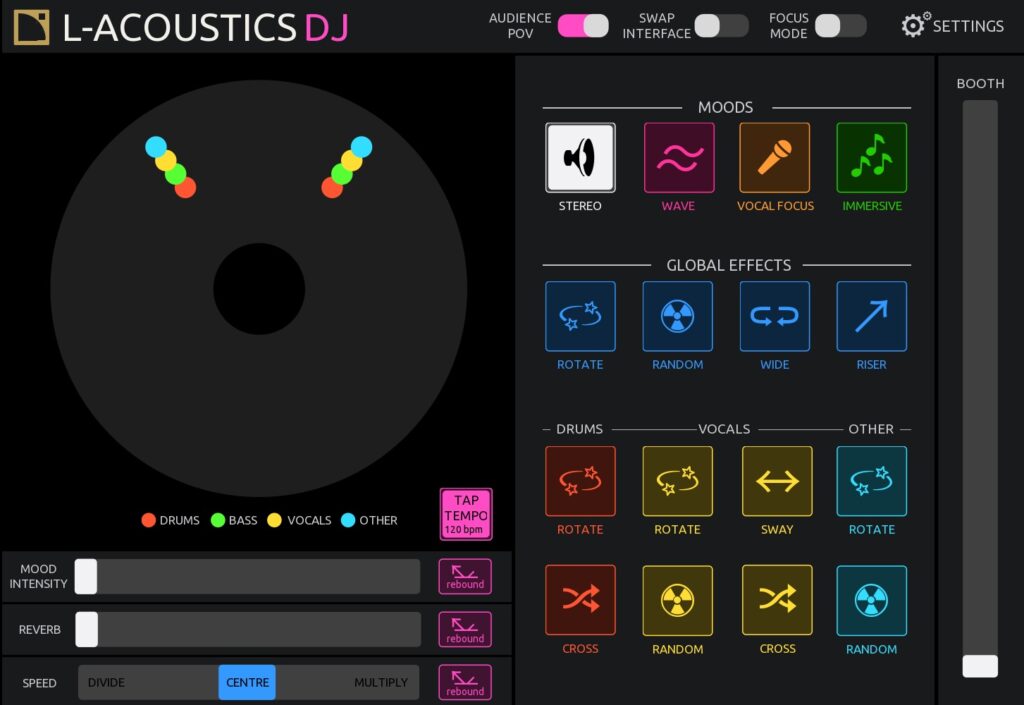
A DJ can operate the spatial mix directly or collaborate with a dedicated spatial sound engineer. This flexibility supports both traditional DJ workflows and hybrid performance models.
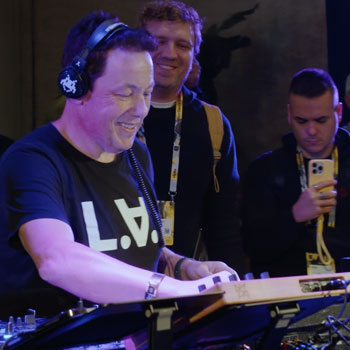
DJ Joachim Garraud, one of the earliest adopters, describes the impact of this technology on his creative process:
“I discovered L-Acoustics DJ in April 2025, and it was a true revelation for me. For the first time, it was possible for the artist to truly play with space as simply as sliding a finger across an iPad. The ability to control separated audio sources without the need for prior analysis of the audio source is truly revolutionary. The tool is so simple and enjoyable to use that, regardless of the DJ’s level, from amateur to professional, it is effortless to integrate this creative element into a set. Since then, I have loved using it to enhance the audience’s sense of immersion and to dynamically boost key sections of my set.”
His perspective illustrates how the system lowers the barrier to spatial creativity. The DJ doesn’t need to prepare stems or redesign their workflow. Spatial control becomes immediate and intuitive.
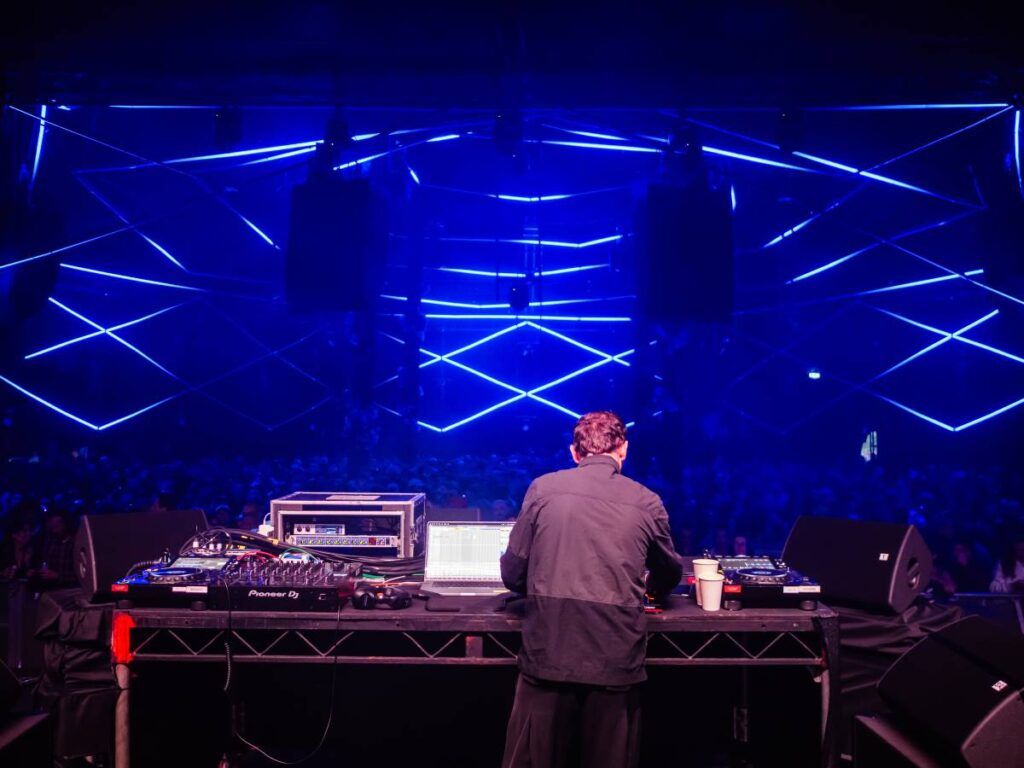
Max Cooper, who demonstrated L-Acoustics DJ at L-Acoustics Keynote 2025 and is known for his immersive audiovisual performances, echoes this sentiment:
“Working with L-Acoustics DJ opens a whole new dimension to my performances. What I appreciate most is how it fits right into my existing setup, and immediately I can place stems throughout the entire space in real time.”
These testimonials highlight a core design principle: spatial audio should be accessible to any DJ, regardless of technical background.
System Architecture and Deployment Models
A full L‑Acoustics DJ deployment uses L‑Acoustics loudspeakers, amplified controllers, L-ISA Processor II Core, P1 networked audio processor, and L‑ISA Controller, LA Network Manager, and Soundvision.
Because all configurations share the same source separation and spatial engine, touring DJs can move between small clubs and large immersive festival stages without changing their workflow. The system adapts to the venue rather than requiring the venue to adapt to the system.
This scalability is essential for touring artists. A DJ can perform in a modest club one night and a festival dome the next, using the same controller and the same gestures to shape spatial movement. The underlying rig changes, but the creative interface remains constant.
Early Deployments – Clubs, Festivals, and Immersive Venues
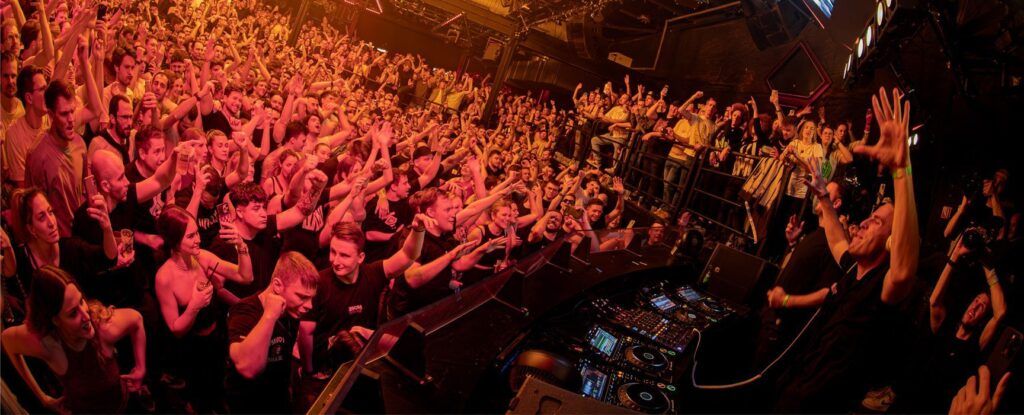
L‑Acoustics DJ debuted publicly at Amsterdam Dance Event 2025, where L‑Acoustics hosted demonstrations and a panel titled “Source, System, Space: Shaping the Club Experience.” Artists including Auro Foxcroft, Doeshka Vrede, Halina Rice, and Joachim Garraud participated. Garraud also performed one of the first public spatial DJ sets using the system.
In 2026, L‑Acoustics deployed a full spatial rig at Winter Music Conference during Miami Music Week. The three‑day pool party series used A15 loudspeakers, KS28 subwoofers, and Syva colinear surrounds, with DJs performing through an L‑Acoustics DJ Controller powered by an L‑ISA Processor II Core. Garraud joined Cedric Gervais, Lorne Padman, Laidback Luke, Nostalgix, and L‑Acoustics CEO Laurent Vaissié for discussions on spatial sound’s role in future club and festival design.
Immersive festival brands such as Polygon Live adopted L‑Acoustics DJ spatial technology for dome‑shaped stages where sound moves through the audience from every direction. These deployments demonstrate that DJs and festival organizers are actively seeking spatial sound as a creative differentiator.
Each deployment provides new data on how audiences respond to spatial movement. Reports from these events indicate increased engagement, deeper immersion, and a stronger sense of connection between artist and audience.

Implications for Clubs, Festivals, and Touring Artists
Most clubs and festivals still operate stereo or quad systems, meaning many audiences have never experienced spatial sound DJ performances. L‑Acoustics DJ offers a competitive advantage for venues seeking to differentiate themselves. Spatial movement provides a new dimension of engagement, encouraging repeat attendance and deeper audience immersion.
For DJs, the system removes two longstanding barriers: complexity and cost. The source separation engine handles the technical workload, and the interface allows immediate creative control without requiring new equipment or training. Touring artists gain a consistent spatial workflow across venues of different sizes.
The system also influences venue design. Clubs can integrate spatial systems without redesigning their architecture.
Takeaway
L‑Acoustics DJ marks a shift in how DJs can shape sound in real time. By combining machine‑learning‑driven source separation with a spatial audio sound system‑Acoustics DJ positions the DJ booth as a site of innovation and establishes a new platform for exceptional electronic music performances.
Frequently Asked Questions
A spatial audio system that transforms a stereo DJ set into a live three‑dimensional experience using real‑time stem separation.
No. The system integrates with existing digital and analog setups.
Yes. DJs can run the spatial mix themselves or collaborate with a dedicated spatial sound engineer.
Deployments range from small clubs to full 3D festival domes.
L‑Acoustics DJ became available on October 30, 2025, with shipments beginning in early 2026.
Subscribe to Our Newsletter
Get the lastest news and find out about listening events.