Product Spotlight: L-ISA Product Spotlight: L-ISA...
If the meme about 2016 being a full ten years ago made you question the passage of time, you are in good company. That same year, L‑Acoustics introduced L‑ISA, a spatial audio technology platform that transformed how sound can be designed, delivered, and experienced in live and studio environments.
L‑ISA began as a response to the limitations of traditional stereo or dual mono reinforcement. Instead of funneling every musical element through a left and right pair of arrays, L-ISA distributes sound through multiple loudspeakers and positions sources as audio objects within a detailed spatial field. The result elevates realism.
A Platform Built Around Spatial Thinking
L-ISA operates as a complete ecosystem. It includes L‑ISA Hyperreal for precise alignment between what an audience sees on stage and what they hear, and L‑ISA Immersive for environments that use surround speakers to create full spatial envelopes. Hyperreal uses a frontal system to achieve natural localization and clarity, ensuring that a vocal or instrument is heard from the place it visually originates. Immersive expands the canvas, allowing sound objects to travel in space and produce experiences suited to art installations, theatre, and unconventional performance spaces.
One key difference between L-ISA and traditional setups is the use of an amplitude-based panning algorithm across at least five frontal arrays. This approach enhances separation between sound sources, improves intelligibility across the venue, and strengthens the connection between sound and sight. L‑Acoustics’ own technical documentation states that this method keeps localization error within a threshold of less than 7.5 degrees for most listeners, provided it is implemented together with proper system‑design principles such as sufficient array count, consistent spacing, and adequate coverage overlap. This ensures both spatial accuracy and a reliable audience experience.
Software That Makes Spatial Mixing Practical
Soundvision’s Design Qualification tools empower designers to build precise immersive loudspeaker systems with unmatched speed and consistency. Combined with the L-ISA design guidelines, they ensure every loudspeaker is positioned with optimal spacing and geometry, guaranteeing a remarkably coherent and truly immersive zone for the audience.
The L‑ISA Controller is the central tool for live spatial mixing. It provides a clear visual interface where engineers can position, size, and animate sound objects in real time. Features include access to multiple Sound Spaces, integration with show control systems, a room engine for virtual acoustics, and dedicated outputs for broadcast and binaural monitoring. It also supports third party tracking systems for real time object motion.
For creation and preproduction, L-ISA Studio brings the spatial engine into a portable workflow. It allows object-based mixing on headphones through binaural rendering and supports up to sixteen speaker outputs for studio layouts up to 9.1.6. The software suite includes the L-ISA Processor Desktop for rendering and the L‑ISA Audio Bridge, which routes up to ninety-six audio objects between a DAW and the spatial processor. The platform includes tools such as the snapshot engine and the FX Engine, which enables reactive movement and complex spatial behaviors.
Updates through L-ISA 3.0 expanded the creative possibilities further with the addition of Stereo Mapper, a tool that maps stereo content into an immersive speaker configuration without altering the original mix. This allows artists to exploit the loudspeakers resources from all the frontal systems (≥5 sources) instead of only 2 sources, even if they perform in stereo.
Hardware Built for Live Scale
The L-ISA Processor II is the hardware engine that renders spatial audio to loudspeaker systems. It supports up to 128 inputs and 128 outputs at 96 kHz and includes tiered output licenses to match projects of different sizes. It exposes parameters such as Pan, Width, Distance, Elevation, and Aux Send and provides features including Stereo Mapper or Room Engine. The L-ISA Processor II also supports L-Acoustics DJ.
This processor extends the accessibility of spatial reinforcement by offering scalable licensing for sixteen, thirty-two, sixty-four, or one hundred twenty-eight outputs from the same hardware. L-Acoustics‑ highlights this flexibility to bring immersive rendering into smaller venues while using the same algorithms employed on large scale productions.
Growing Through Demonstrations, Deployments, and Education
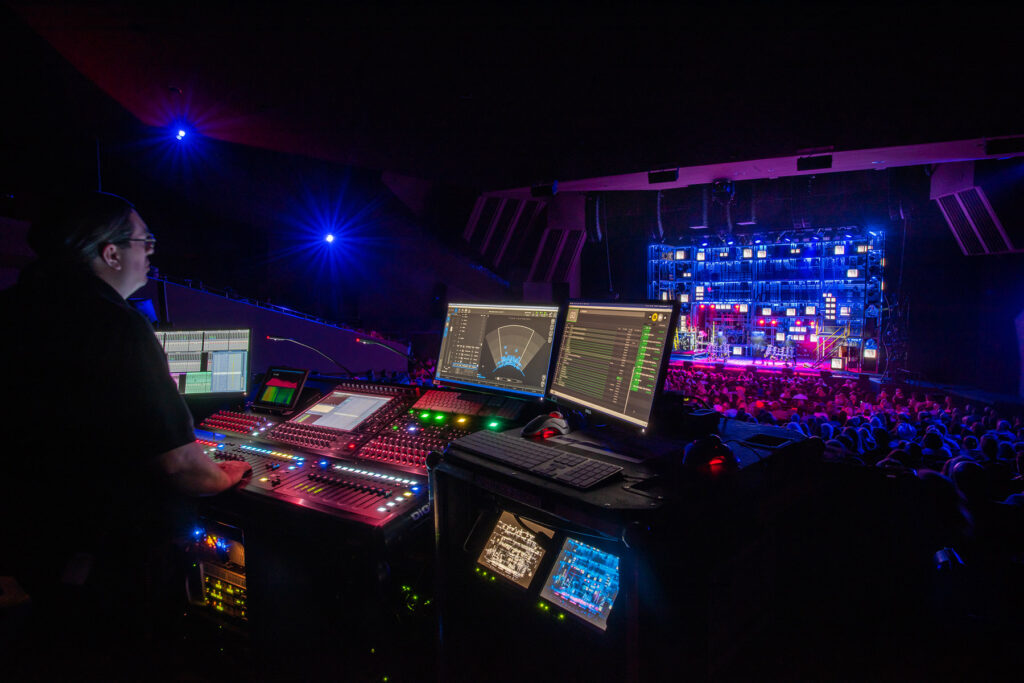
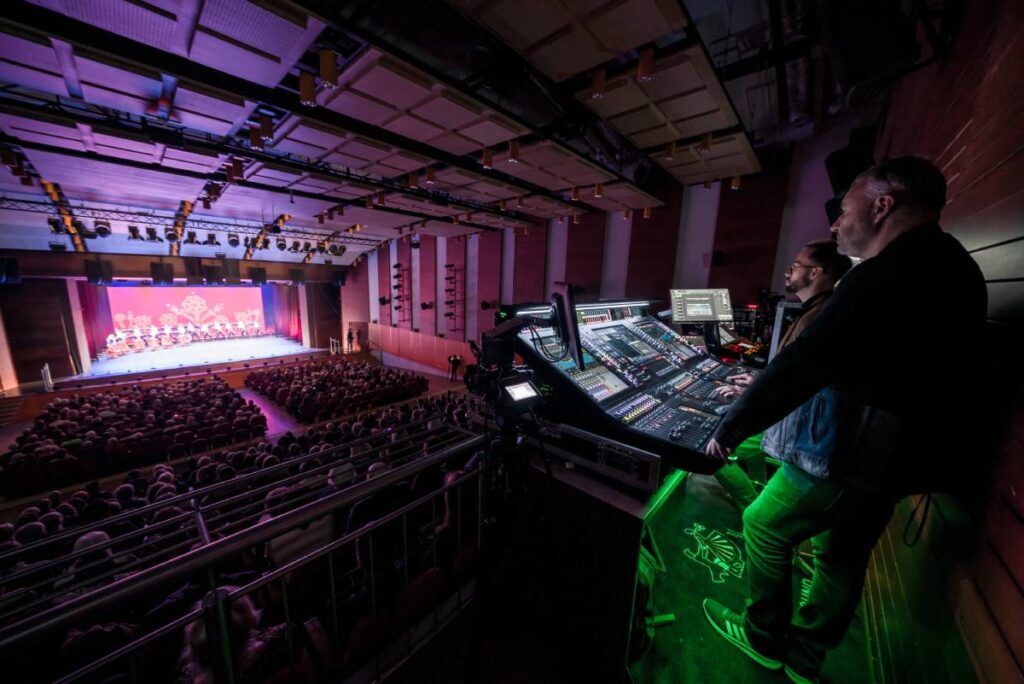
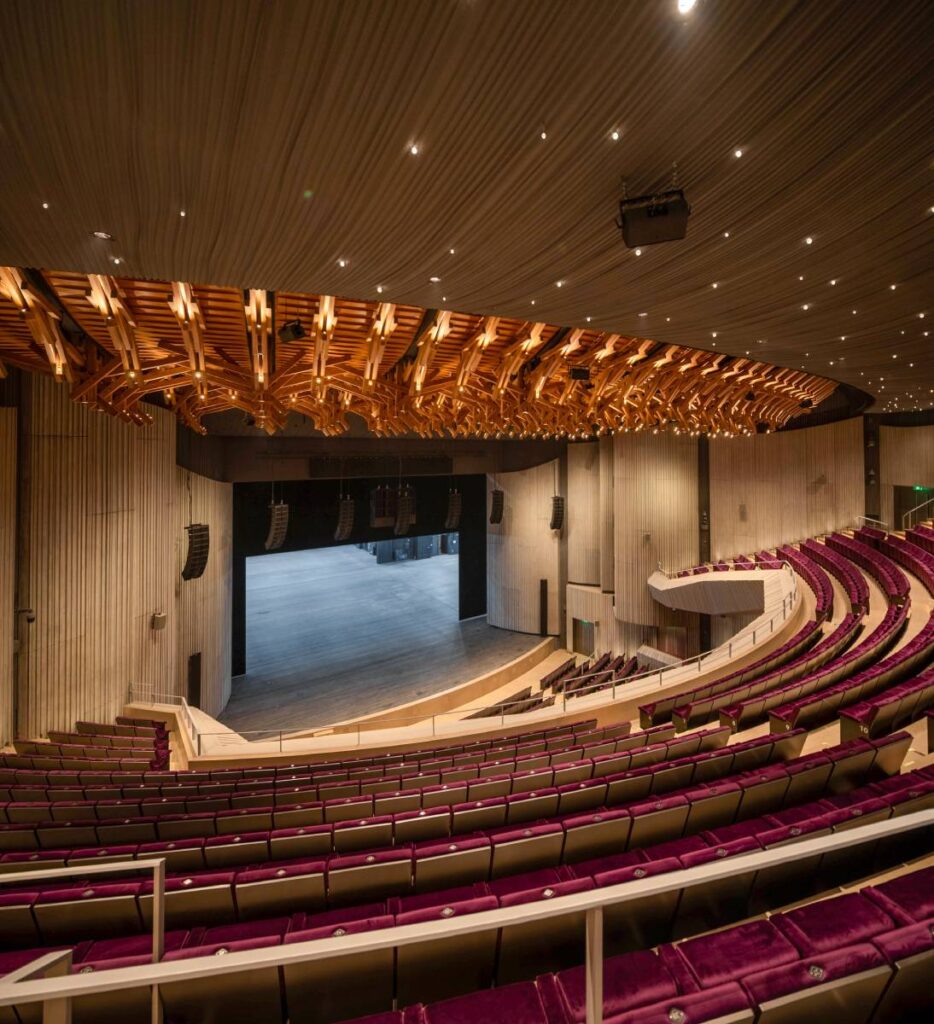
L-ISA has been showcased worldwide through L-ISA Auditoriums in cities such as Paris, London, and Los Angeles, as well as through certified provider spaces, guiding visitors through the platform and highlighting its creative potential in environments precisely calibrated to L-Acoustics standards. Real-world deployments have demonstrated the technology’s remarkable range. In Warsaw, the Mazowsze National Folk Song and Dance Ensemble transformed its 600-seat concert hall into Poland’s first fully immersive 360-degree performance space, combining L-ISA with the L Series in a system that surrounds audiences with sound from every direction, including overhead. In Xi’an, the newly opened Xi’an Grand Theatre, designed by Pritzker Prize laureate Wang Shu and serving as Northwest China’s first comprehensive high-end performance complex, chose L-ISA full surround technology for its 1,600-seat Opera Hall, ensuring that every audience member sits at the center of the sound field regardless of their seat position. In Las Vegas, Resorts World Theatre became home to the first fixed installation of L-ISA Immersive Hyperreal Sound technology on the Strip, hosting residencies by Janet Jackson, Katy Perry, and others through a system of more than 200 L-Acoustics loudspeakers. Across opera houses, concert halls, pop-up venues, and residency theaters, L-ISA continues to prove that immersive sound is no longer a specialized application. It is the new standard.

Technology That Keeps Expanding
L-ISA continues to evolve with updates such as additional free outputs in L‑ISA Studio introduced in version 3.2. These updates support broader access across educational institutions and theatrical environments and create more opportunities for personalized audience experiences through mobile devices.
From its launch in 2016 to its current position as a widely adopted spatial audio platform, L‑ISA has reframed how artists, engineers, and venues think about sound. It offers tools that support creative decision making, enhance the listener’s connection to performance, and create environments where sound behaves with precision and expressive power.
If realizing that 2016 is now a decade behind us feels surreal, consider this a reminder that some innovations age well. L‑ISA has spent those ten years reshaping the landscape of live and immersive sound with clarity, artistry, and a flexible ecosystem that continues to grow.
Subscribe to Our Newsletter
Get the lastest news and find out about listening events.