How Sound and Emotion Shaped the World’s Most Important Conversations at Davos 2026 How Sound and Emotion Shaped the World’s Most Important Conversations at D...
At the World Economic Forum Annual Meeting 2026, progress is often measured in frameworks—policy shifts, financial commitments, technological breakthroughs. But alongside those systems of change, another layer is emerging. One that is less quantified, but no less powerful:
How change is felt.
At the World Woman Foundation’s Davos Agenda, where global leaders gathered to explore equity, sustainability, and inclusive innovation, a different kind of question took shape through the World Woman Foundation’s programming —one that sat just beneath the surface of every conversation:
What if transformation doesn’t begin with information, but with experience?
As the Official Sound & Sensory Partner for World Woman Foundation at Davos, L-Acoustics entered this space not only to amplify voices but to deepen how those voices were received and to connect people in community through shared experiences. Because sound, at its most powerful, is not about volume. It’s about connection.
Designing the Conditions for Listening
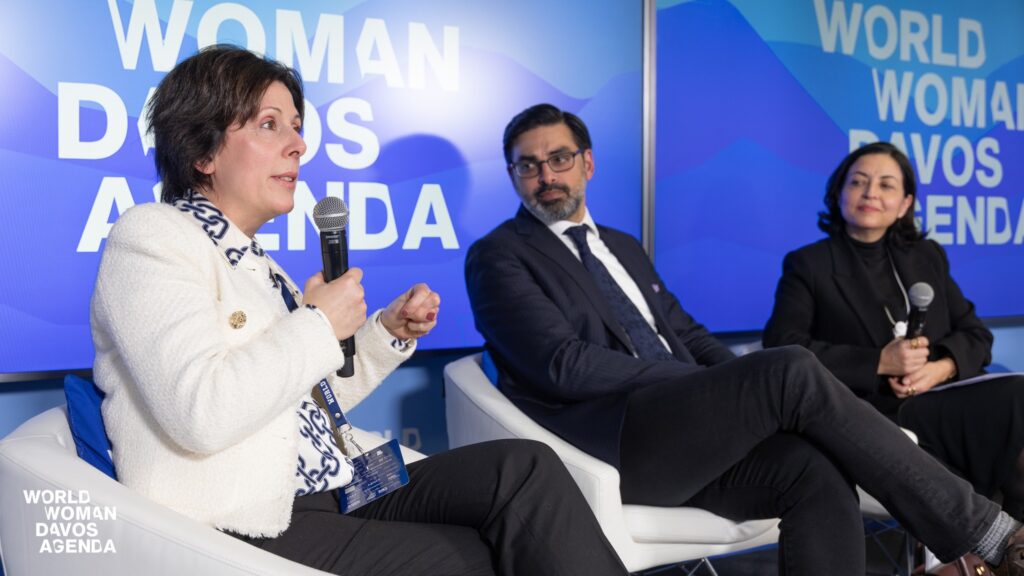
Davos is built on dialogue. This year’s theme was “the spirit of dialogue”. But dialogue alone doesn’t guarantee understanding.
“The future of leadership is deeply human,” shared Cathy Runciman, Co-Executive Director of EarthPercent, during the program. “If we want to unlock real change, we have to create environments where people feel safe enough to listen—and to be heard.”
That distinction—between hearing and listening—became central to the experience.
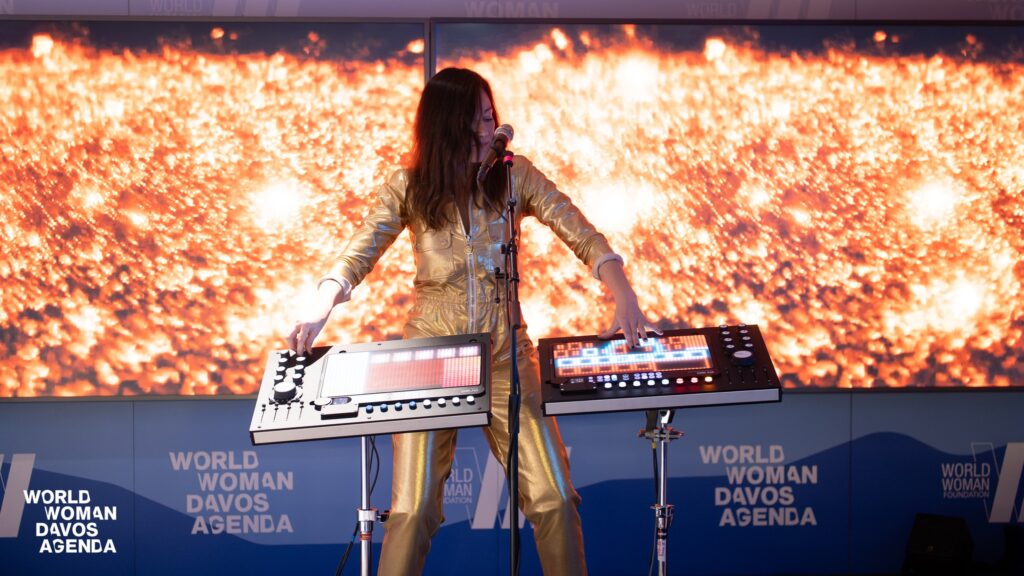
Through intentional sound design, the rooms shifted. Creating the opportunity for talks, collective meditation, and immersive performances. Voices carried with clarity and presence. Silence was no longer empty, but held. The pace softened. Attention deepened. Each evening, people had the opportunity to share in the joy of music together through performances by French electronic artist DeLaurentis, featuring a 360 immersive concert in L-ISA, and by DJ and licensed clinical therapist DJ Hesta Prynn, who created immersive moments throughout her set using L-Acoustics DJ.
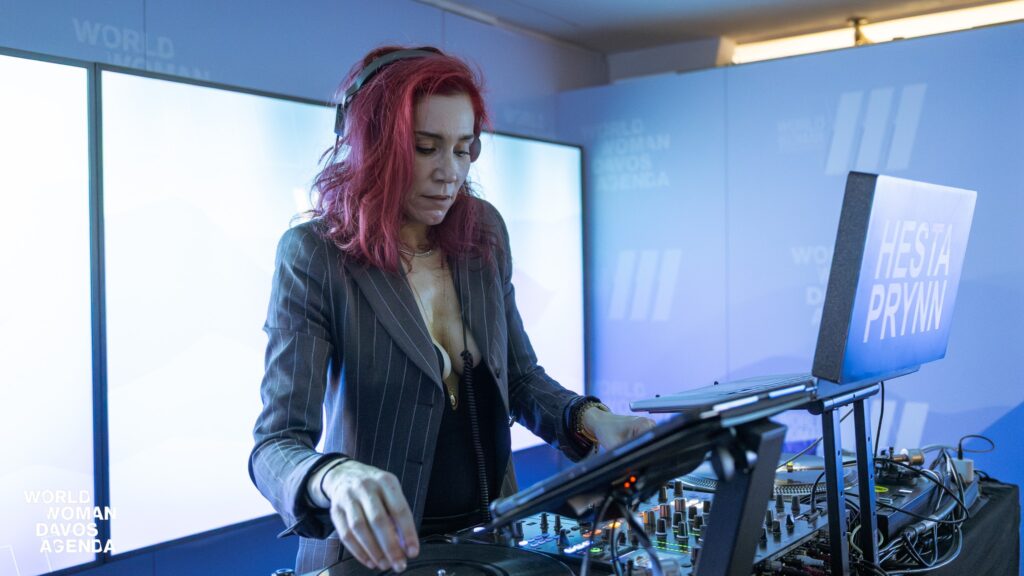
What emerged was not just conversation, but connection.
Because when sound is designed with care, it changes behavior. It invites focus in a distracted world. It creates intimacy in spaces often defined by scale. And it allows vulnerability to surface—something rarely associated with global forums.

Sound as Emotional Infrastructure
We often think of sound as an output—music, speech, performance. But at Davos, it also revealed itself as infrastructure.
Not just physical infrastructure, like architecture or technology—but emotional infrastructure. The invisible layer that shapes how we experience a moment, and whether it stays with us.
Artist and cultural voice MAEJOR captured this shift in perspective: “Sound is the fastest way to move energy. It bypasses logic and goes straight to feeling. And feeling is what creates change.”
This is where sound intersects with culture.
Because culture is not built through information alone. It is built through shared experiences—through moments that resonate, that linger, that move us to think or act differently.
At the World Woman Davos Agenda, those moments were intentional.
They lived in the tone of a conversation. In the emotional weight of a story. In the collective stillness of a room, truly listening. In a room filled with individuals who each have the power to change through their daily work, and those who have lived through, or are living through, some of the painful moments we see in this world, we experienced people truly listening to each other and sharing with their community.
From Awareness to Action
Across sessions focused on climate, health, and equity, a common tension surfaced: the gap between awareness and action.
We understand the challenges. We have the data. And yet, meaningful behavioral change remains slow. This is where sound offers something uniquely powerful.
It translates abstraction into experience.
It can bring distant realities into immediate proximity. It can make global issues feel personal. It can shift something from being understood intellectually to being felt viscerally.
Anil Soni, the CEO of the WHO Foundation, spoke to this need for deeper connection: “If we want people to engage with global health challenges in a meaningful way, we have to move beyond information. We have to reach people emotionally—because that’s where action begins.”
Sound operates precisely in that space. It has the ability to carry not just information, but emotion. Not just message, but meaning. And in doing so, it becomes a powerful tool for conservation, for public health, and for cultural change.

A New Role for Sound in Global Conversations
What became clear in Davos is that sound is no longer peripheral to these conversations—it is central to them. It has always been there, but this provided an opportunity to showcase the ability it has to support global change.
As we rethink how we design gatherings, spaces, and systems, we must also rethink the sensory environments that shape human experience within them.
Because the success of a conversation is not only defined by what is said, but by what is received. We often speak about the intersection of sound, space, and human connection. But at the World Woman Davos Agenda, that intersection expanded. It became a call to action.
To design not just for communication—but for connection.
Not just for clarity—but for empathy.
Not just for presence—but for impact.
Listening Forward
If there is one idea that lingers beyond Davos, it is this:
We need to start listening differently. In a world that is increasingly complex, divided, and accelerated, the ability to create spaces where people feel—truly feel—may be one of our most undervalued tools for change.
Sound gives us that access.
It is the medium through which stories come alive. The bridge between information and emotion. The foundation of shared human experience.
And if we are serious about shaping the future—of culture, of conservation, of global equity—then sound must be recognized for what it truly is: not an enhancement. But a pillar.
Subscribe to Our Newsletter
Get the lastest news and find out about listening events.