Women in Pro Audio: Antonia Bustamante Women in Pro Audio: Antonia Bustamante...
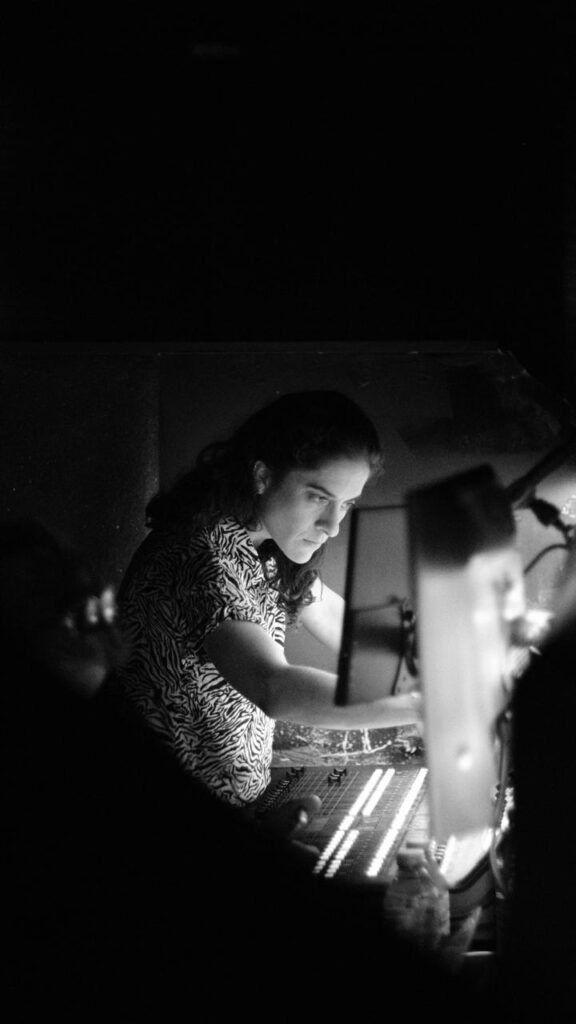
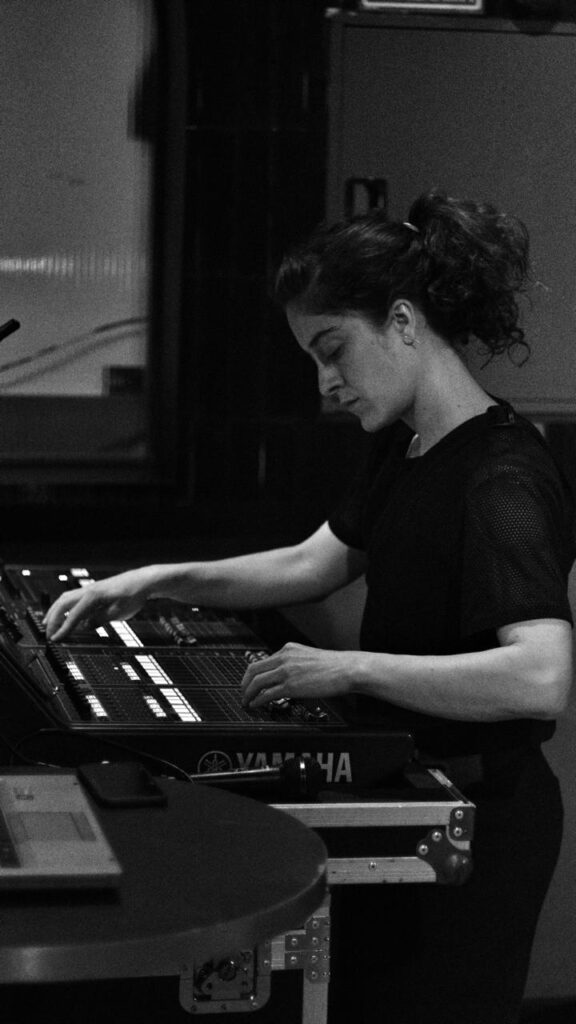
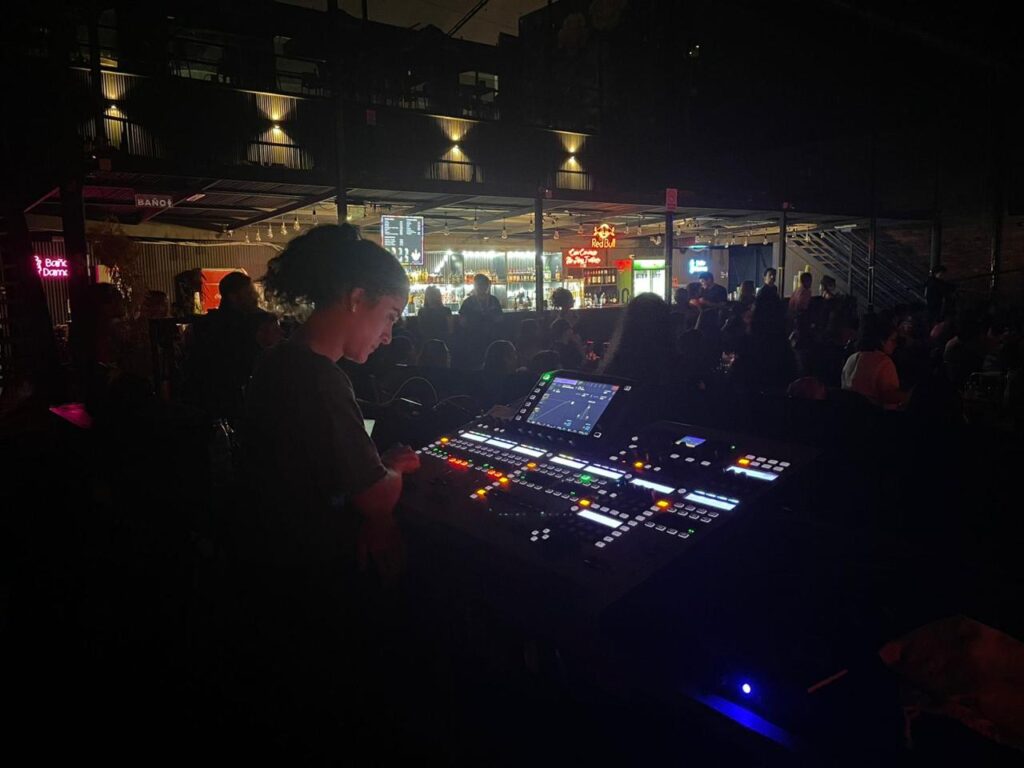
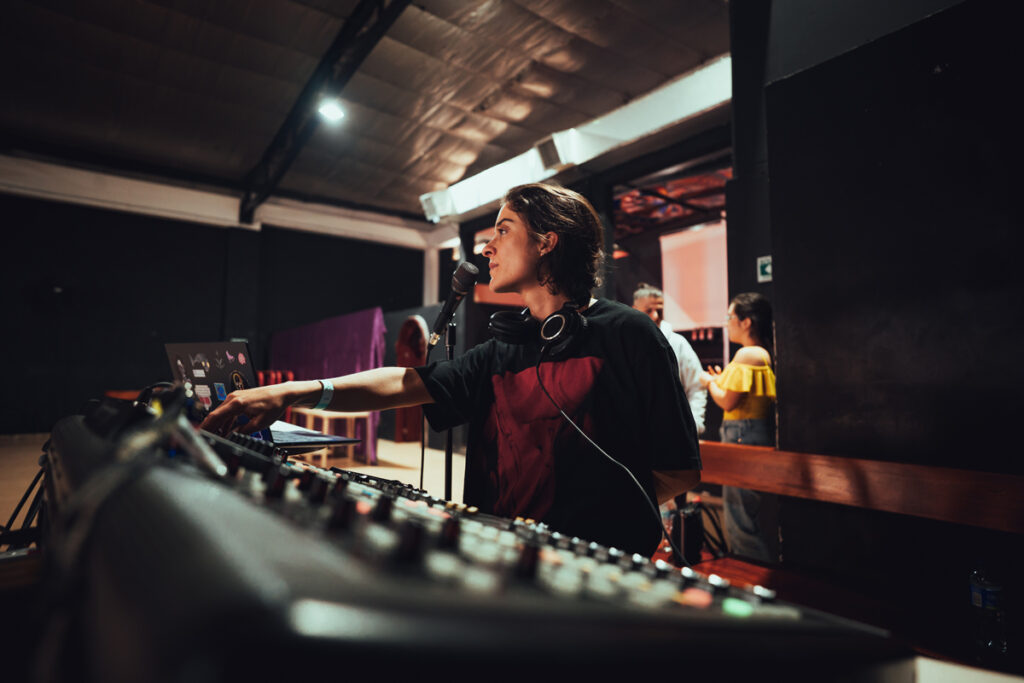
The live sound environment is an ecosystem of massive power, delicate signal flows, and invisible sound architectures. Yet, when we look beyond the mixing consoles, the demographics still skew heavily in one direction. Providing this platform to highlight women working in the pro audio and live sound industry remains critically necessary. We need these voices to cut through the mix. Enter Antonia Bustamante. Antonia is a sound engineer working mainly in live concert sound, both at front-of-house (FOH) and monitors. She also works as a stage manager and in production, as well as in mixing and sound design for podcasts and other audio content.
Between Art, Science, and the Rush of Live Sound
“Alongside my technical work in sound, I explore creative coding and writing,” Antonia explains. “I am particularly interested in the creative possibilities of technology and in developing a critical understanding of listening through philosophical perspectives.” Originally born in Bogotá, Colombia, where she currently resides, she studied and lived in Buenos Aires for many years before returning to her hometown in 2018. “I’m always happy to travel, and I don’t spend all my time in Bogotá,” she notes. “Fortunately, over the last four years, I’ve been touring regularly, which has allowed me to keep moving, visit new places, and work in different environments.”
Her path to the console was a winding one. “I’ve always loved music. I took lessons and played the violin from a young age, but I didn’t want to become a professional violinist, mainly because I was interested in so many things, and I found the world so fascinating that I didn’t feel I had the kind of focus a professional instrumentalist needs,” she recalls. “At school, I was very interested in both the arts and the sciences, and I wanted to do something that could combine those two worlds. I stopped playing when I was seventeen and tried to study architecture, but after some years, I realized it was quite far from what I wanted and from the way I imagined the world.”
“Sound engineering had always been a possible path,” Antonia continues. “I had friends working as FOH engineers, and when I was eighteen, I thought they had one of the coolest jobs in the world. They actually tried to make me change my mind, but when I gave up architecture, I decided to give it a try, start playing again, and eventually, I studied sound, recording, and music production.” During her final year of studies, a friend pointed her toward a sound technician role at an independent theater. “Although I was studying something slightly different at the time, I went for it because I needed the job. Working there, I discovered that I enjoyed the live rush and stress (which may sound strange, but it’s true, I still do), and especially the feeling of people listening to live music together. So, I stayed and worked there for about three years.”
Navigating the Industry
Antonia acknowledges the distinct hurdles women face in this field. “I think the industry has changed a lot since I started working in 2014. Back then, it was quite common to encounter musicians asking stupid questions like, ‘And where is the sound guy?’ after I had already connected all the stage cables, or saying things like, ‘What are you doing here? Are you the girlfriend of…’ and so on,” she shares. “I guess times have changed, and I also look older and more confident now. Even so, there is still a kind of male complicity (I’m not sure if that’s the right word), something like a brotherhood that can exclude us, sometimes even unintentionally.”
Antonia adds, “I feel it is not easy to get into these men’s collective spaces of work. And although I enjoy working with men, in recent years I’ve been trying to consciously build a similar sense of female complicity with my colleagues, inviting them to work together, to share projects, because otherwise, how can we strengthen ourselves?”
When asked why there remains a shortage of women in the audio industry, she points to deeper societal roots. “This is a common question, but more complex than it seems. The history of the gender gap in technology shows how, during the 20th and 21st centuries, children’s toys shifted from being relatively gender-neutral to a highly segregated and stereotyped system, and that hasn’t really changed. I suppose that’s part of the beginning,” she observes. “I’m not sure what other reasons exist, besides education. Maybe it’s a field where the entry-level jobs are tough and exhausting, and there are prejudices that say that you have to be strong or rude to be part of it. There may also be the perception of working in a sexist environment, or doing work traditionally associated with men, which might discourage some women from entering the field. And then there is what I mentioned earlier: the dynamic of male groups of colleagues working together and supporting each other, which can make it harder to enter and navigate these spaces. I’m only speculating, but it would be interesting to really research it in depth.”
Economics, Analog Anecdotes, and Overcoming Obstacles
After her initial theater stint, Antonia faced the harsh economic realities of the independent scene. “When I returned to my hometown, I worked in a theater as an audio assistant. It was a very nice place, but the salary and schedule were difficult. I’m not sure how it works in other countries, but here live sound is a profession with huge salary gaps,” she explains. “You can earn good money if you work with international teams or well-known pop artists, but in independent music and most theaters and sound companies, salaries are very low, and there is little regulation. As a result, I eventually changed direction and stepped away from concerts for a while, only working occasionally with friends. After the pandemic, when I think everyone, myself included, needed to gather and hear live music, I returned to concerts as a side job. Now I dedicate more and more time to it, although I still combine it with other work, and I continue to be interested in other fields such as programming and philosophy, which I don’t want to leave aside.”
When challenges arise, Antonia relies on perspective. “Whenever things get difficult, I try to keep calm and concentrate on solving or, at least, on keeping the situation under control. I can remember four or five truly awful moments in my career that made me think, ‘Why did I decide to do this for a living?’ or ‘Am I really good enough for this?’ But that’s part of the process,” she admits. “Some years ago, I attended a stage management workshop for opera led by a woman who said something I still try to remember whenever things get difficult: ‘It’s just opera.’ She meant that, in most cases, it’s not the end of the world if something goes wrong. There are situations where things can become genuinely dangerous, but most of the time that’s not the case, so it’s important to stay calm and keep moving forward. In any case, when you don’t have complete control or full knowledge about a situation, it’s important to anticipate problems, think creatively about what could go wrong, and have possible solutions in mind just in case. It’s also crucial to have a good team around you, because this is not a one-person job.”
Finding Inspiration in Fellow Women in Pro Audio
That level head proved useful during a memorable gig in eastern California. “On a tour around the USA some years ago, we played at a beautiful and crazy festival in Bishop, a town in the mountains of eastern California,” Antonia remembers. “We had played in Las Vegas the night before, and we had to drive six hours through a beautiful desert landscape to get there, do the soundcheck, play the show, and then drive back to Las Vegas afterward to catch a flight the next day. None of us had ever been to that part of California before, and we didn’t really know much about the festival, but it was great. The organizers and most of the audience were a group of hippie adults who had been running the festival for around forty years, right in the middle of the mountains. Festivals like that one are incredible to me because you have to create a big and ephemeral infrastructure in the middle of nowhere, which means you really need the desire and the will to do it.”
The real surprise awaited her at the console. “I was already very happy with the landscape, but when I arrived at the FOH, I saw the most incredible thing: the audio console was a huge analog mixer, a Gamble EX-56, I think. The person in charge was a lovely woman who immediately put my English to the test with the speed at which she spoke. She told me that she and her husband had bought the mixer decades ago, that she hated digital consoles and digital sound, and that they traveled around with that crazy thing. She was amazing.”
The Art of Listening
For Antonia, the core of her work always returns to the audience. “I love concerts in theaters and in beautiful outdoor settings,” she says, listing Stern Grove Festival in San Francisco, The Ford Theater in Los Angeles, Le Suds à Arlès festival in France, the Barbican in London, and Festival Bahidorá in Mexico as her favorites. “I love it when you can feel people enjoying the concert, listening attentively, dancing, singing, or simply engaging with the music in whatever way it invites them to. I try to stay aware of that, keeping myself open and attentive to the audience’s response, and then reinforce those feelings through elements of the mix: effects, dynamics, bringing certain things forward, or pulling them back, and so on.”
Honing that craft requires constant education. “YouTube is full of great information. I use it to learn about equipment, mixing, music, philosophy, math, physics, and countless other things. Brand websites can also be good resources,” she notes. “I also think that regular ear training is important, whether through classic exercises, training apps, games, your own recordings, or whatever method you enjoy most. Even just spending some time in a good-sounding room and listening carefully can be a valuable exercise.”
This ties into the top skill she recommends for anyone in the industry: “Listening, in the broadest sense of the word. Listening to the music and the mix to understand the dynamics, the changes, and the flow of energy: what does the music need at each moment? But also listening to how the space and the sound system affect the music, listening to the audience, and listening to the team you are working with, so that you can quickly understand what they need to feel comfortable and perform at their best. Then, depending on the type of work you want to focus on, I think it’s important to be comfortable with the tools you use and to have a solid understanding of signal flow.”
The Future of Live Sound
Looking forward, she is clear about what needs to change. “Better working conditions, or a reduced gap between independent and mainstream music, both in terms of technical resources and salaries,” Antonia states. “I hope people—audiences, musicians, and staff alike—keep enjoying them and taking care of them as spaces of freedom, gathering, joy, and collective resistance. I would like better technical conditions in all kinds of venues and productions, as well as stronger human teams. Also, I hope AI doesn’t replace us with generic approaches to mixing, and that people continue to be artistically and technically creative.”
Her ultimate advice to other women entering the field is both pragmatic and resilient. “Try and insist. Try to figure out if you like the job, because we have a lot of preconceptions about what we can do or what our wishes are, but you only know it when you try. And insist because this is a practical job. You can learn a lot at home and study on your own, but real-world experience is what teaches you the most,” she urges. “I had a friend, a really good violinist, who used to say, ‘To do something well, you first have to do it badly.’ It’s a simple and wise phrase. Sometimes you just have to try, and if you fail, accept the failure, keep going, study harder, and do it again, better the next time. Trust and be stubborn and kind.”
Connect with Antonia Bustamante on Instagram at @anattoliaa and on her website.
To read last month’s Women in Pro Audio interview, click here.
Would you or someone you know like to be featured in our Women in Pro Audio series?
Subscribe to Our Newsletter
Get the lastest news and find out about listening events.