Why a Rider-Friendly Stadium Sound System is a Year-Round Asset Why a Rider-Friendly Stadium Sound System is a Year-Round Asset ...
Beyond the roar of the crowd and the usual gameday excitement, today’s stadium sound system must serve as a high-performance engine for revenue outside of hosting sports. Despite this reality, many venues treat their house audio system as a mere utility for game-day playback, sirens, and basic paging. While a stadium is a marvel of civil engineering, it often sits dormant for most of the year.
For a professional football franchise, the ‘home’ window spans a mere 17 weeks. To justify their massive footprint, stadiums must function as high-capacity entertainment hubs for the remaining 300 days, and that requires a rider-friendly audio system.
When permanent stadium loudspeakers fail to meet touring rider standards, the venue becomes a logistical liability. Transitioning to a rider-friendly L-Acoustics installation moves a venue from a passive space to a proactive touring asset.
If your focus is typically on the field rather than the rafters, you might wonder: what does “rider-friendly” actually mean for a stadium’s bottom line? To bridge the gap between sports operations and global entertainment standards, it helps to know that certain names carry more weight on a contract. In the pro audio industry, a rider-friendly system is one that is pre-approved and specifically requested by an artist’s production team. This ensures they can achieve their signature sound without the friction of negotiating substitute gear. L-Acoustics is the industry standard in this regard, recognized as the #1 brand chosen by the world’s largest music festivals.
The Revenue Logic: From House Rig to Touring Asset
The financial friction of “touring-in” a temporary system is significant, requiring additional rigging points, extra load-in days, and the rental of massive arrays. By installing an L-Acoustics system, a venue converts its overhead into an invitation. Because our technology is the global benchmark for the world’s highest-grossing tours, the house system remains in the air year-round, offering incoming production managers an efficient, hybrid environment.
Understanding the nuance of stadium acoustics is key here. A permanent game-day rig is highly directional, engineered to keep acoustic energy focused on the seats and off the field to minimize reflections. When an end-stage concert moves in, the tour will typically hang its own main left/right arrays to address the floor. However, a rider-friendly house system delivers massive value by acting as the delay and fill system for the upper bowls.
Utilizing a permanent K Series installation offers several strategic advantages:
- Rider Acceptability: Top-tier artists demand consistent sonic signatures. Providing an upper-bowl delay system that matches the caliber of their touring rig eliminates the need to haul extra columns of steel and plastic just to cover the nosebleeds.
- Logistical Compression: Bypassing the need to rig a secondary, temporary delay system slashes labor costs, minimizes rigging points, and compresses load-in windows from days to hours.
- Turn-Key Efficiency: For shows designed “in-the-round,” a center-hung house system can occasionally handle the entire performance, making the venue an incredibly lucrative, plug-and-play stop on a global itinerary.
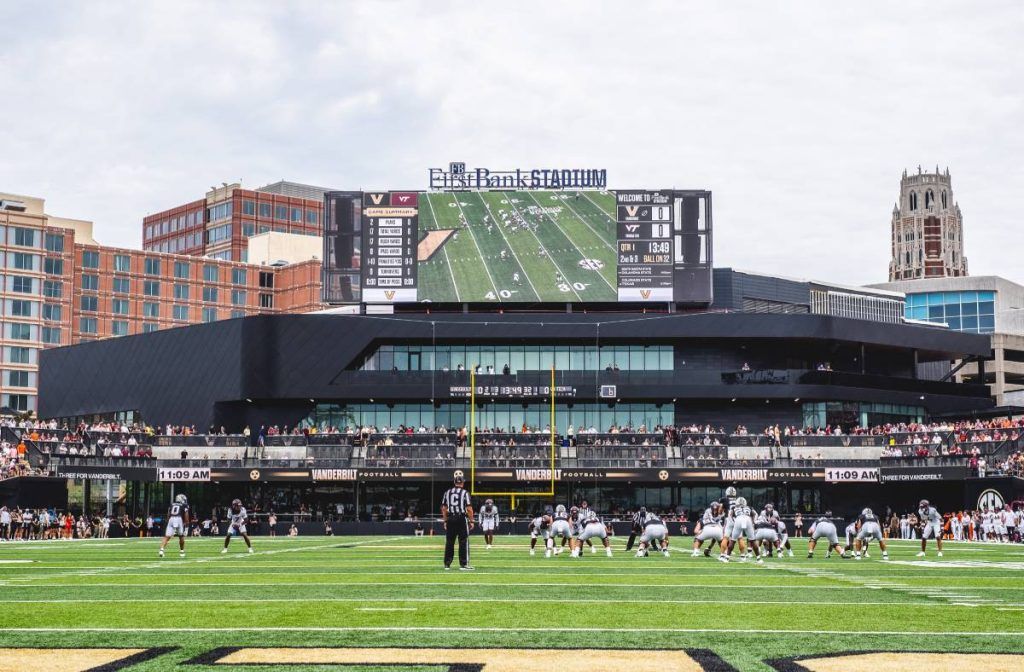
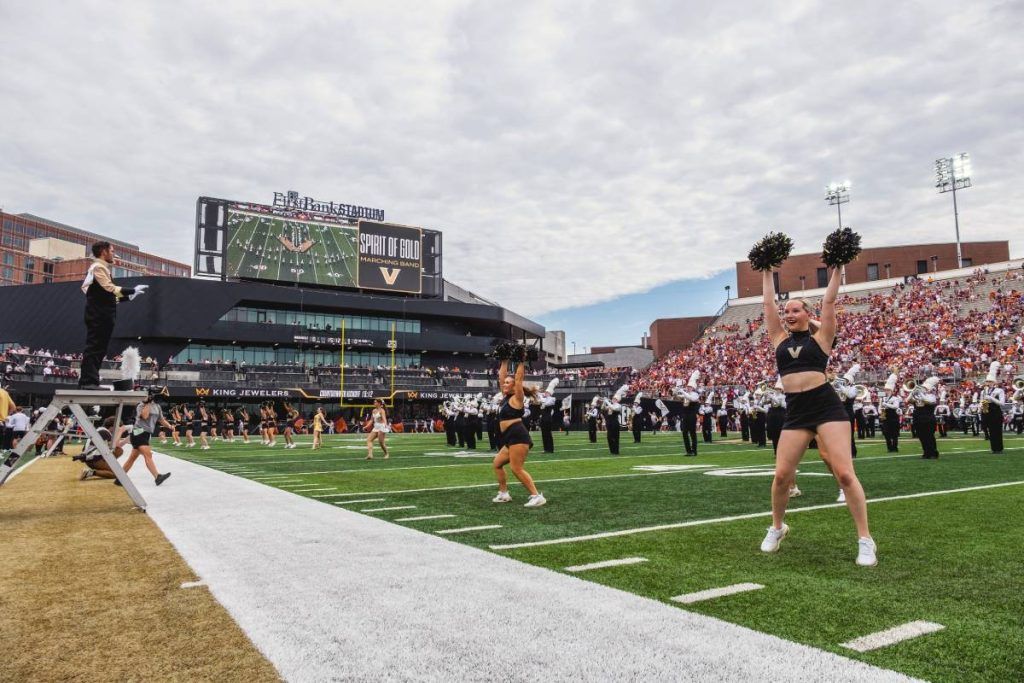
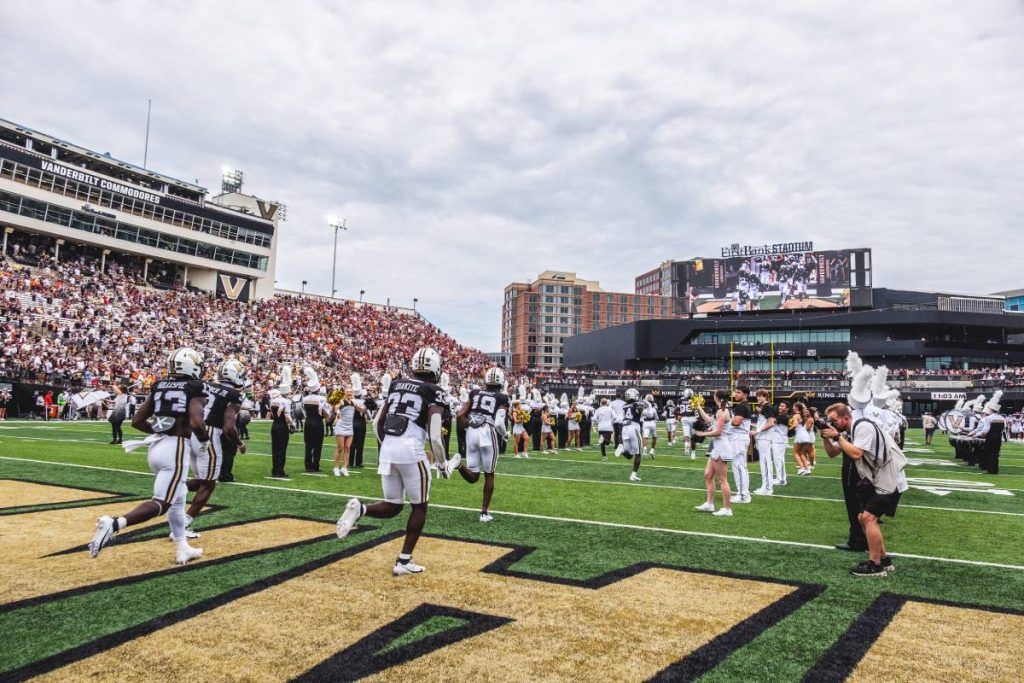
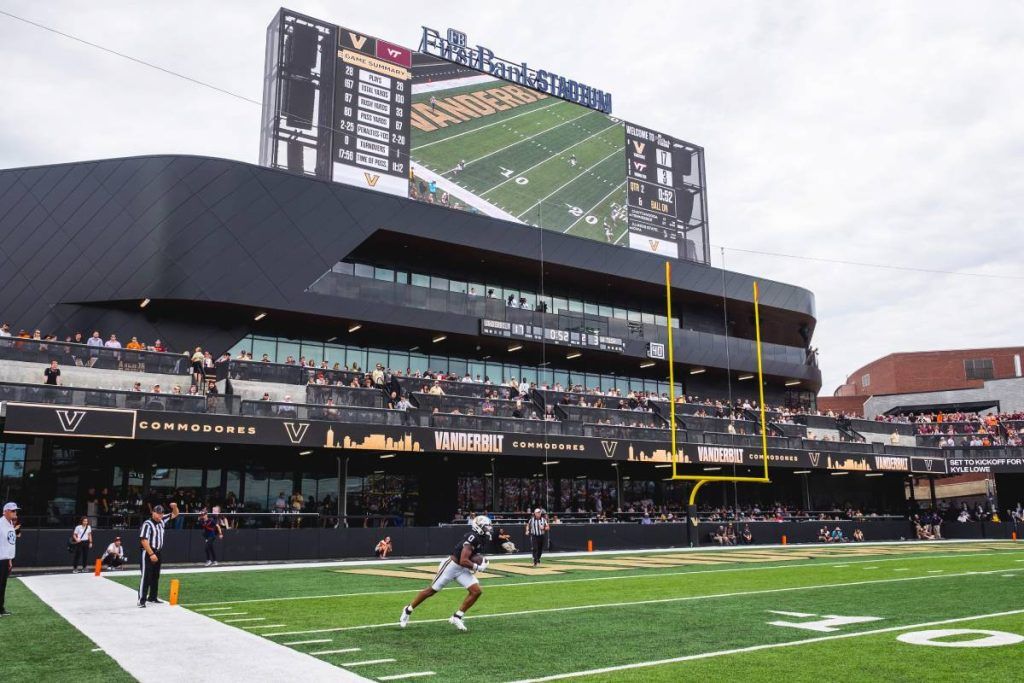
FirstBank Stadium, Vanderbilt University
Vanderbilt University’s FirstBank Stadium, the first stadium in the American South built exclusively for college football, recently modernized its stadium sound system with 24 K2 enclosures in left/right arrays. While primarily the home of the Commodores, the venue has a rich history of hosting massive tours like the Rolling Stones and the Dave Matthews Band. By selecting K2 for its ability to “punch all the way to the other side of the facility” while maintaining premium fidelity, the stadium ensures it remains a top-tier destination for both SEC football and global concert tours.
State Farm Stadium
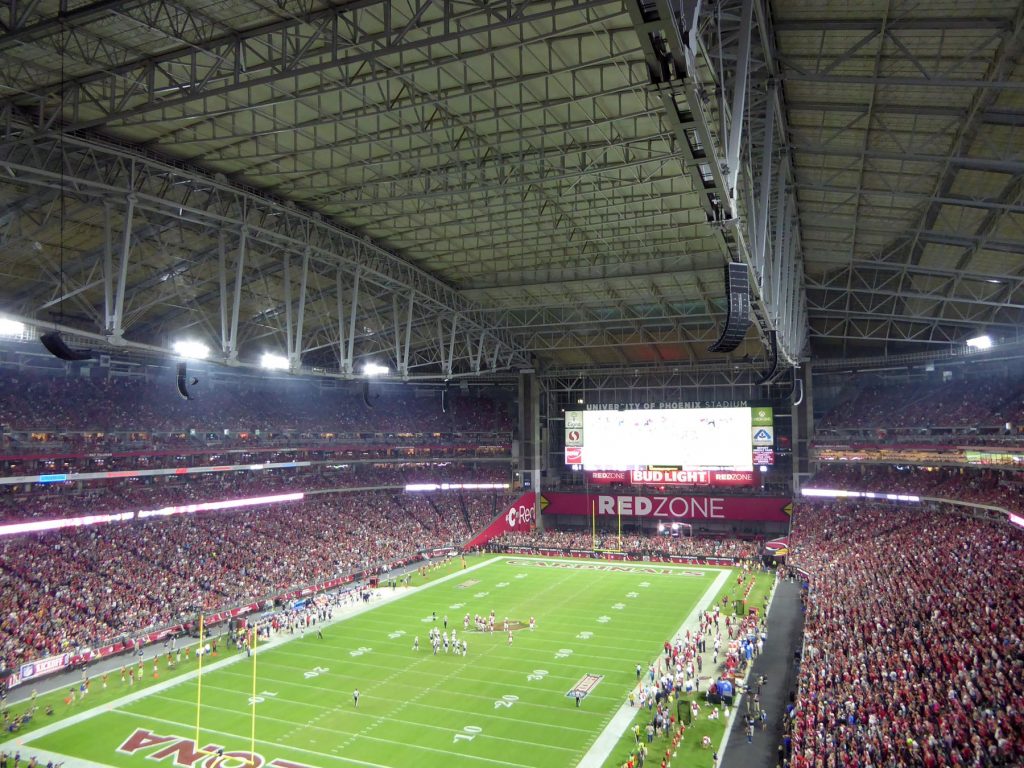
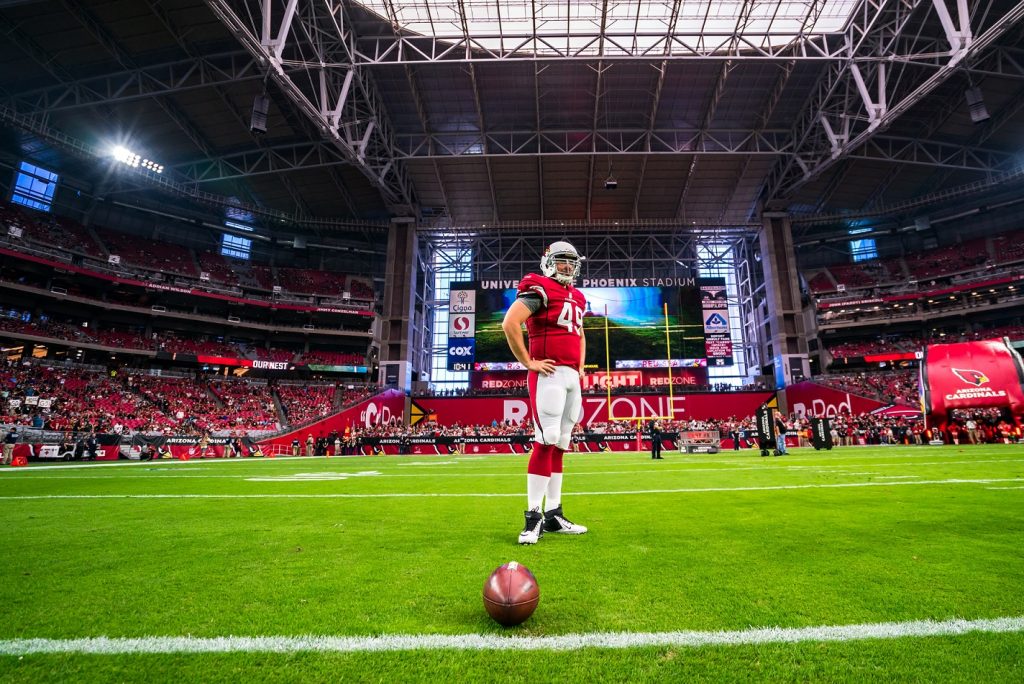
State Farm Stadium, home to the Arizona Cardinals, perfectly illustrates this hybrid touring model in action. As a venue that regularly hosts global mega-tours alongside marquee sporting events like the Super Bowl, the facility requires a highly adaptable acoustic infrastructure.
When a massive end-stage concert loads in, the touring crew hangs its primary arrays to cover the field and lower seating tiers. Instead of spending additional days hauling heavy equipment, calculating extra rigging points, and flying secondary systems to reach the uppermost seats, the production simply ties into the permanent L-Acoustics house rig. This dual-system approach seamlessly merges the touring PA with the stadium’s upper-bowl delays, creating a unified, rider-friendly environment that compresses load-in times, reduces labor costs, and guarantees pristine fidelity from the front row to the nosebleeds.
Engineering for Extreme Environments
Outdoor stadium loudspeakers must endure a relentless cycle of UV exposure, precipitation, and temperature fluctuations. L-Acoustics addresses these variables through specialized weatherization and IP-rated enclosures.
The core of this performance lies in line source technology. By using variable curvature, engineers ensure uniform SPL and high-frequency precision across all tiers of the bowl. Whether a spectator is seated at the pitch or in the furthest reaches of the upper nosebleeds, the audio remains impactful, coherent, and detailed.
Safety Without Sacrifice: The EN 54 Advantage
In many jurisdictions, operators are legally required to provide a voice alarm system that meets the stringent EN 54-24 standard. Historically, this forced a compromise: venues would maintain a secondary, lower-fidelity paging system for safety while reserving the main rig for entertainment.
With L-Acoustics, this redundancy is no longer necessary. Our systems are fully qualified to function as the primary voice alarm and emergency communication link. This unified infrastructure delivers a high Speech Transmission Index (STI), ensuring that emergency instructions are broadcast with the same pristine intelligibility and power as a headlining performance.
Software Integration: Designing for a Stadium Sound System
The precision of a stadium-scale deployment is managed through a sophisticated software ecosystem:
- Soundvision: This 3D modeling tool allows designers to map the venue’s unique geometry. This is critical for predicting exactly how the audio will interact with the architecture, ensuring proper coverage of the seating bowls while keeping the field clear of stray acoustic energy.
- Milan-Certified Networks: Digital networking and amplified controllers allow for a seamless transition between “Game Day” paging and “Concert” performance modes, ensuring the network is robust, synchronized, and easily reconfigured.
Future-Proofing the Venue
Investing in a professional stadium sound system is a calculated business maneuver rather than a mere equipment upgrade. By prioritizing a rider-friendly, weather-resistant, and safety-compliant system, owners ensure their venue remains profitable, safe, and prestigious every day of the year.
Subscribe to Our Newsletter
Get the lastest news and find out about listening events.