Women in Pro Audio: Tania Neacsu Women in Pro Audio: Tania Neacsu...
The people working behind the scenes of live events are the architects of those experiences we never forget. Since its inception on International Women’s Day in 2021, the Women in Pro Audio series has pulled back the curtain on the technical experts and creatives who define the sound of modern performance. This interview series offers an agnostic, unfiltered look into the professional journeys and unique perspectives of the women shaping the industry today.
Meet Tania
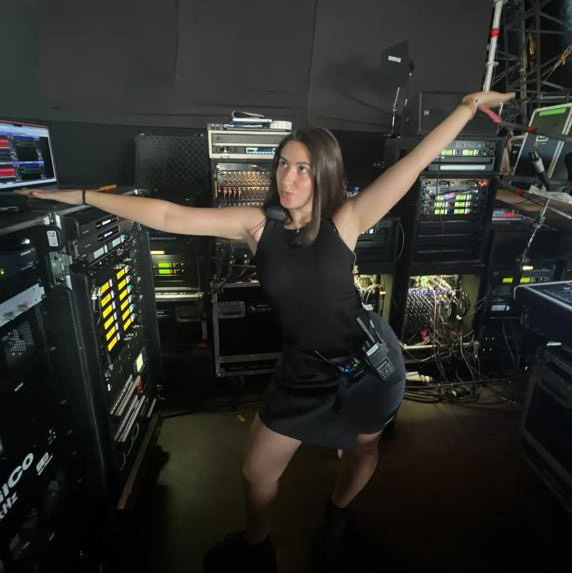
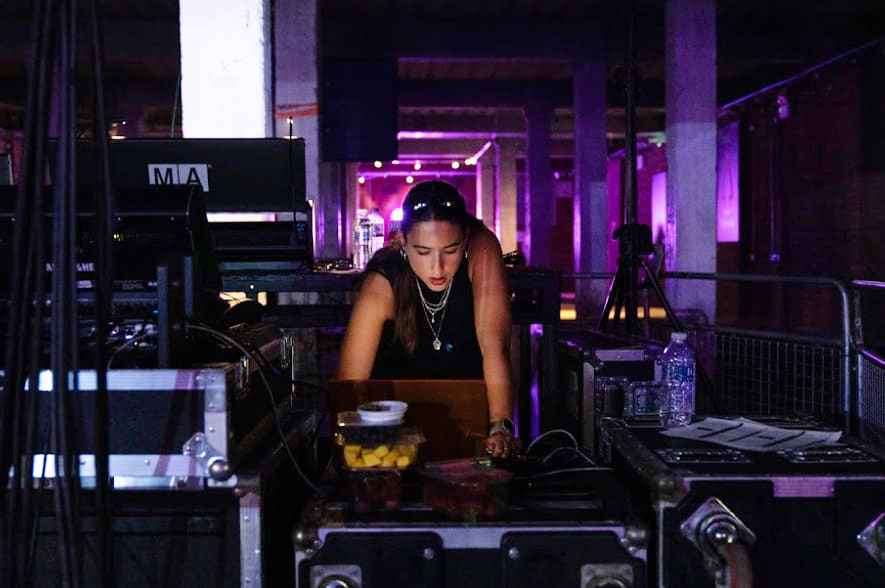
Tania Neacsu is a live sound engineer from London who currently spends the majority of her time on the road. “These days you’ll mostly find me on the road doing monitors for Jalen Ngonda, or in-house at music venues Earth Hackney and Village Underground in London,” she explains.
She is currently interviewing with us from a flight to New Zealand for the first stop of a “down under” tour. Her path to the soundboard was a gradual migration away from the spotlight; having played and written music since a family friend left a guitar at her house as a child, she initially aimed to become a singer-songwriter. However, while attending the BRIT School in Croydon, she learned that she, in fact, didn’t like performing. “I fully discovered how much I disliked playing in front of people! Thus started my slow ascent further and further up stage, looking for somewhere I felt comfortable.” Tania recalls moving from singing to playing bass before finally discovering music technology.
Discovering the Niche
Under the guidance of a teacher named Dec, the BRIT School recording studio became a sanctuary where Tania began exploring the technical side of music. While many students wanted to be recorded, few were interested in the recording process itself, providing Tania with ample opportunity to practice. She spent nearly every day, including lunchtimes and hours after lessons, recording and mixing.
“Honestly, that recording studio and Dec changed my whole school experience—I was now making friends and bonding with people I wouldn’t have otherwise known, whether it was in really vulnerable one-on-one session recording vocal takes, or big group projects where we’d improvise and stay in the studio late into the evening brainstorming and experimenting,” Tania says.
She found that audio engineering perfectly married her love for music with her interests in mathematics and science. By age 17, she and a friend started a project called “ANTAN records” and secured a £5,000 Westfield bursary to purchase equipment. Around this time, she also met Ash Roye, a music event organiser who encouraged her to engineer at his nights, providing the space to figure things out on gigs where others might have been reluctant.
Navigating Challenges for Women in Pro Audio
Tania admits that she did not register much gender-based adversity until after she left the supportive environment of her school. Once in the professional world, however, the shift was palpable. “I started feeling resistance on gigs before musicians even started soundcheck, and watched people refuse to believe that I was the engineer,” she notes. In response, Tania initially took pleasure in defying expectations by exaggerating her gender expression, wearing heels, dresses, and lipstick to work. “Not very practical, and a rare occasion nowadays,” she adds.
This resilience was bolstered during her time studying on the Music and Sound Recording (Tonmeister) course at Surrey University and working at The Boileroom in Guildford. While the university provided the theoretical foundation, The Boileroom—a venue she describes as “loud and proud about diversity, and heavy on the female power”—offered the practical application.
“They introduced me to communities such as WiLM (Women in Live Music) and NOWIE, and had such confidence in me that I felt strong heading into even tricky situations,” Tania says. She recalls a manager, Joe, who enjoyed watching skeptical bands with bad attitudes leave the venue, asking for her contact details. “This is all to say that in a way… the adversity people threw at me fuelled me. What should have been my biggest struggle ended up being one of my motivations.” She acknowledges that this mindset might not have been possible without encouragement and support from others in the industry.
Despite that strong professional foundation, Tania notes that networking remains a unique and frustrating challenge. “Socializing in live music usually happens in the evening, after soundcheck or a gig over a beer. But unfortunately, when you throw a girl into the mix, some start confusing it for romance,” she observes.
Tania spent significant time trying to figure out how to “desexualize” herself at work without compromising her gender expression. She notes that while the industry is often a “boy’s club,” the real issue is that “some of the boys don’t want you at the party and some of them want you there for the wrong reasons.” She explicitly refuses to use “I have a boyfriend” as a form of protection, stating, “I should be respected alone and not as another man’s property.”
Breaking the Vicious Feedback Loop
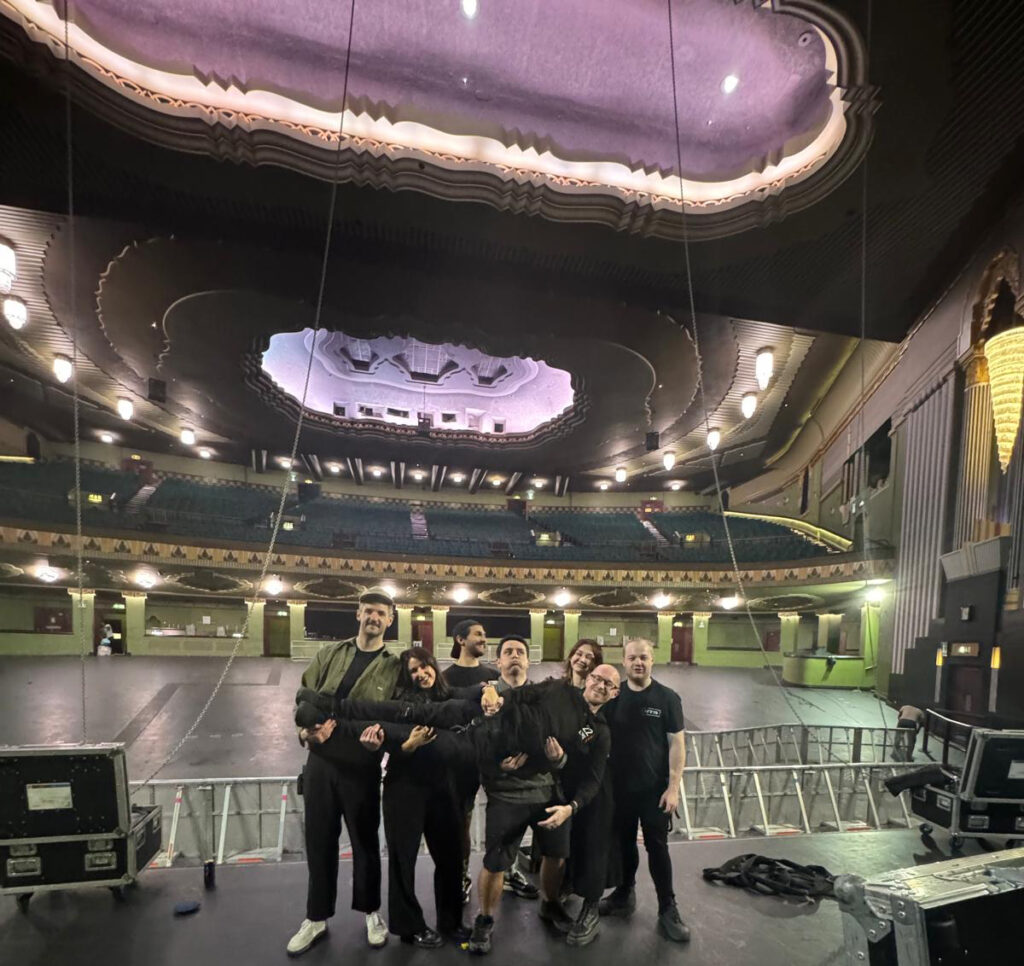
Tania observes that the industry often feels uninviting to women due to a “vicious feedback loop” in which seeing only men in technical roles makes it difficult for others to imagine themselves there. “There are still times I turn up to a job, and I am the only woman on site,” she says. She identifies three main factors—technicality, a nomadic lifestyle, and physical demands—as elements traditionally viewed as “unfeminine”.
The physical nature of the job is something Tania approaches with a practical strategy. “It’s very physical – packing and unpacking trucks, lifting speakers or tipping desks, and as much as I hate to admit it, the average guy is definitely stronger than me,” she notes. She emphasizes being conscious of where she is most useful on a load-out, noting that delegating or performing “idiot checks” is sometimes more efficient than risking injury by pushing heavy boxes alone. Conversely, she notes that “chivalry” can sometimes be its own hurdle when crews refuse to let her help. “But the truth is that my job there is to help get a gig running, and if I say I can do it, please trust that I can,” she asserts.
The Pendulum of Professional Identity
She speaks candidly about the “paradox” of behavior expected from women in pro audio. “Another thing that I think is especially tricky for women in the industry is how hard the pendulum swings on our behavior. There are many things that if I did the same way as guys, would not be received equally – for example, when I am assertive, tell other people what to do, or disagree with another engineer,” she explains. This pressure often forces a specific persona: “The paradox of that is that I also feel I have to be especially assertive, stoic, and blunt to offset preconceptions that come with me being female.”
Tania finds this increasingly conflicting as she gets older, noting that while she was genuinely stoic in her youth, it was often a manifestation of repression. “These days I’m much softer, more open, and take things less seriously in my personal life, but I felt people’s trust in my technical abilities waver when I conveyed this in the workplace,” she notes. She is still experimenting with how much of her personal self is appropriate to bring to a workplace where the lines between personal and professional are often blurred.
However, Tania has found ways to turn these stereotypes to her advantage, particularly in her role as a monitor engineer. “I hope for a world where these characteristics are gender neutral, but until then, women are still stereotyped as more caring and nurturing,” she says. She suggests this might explain the higher representation of female Tour Managers, noting that “feeling cared for doesn’t go amiss when you’re getting pushed out on stage in a foreign country.” For Tania, this translates into a superior working relationship with her artists: “I want my artists to feel comfortable asking me anything, discussing even the smallest discomforts about their mixes.”
To bridge the gap in representation, Tania points to the power of community and higher education. She estimates that 95% of her jobs come through ex-BRIT or Tonmeister grads. Though her own university year famously had more students named “Tom” than girls, the landscape is shifting. There is now a network of over 60 female alumni who meet annually and share job opportunities, proving that “other avenues are available” for women looking to break into the field.
Technical Foundations and Professional Growth
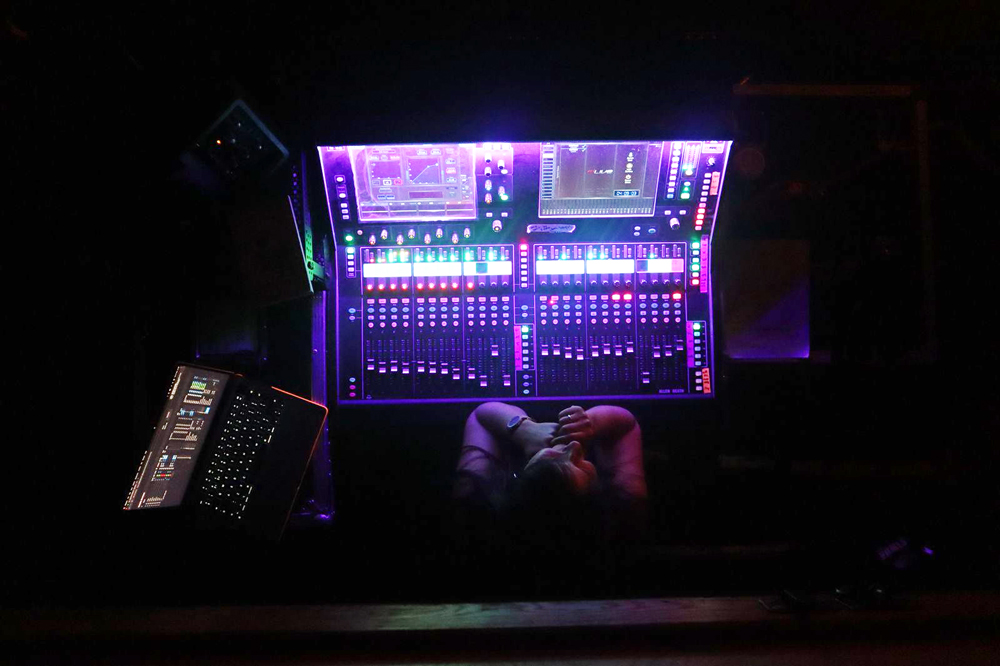
Strong theoretical knowledge is often underestimated, yet essential. Tania asserts, “Understanding not only how, but why you’re doing something a certain way. How that microphone actually works. What grounding is. How sound travels and general acoustics. Signal paths. If you have the foundations, you can apply them to anything.”
To keep her skills sharp, she utilizes various resources. “We’ve got an L-ISA system at Earth Hackney, so I’ve watched a lot of the L-Acoustics webinar recordings on YouTube to explore that,” she says. She also utilizes the Shure Academy and attends workshops. She is even working on retaking her Dante certifications, though she admits it is “more painful than doing taxes.”
Her practical advice for others includes the value of shadowing: “I’d go to a gig, wait until the end, and then go chat with the engineer. I think this is so much better than asking people for jobs.” She also emphasizes interpersonal etiquette, with one of her top tips being to “buy coffees for others,” as it’s “impossible not to get on with someone who’s gotten you a coffee.” Logistically, Tania is religious about her health. “Please don’t sacrifice your sleep… I’m religious about sleep—to the point that it’s scheduled into my calendar.” She treats her Google Calendar as a reflection of a balanced life, scheduling self-care and socializing because “Life is a rainbow, and your Google Calendar should reflect that! All work no play makes Jack mental,” she playfully references the Stanley Kubrick fan favorite, The Shining.
Professional Integrity and the Future
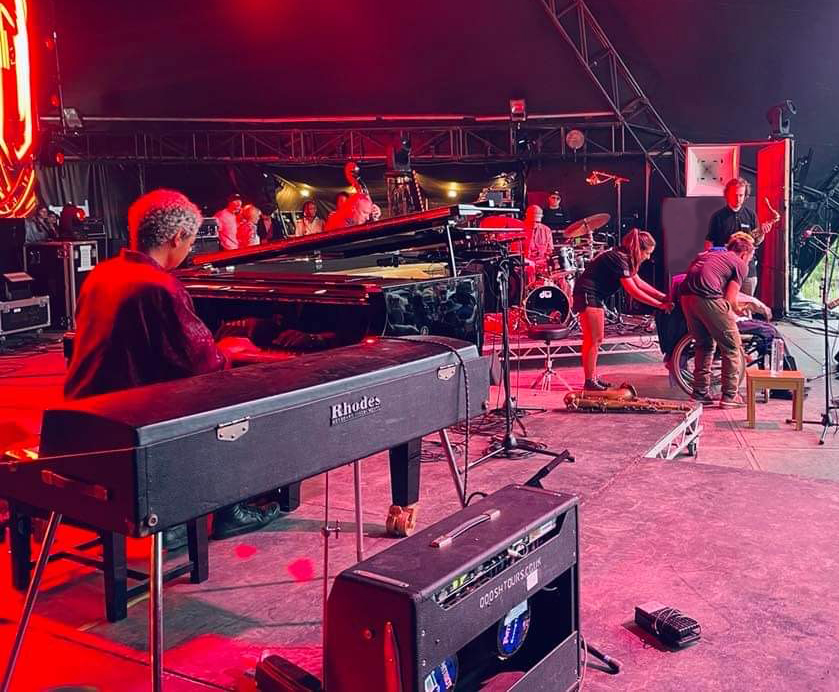
Tania remains deeply motivated, viewing challenges as creative puzzles. One of the best pieces of advice she received was from Mike Njuguna: “It’s important to know when to say no to a gig,” particularly if one cannot prepare properly. Her career highlights include helping Pharoah Sanders on stage at his final show in 2022 and working on Loyle Carner’s “Hugo” tour, an album she connected with deeply. She also takes great pride in her recent work with Jalen Ngonda at the Eventim Apollo.
Looking forward, Tania hopes for a more transparent industry that does away with “information withholding.” She envisions a future with “more diversity—in all forms! Not just more white women,” alongside a focus on welfare and sustainable touring. Despite the hurdles, she remains steadfast. “Honestly, I’ve never felt like giving up. I love what I do and can’t imagine another career for myself.”
To keep up with Tania, you can follow her on Instagram at @tanianeacsu or contact her for professional inquiries at tania-n@hotmail.co.uk.
To read last month’s Women in Pro Audio interview, click here.
Would you or someone you know like to be featured in our Women in Pro Audio series?
Subscribe to Our Newsletter
Get the lastest news and find out about listening events.