Product Spotlight: Source Intelligence – Live Sound Finds Its Voice Product Spotlight: Source Intelligence – Live Sound Finds Its Voice...
L-Acoustics has spent decades shaping the future of sound, from the line array technology that redefined large scale touring to the immersive systems now reshaping how audiences experience live performance. Source Intelligence, introduced at L-Acoustics Keynote 2026 at the Hollywood Bowl, extends that legacy into a problem engineers have wrestled with for as long as microphones and loudspeakers have shared a stage: delivering a clean vocal when the crowd is screaming, the band is loud, and the PA itself bleeds back into the mic.
What Is Source Intelligence, and How Does It Work
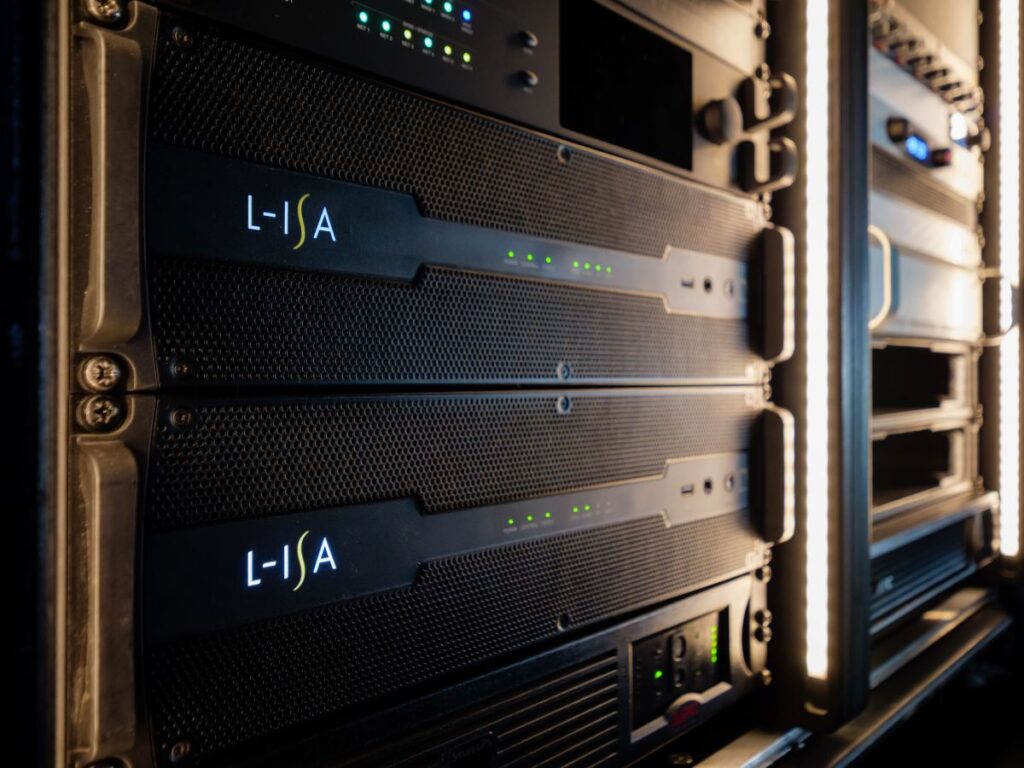
Source Intelligence is a real-time vocal enhancement technology that isolates the human voice from everything around it. It runs on the L-ISA Processor II Core and uses a proprietary machine learning-based source separation algorithm to continuously identify a vocal signal and strip away crowd noise, instrument bleed, PA spill, and room reflections. The result reaches the console as a clean, isolated vocal, without the engineer needing to fight the room to get there.
That distinction matters. Traditional tools for controlling an unruly vocal channel, aggressive EQ, gates, reactive compression, all work by responding to a signal that already contains the problem. Source Intelligence removes the unwanted sound before it reaches the fader, so engineers spend less time on corrective processing and more time mixing creatively.
It integrates directly into an existing signal chain rather than replacing it:
- Four independent processing instances per L-ISA Processor II each with separate controls for high and low frequency refinement
- Input and output over MADI, Milan-AVB, or AES
- End to end latency under 8.5 milliseconds, validated as imperceptible at front of house by touring engineers
- Up to 40 dB of non-voice signal reduction, including the ringing that typically escalates into feedback
- No thresholds, ratios, gates, or complex menus, just straightforward channel routing
The system requires at least three L-Acoustics amplified controllers on the network to activate and runs on the same L-ISA Processor II Core platform that also powers L-ISA Hyperreal, L-Acoustics DJ, Ambiance, and HYRISS, though a given processor runs either L-ISA or Source Intelligence at one time, not both simultaneously.
On Tour and Beyond: From Arenas to Broadway and Trade Shows
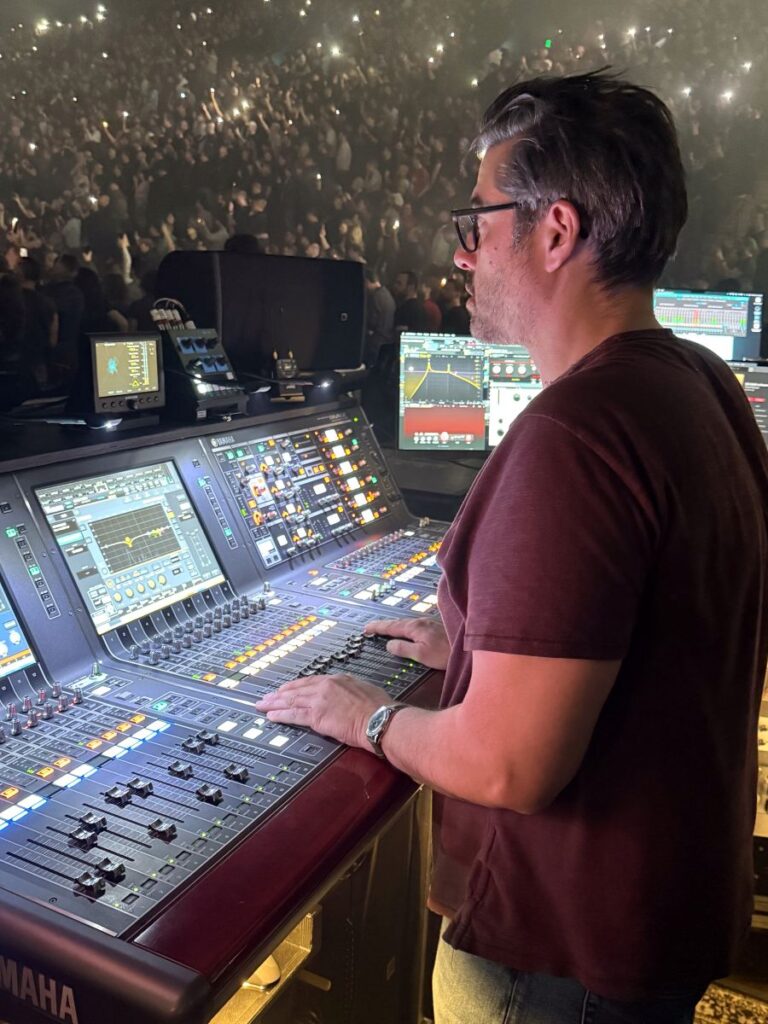
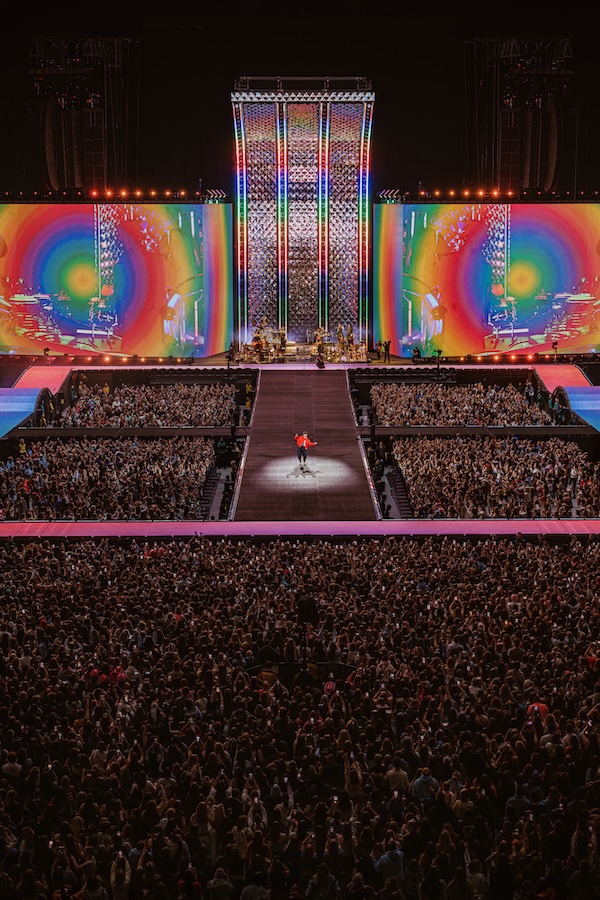
The clearest proof of what Source Intelligence solves comes from Bruno Mars’ The Romantic Tour, where front-of-house engineer Sean “Sully” Sullivan uses it nightly to manage one of the harder vocal challenges in arena touring. Mars moves constantly relative to his microphone, sometimes six to eight inches away, sometimes as far as two feet, all while performing in front of loud side fills and a full band.
“Source Intelligence is really helping deal with keeping it clean and allowing me to do his compression as I like, as well as effects and dynamics,” Sullivan says. “If the snare drum’s loud and bleeding into the vocal, it’s kind of hard to lay into it, but Source Intelligence takes care of that. In fact, you can’t even tell there’s any noise up there at all. Source Intelligence is so good at cleaning the junk out and leaving the vocal untouched. It’s all Bruno. And that’s what everyone came to hear.”
Source Intelligence has also proven itself on Benson Boone’s tour. Front of house engineer Joey Diehl has called the results studio quality, noting that engineers who adopt it early gain a real advantage over those who wait. On Broadway, sound designer Cody Spencer used it on the production of “Dog Day Afternoon,” where it gave him the confidence to leave actors’ mics open in moments he previously would have handled far more cautiously.
L-Acoustics also brought Source Intelligence to InfoComm 2026 in Las Vegas, running live demonstrations in a dedicated audio demo room alongside the CS1 subwoofer and L-Acoustics DJ, giving system integrators and consultants hands on time with the technology outside a touring context.

Photo: Matthew Murphy
A New Standard for Houses of Worship
Vocal clarity carries particular weight in houses of worship, where a message depends entirely on intelligibility and where mic technique varies widely across volunteer and staff speakers. North Point Community Church became the first house of worship deployment of Source Intelligence, pairing it with L-ISA to strengthen both connection and message clarity for its congregation.
“It allows us to get the gain we want out of the mic without worrying about either feedback or other stage noise that can impact the mix when you have the vocal sitting where you want it,” says Luke Roetman, Applications Director at North Point Ministries. That combination, higher usable gain and freedom from feedback risk, applies just as directly to musicals, corporate events, and special events as it does to touring and worship settings.

Why It Matters
Source Intelligence changes what is possible for everyone standing between a performer and an audience:
- Audiences hear intimate vocal performances with full clarity and emotional impact, free of crowd noise, stage noise, and PA spill
- Performers and presenters move freely, even directly in front of the PA, without risking feedback
- Front of house engineers spend their attention on creative mixing instead of corrective damage control
- Production designers gain freedom to place performers anywhere on stage, unconstrained by traditional feedback and bleed limitations
Across blind listening tests against other noise suppression tools on the market, Source Intelligence has consistently rated as the best sounding option, delivering greater noise reduction while preserving full vocal quality. For an industry built on connecting audiences to the best shared sound experiences, less noise and more voice is exactly the kind of innovation the next generation of live sound depends on.
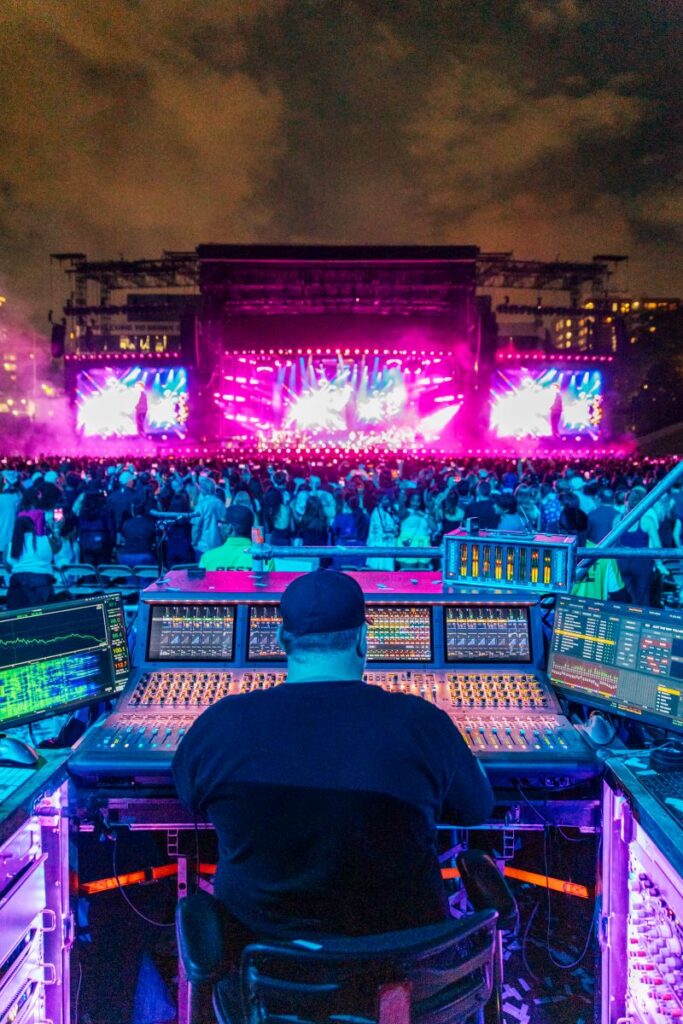
Photo: Diwang Valdez
Frequently Asked Questions
Does Source Intelligence introduce latency?
Yes, as all live audio processing does. Source Intelligence adds under 8.5 milliseconds end to end over MADI, a level extensively tested and confirmed as within tolerable limits by leading front of house engineers, given the quality gain it delivers.
How does it prevent feedback?
It reduces non-voice signals, including ringing that often escalates into feedback, by up to 40 dB, continuously identifying and isolating the vocal through a proprietary machine learning algorithm.
What hardware does it require, and can it run alongside L-ISA?
It needs at least three L-Acoustics Amplified Controllers on the network, such as LA4X, LA12X, LA2Xi, or LA7.16i, validated through the L-ISA Controller software.
To learn more visit the Source Intelligence product page.
Subscribe to Our Newsletter
Get the lastest news and find out about listening events.