Yim Jae-Beom’s Farewell Tour Brings the Audience Close with L-ISA Immersive Sound at Seoul’s KSPO Dome Yim Jae-Beom’s Farewell Tour Brings the Audience Close with L-ISA Immersive Soun...
Klausys and Hyundae Sound deploy L-ISA Immersive Hyperreal Sound with K Series for landmark production at KSPO Dome in Seoul
SEOUL, South Korea – July 2026 – Few voices in South Korean music carry the weight of Yim Jae-Beom. Widely regarded as one of the country’s greatest vocalists, he debuted in 1986 fronting the hard rock band Sinawe, whose 400,000-selling debut helped push Korean heavy metal into the mainstream. The solo career that followed turned his raw, emotionally charged delivery into a national signature. In 2011, a generation that had grown up on his ballads rediscovered that power when he joined the televised competition, I Am a Singer, placing first on two occasions. Throughout the course of his career, Yim has also composed for film and drama.
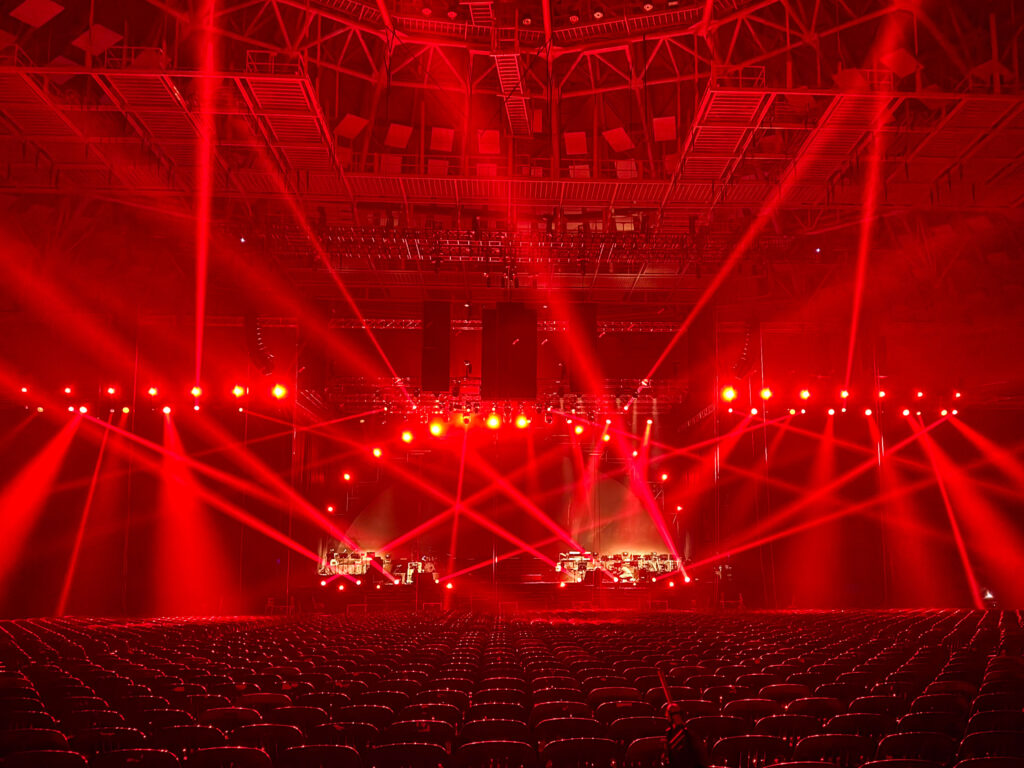
Earlier this year, Yim performed a 40th anniversary farewell concert at Seoul’s KSPO Dome. The programme was designed to reflect the full breadth of his career, from his origins in metal and rock, to his later work across ballads, R&B, soul and orchestral arrangements. Billed as part of the tour that would close his performing career, the show carried an unusual emotional charge: an artist celebrated for the intimacy and force of a single voice, saying goodbye to a stadium-sized audience. That tension, between the scale of the room and the closeness the music depended on, shaped every decision that followed. With up to 15,000 people in the venue and a production brief centered on natural, detailed sound, L-Acoustics Certified Provider Klausys and Hyundae Sound turned to L-ISA immersive sound technology.
L-ISA Closes the Distance in an Arena-sized Room
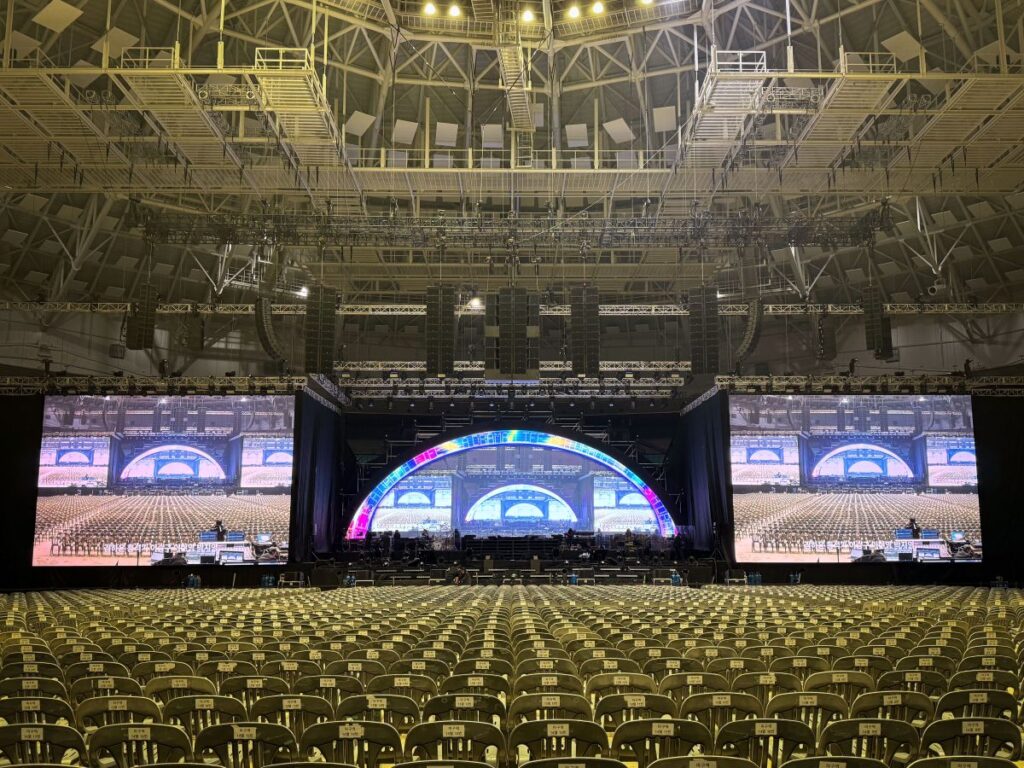
Composer and music producer Gi-Deok Park was responsible for the production’s artistic direction and had a clear idea of what he wanted to achieve. The goal was to make the audience feel as close to Yim as possible, regardless of where they were sitting. This was a complex task at KSPO Dome. Built as the gymnastics arena for the 1988 Seoul Olympics and since reinvented as one of Korea’s busiest large-scale concert venues, the room seats close to 15,000 across a wide floor and three steep tiers — the kind of volume that tends to push an audience away from the stage rather than draw it in.
“The production was never intended to sound exaggerated or overwhelming,” says FOH engineer Doosoo Park of Hyundae Sound. “Gi-Deok wanted the audience to feel close to the artist and the band — close enough to hear the smallest details, even Jae-Beom’s breathing. We both agreed very early that L-ISA was the right technology for achieving that level of realism and connection.”
Hyundae Sound and Klausys have a long working relationship, established across numerous K2-based productions. The L-Acoustics APAC Application team also participated from the outset, with senior application advisor Alvin Koh embedded throughout design, preparation and the shows themselves.
For Klausys Head of Application Cheol Jang, the decision to go with L-ISA Immersive was based on what the music required. “With L-ISA, we were able to reproduce the position, separation and resolution of each audio source much more precisely,” he explains. “The result was a far more immersive and detailed listening experience throughout the arena.”
Soundvision Accurately Predicts L-ISA Zones
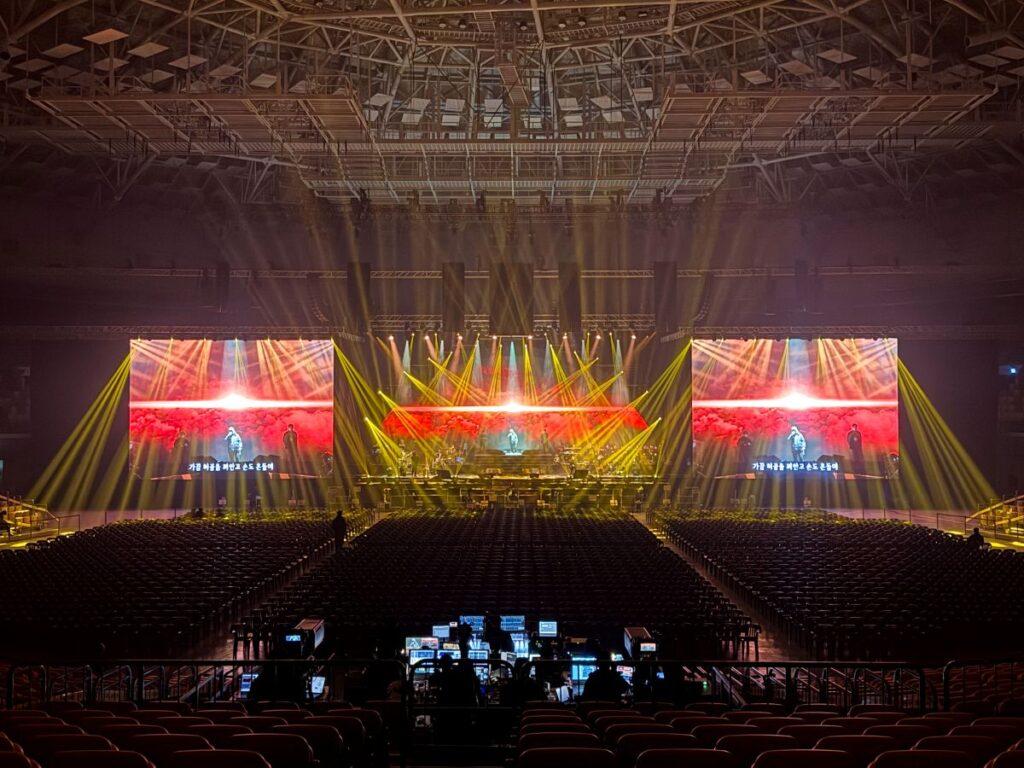
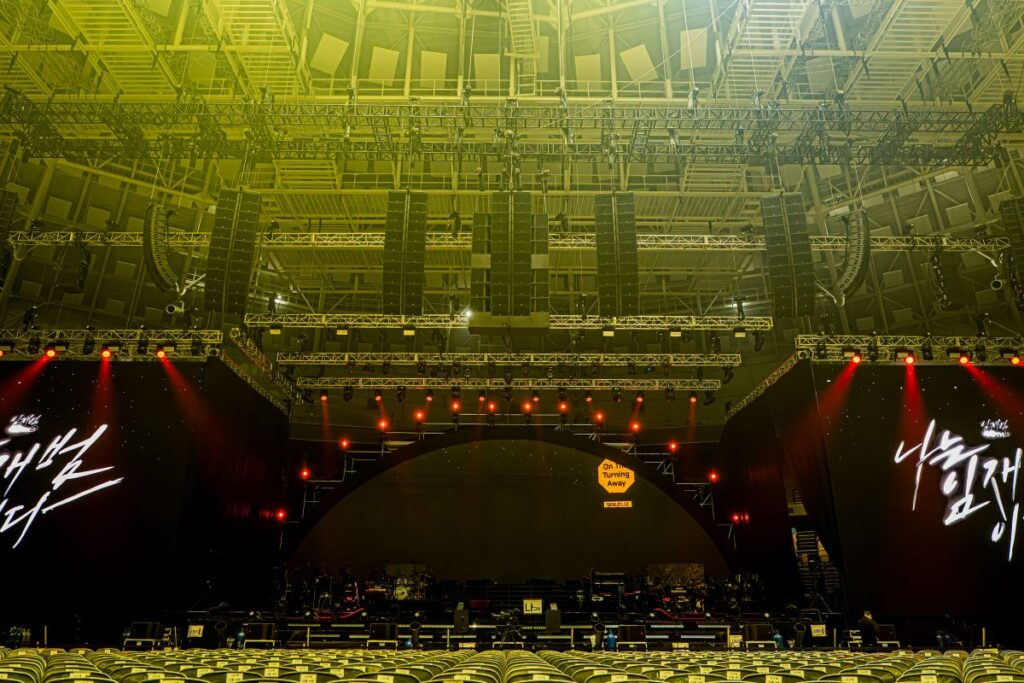
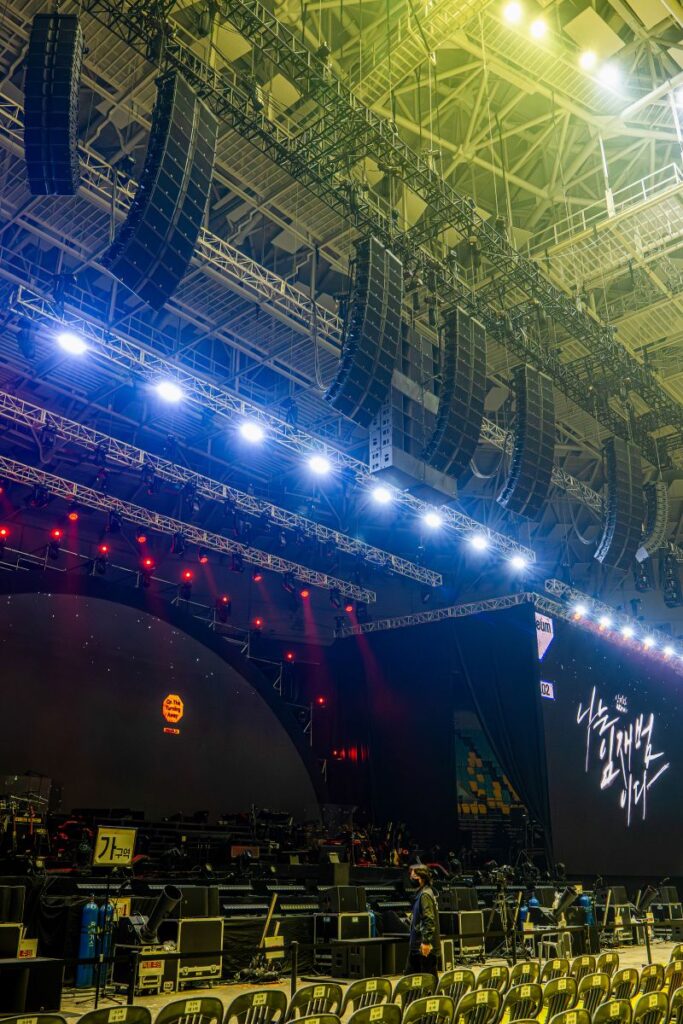
Klausys built the design around an L-ISA Focus configuration, with the main Scene arrays based on K2 for tonal consistency across the sound field. Getting that spatial image to hold up evenly across the floor and all three tiers was where the modelling work began. “We spent a considerable amount of time optimising the rejection pattern through repeated simulation and on-site verification before finalising the setup,” says Jang. “That process became one of the most memorable technical parts of the project for me.”
L-Acoustics Soundvision was central to this work. In addition to mapping coverage and SPL distribution, its most useful feature in this instance was its ability to predict the L-ISA zones. “That gave us a much clearer understanding of how the spatial image would translate across the audience area in advance,” he adds. Soundvision also helped the team to verify structural data and safety conditions, and the visual system layouts made it easier to share the design concept and deployment with the wider production team.
Powerful L-ISA Sound with K2
The main L-ISA Scene system comprised five frontal clusters, built from a total of 60 K2. Extension and out-fill coverage was handled by 48 Kara II, while seven A15 Focus were deployed as spatial fill at the front of the stage. For low-frequency reinforcement, two flown KS28 clusters of eight enclosures per cluster were complemented by four ground-stacked KS28. A cardioid subwoofer arrangement reduced comb filtering and delivered consistent low-frequency coverage across the venue.
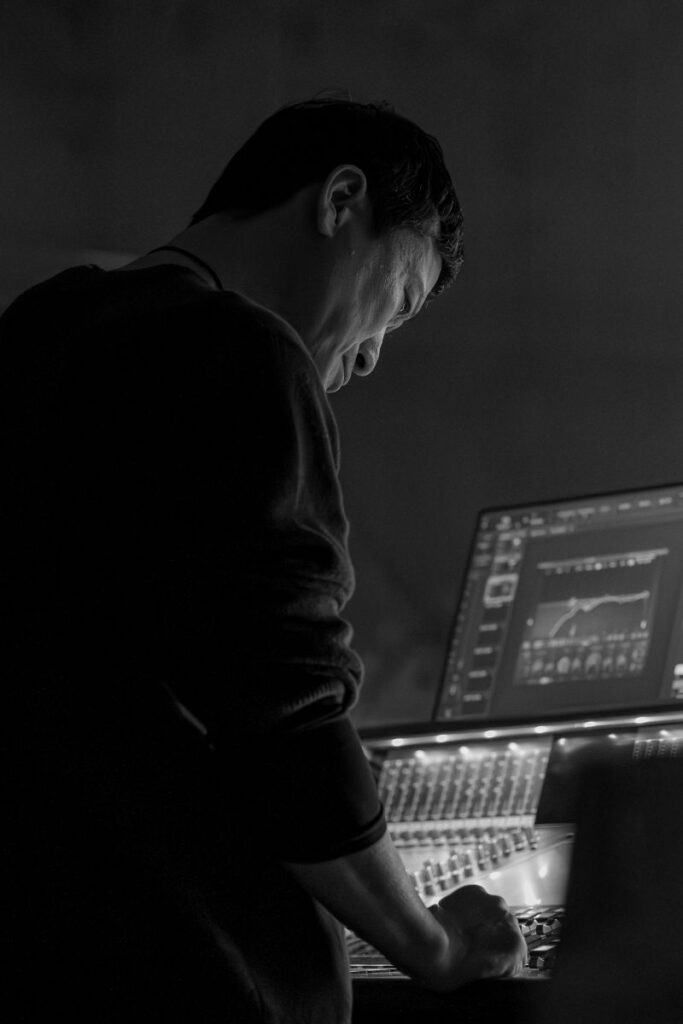
The system drive ran across 18 LA-RAK II AVB touring racks, with an L-ISA Processor I at the heart of the audio network. A P1 processor and a single LC16D audio converter completed the electronics package. The LC16D bridged the L-ISA Processor’s MADI outputs into a redundant Milan-AVB network, allowing legacy hardware and modern network infrastructure to operate seamlessly together. It also enabled precise clock synchronisation between the mixing console and the Milan-AVB media clock. “Because the LC16D can be monitored directly through a web interface, we could check device status and respond to technical issues immediately,” says Jang.
The integration between audio and visual was a deliberate part of the production design. Show producer James Koo built the visual content around the L-ISA environment, linking dynamic objects in the video content with audio object movement in the L-ISA Controller.
A Major Immersive Concert
This was the first major concert in Korea to adopt L-ISA technology since the Los Angeles Philharmonic played the same venue in 2019. Wary of the unknowns, the team built generous time into the schedule, then found the system came together faster than expected — leaving the focus where it belonged, on a fitting send-off for one of South Korea’s most loved artists.
“What impressed us most was the natural resonance and emotional impact of the live sound,” says Gi-Deok Park. “The immersion and clarity of both the vocal and band mix remained exceptional throughout the venue.”
Post-show audience response reinforced that. “What stood out was how clearly many people recognised the difference between a conventional stereo system and the immersive L-ISA environment,” says Koo. “Positive feedback about the level of immersion appeared consistently across the entire venue, from the floor seats all the way to the upper tiers. Audiences also responded to the physical presence of the speaker system itself, with the flown clusters becoming part of the visual experience rather than only a technical element.”
For system engineer Sunchang Shon, the project opened up a broader perspective on what L-ISA represents as a production tool. “L-ISA expands the range of what can be expressed spatially and musically in a live environment,” he says. “Exploring that new territory was one of the most exciting parts of the entire production.”
Press release assets are found by clicking here.
Subscribe to Our Newsletter
Get the lastest news and find out about listening events.