Performing Arts Centers
Philharmonie de Paris Studio
Context
The Team
Bridging the Acoustic Divide: Elevating Rehearsals at the Philharmonie de Paris Studio
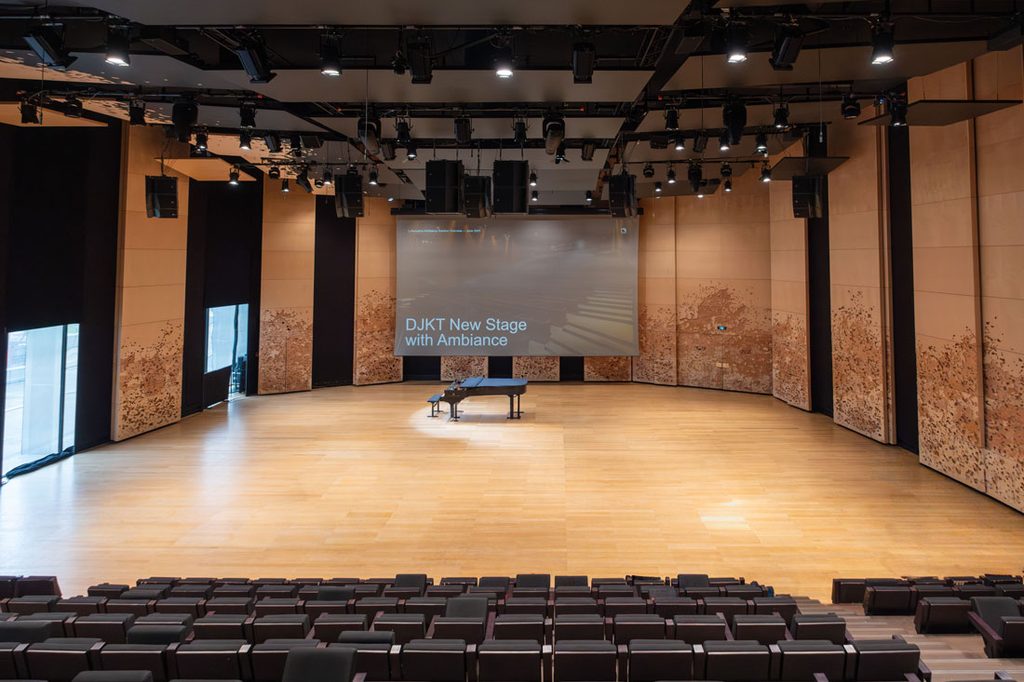
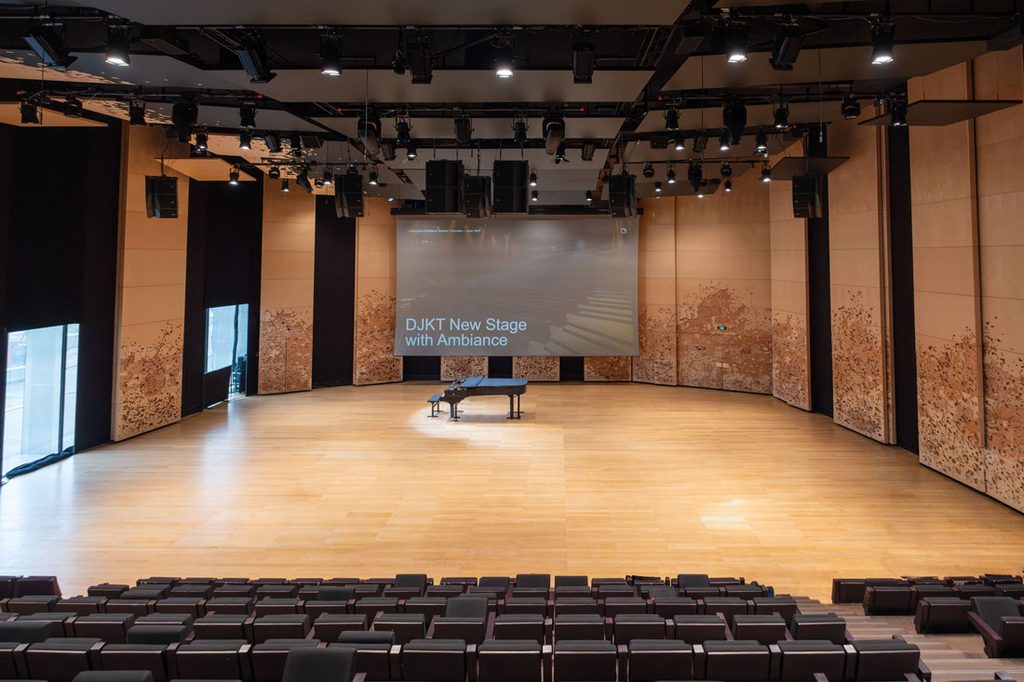
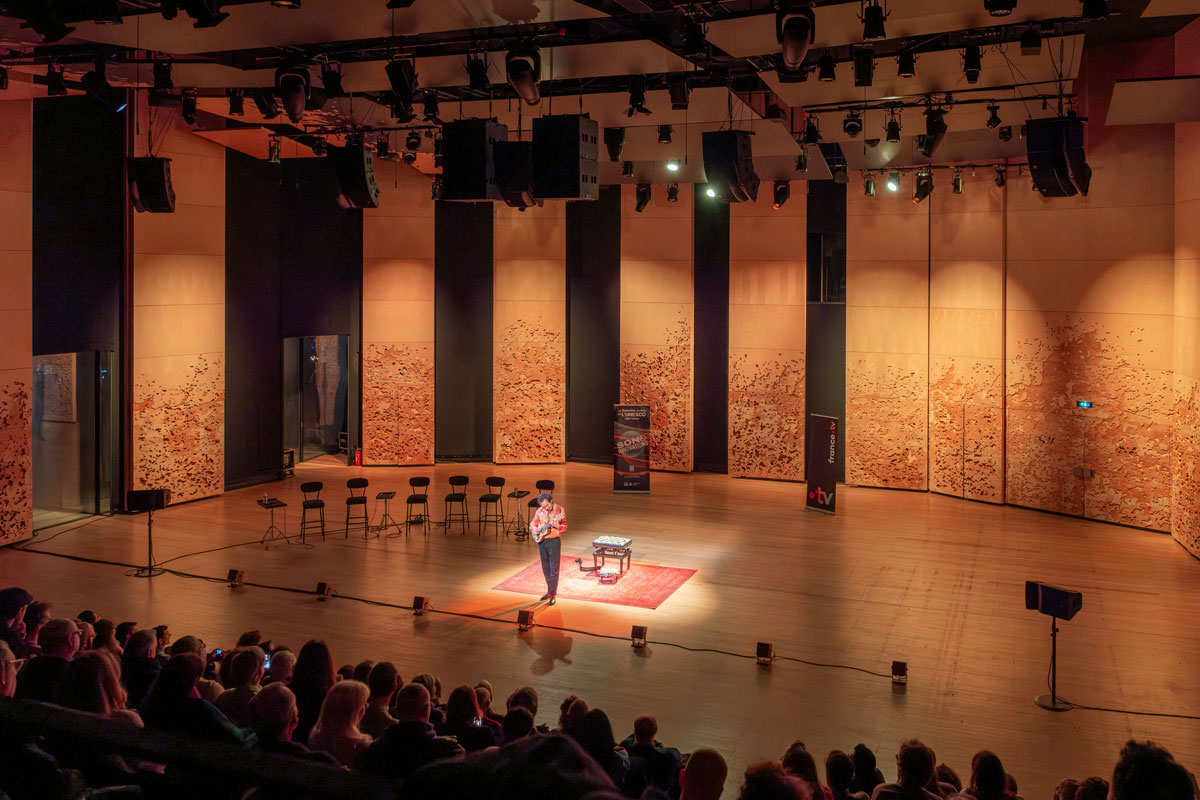
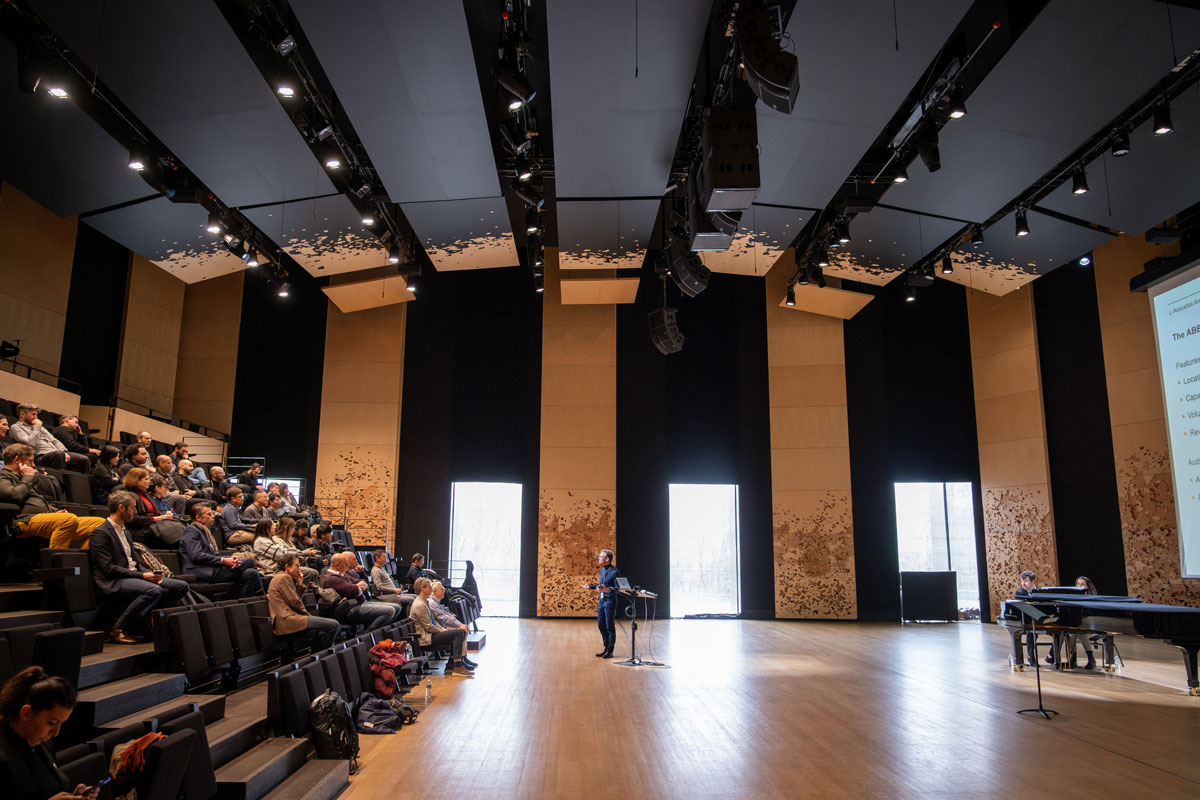
Le Studio at the Philharmonie de Paris is a versatile rehearsal and performance space. Serving prestigious musical ensembles—including the Orchestre de Paris, Ensemble Intercontemporain, Les Arts Florissants, Orchestre de Chambre de Paris, and Orchestre National d’Île-de-France—the venue also welcomes the public for open rehearsals, corporate events, lectures, and live concerts of all kinds. With a 5,000-cubic-meter volume, the room features passive acoustics driven by moving wall panels, yielding an initial reverberation time of 1.1 to 1.3 seconds.
The Challenge
A stark discontinuity separated the rehearsal space from the primary concert venue. The Grande Salle boasts a reverberation time of 2.6 to 3.1 seconds, while Le Studio maxes out at a much drier 1.3 seconds, even with its acoustic side panels fully deployed. This acoustic gap forced ensembles to expend significant effort adapting their performances when transitioning from rehearsal to the main stage. Furthermore, Le Studio’s smaller volume produced brighter reflected sound in the 500 Hz to 4 kHz range, which could lead to listener fatigue. Upgrading the venue meant overcoming steep hurdles: the space required flexible acoustics to support different musical genres and high SPL for amplified events, all while preserving the natural imaging of acoustic sources. Crucially, any solution had to avoid costly, irreversible structural modifications to the room itself.
The Solution
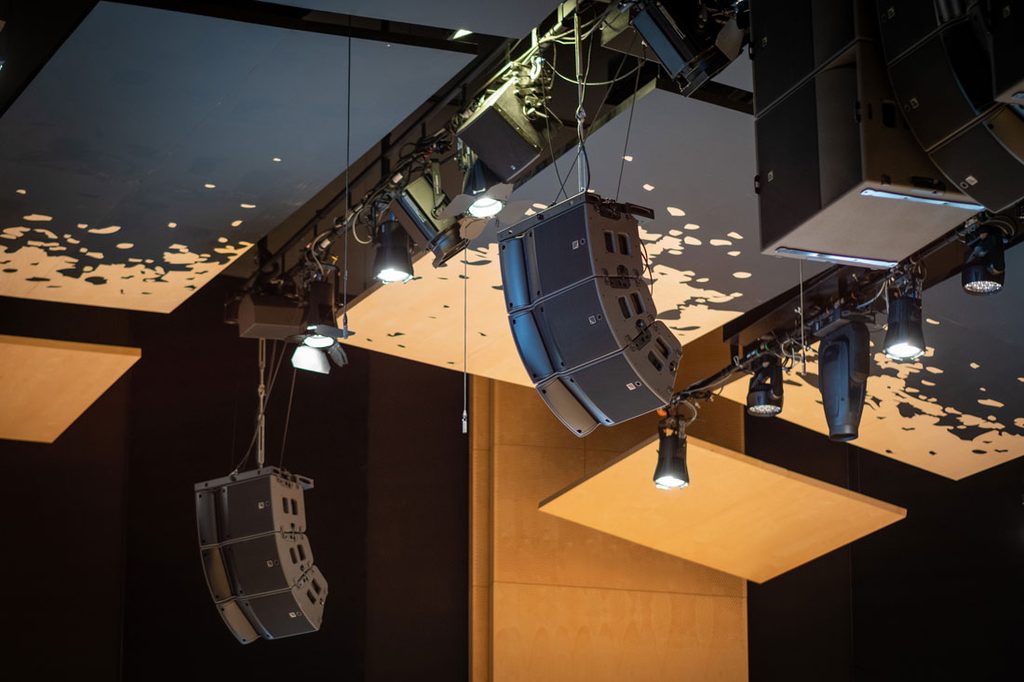
To bridge this acoustic divide without altering the physical architecture, the venue implemented Ambiance, an additive active acoustic technology from L-Acoustics. Ambiance electronically extends the room’s volume beyond its physical acoustic panels. The deployment places 20 X8i loudspeakers and 16 Schoeps MK21 wide cardioid microphones discreetly within the ceiling structure. Operating over a digital audio network, these components interface with one L-ISA Processor II and four P1 Milan-AVB processors to capture the natural acoustic field and recreate an extended reverberation profile.
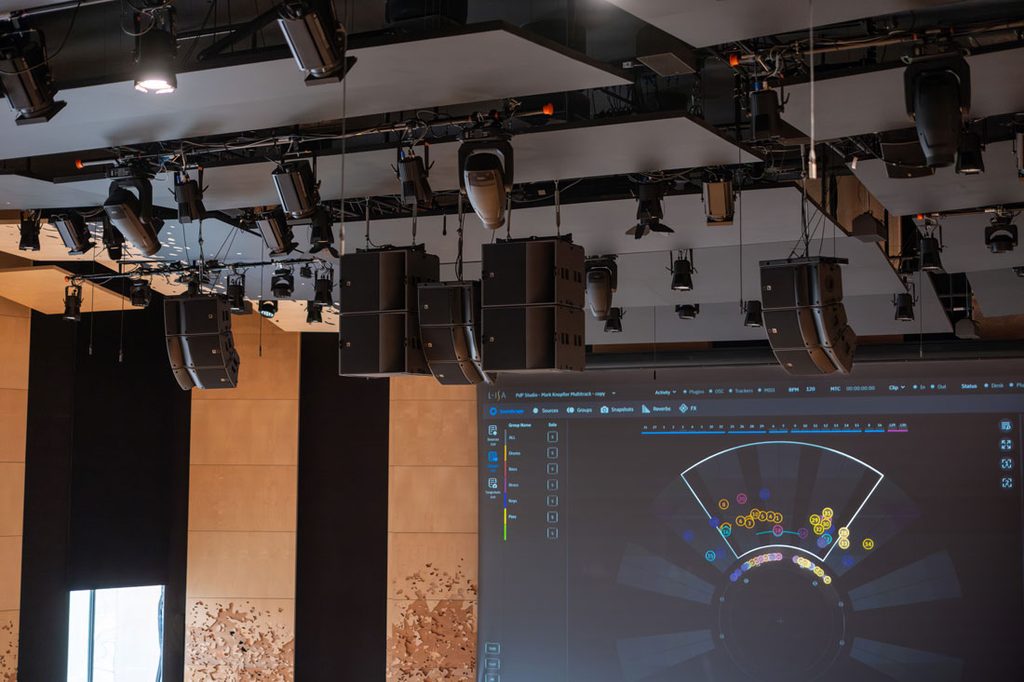
The venue also integrated L-ISA spatial audio technology to enhance its object-based mixing capabilities. The setup uses a flexible A Series design with five variable-curvature arrays made of A15i Focus and A15i Wide enclosures, anchored by four KS21 subwoofers in two central hangs. Single A10 Wide enclosures on pole stands serve as in-fills, while seven 5XT coaxial loudspeakers along the stage provide front-fill coverage. This approach amplifies performances while anchoring the audio to its true onstage source, respecting the performers’ intent and blending flawlessly with the venue’s natural acoustic environment.
The Result
Ambiance delivers instantaneous variable acoustics, extending reverberation time up to two seconds while preserving the room’s original acoustic profile for naturalness. Venue operators can now navigate seamlessly between two sets of four custom presets, corresponding directly to the deployed or retracted positions of the physical wall panels. Musicians enjoy a rehearsal environment that accurately mimics the Grande Salle, and audiences benefit from a faithful, rich sonic landscape.
Project Photos
With Ambiance, switching the room acoustics with the press of a button gives musicians the ability to outperform. It makes it possible to offer premium acoustics to any world class artist we welcome here.
Bruno Morain
End User
Tech Brief
- Processing: One L-ISA Processor II and four P1 Milan-AVB processors
- Microphones: 16 Schoeps MK21 room microphones
- Overheads: 20 X8i coaxial loudspeakers
- Scene arrays: Five arrays of A15i Focus over A15i Wide
- Subwoofers: Four KS21 enclosures in two central hangs
- In-Fill: Single A10 Wide per side on pole stands
- Front-Fill: Seven 5XT coaxial loudspeakers along the stage
- Amplification: Three LA7.16i amplified controllers
- Network/Channels: 25 L-ISA channels plus subwoofers for object-based mixing and active acoustics, alongside seven L-ISA spatial channels for front-fill speakers


