Women in Pro Audio: Elizabeth Compère Women in Pro Audio: Elizabeth Compère...
The audio industry can sometimes feel like an exclusive club where the entry fee is moving the heaviest road case alone. While the demographics of the live events world are slowly shifting, the prevailing culture still often demands that professionals prove their physical grit before they are trusted to simply do their job.
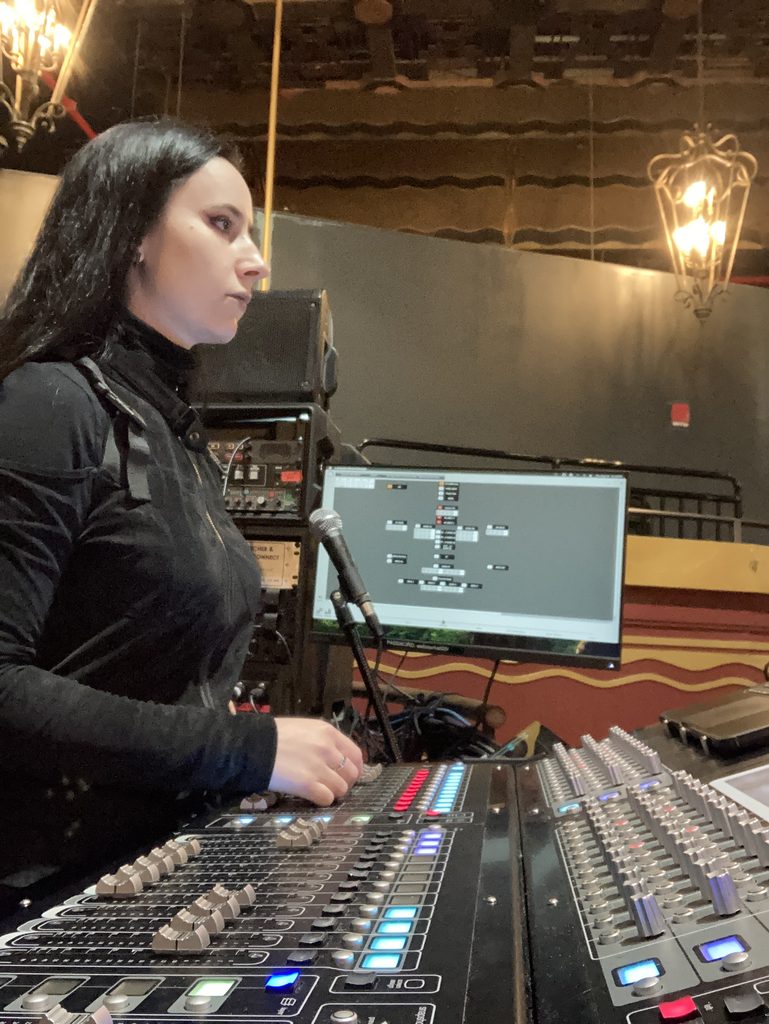
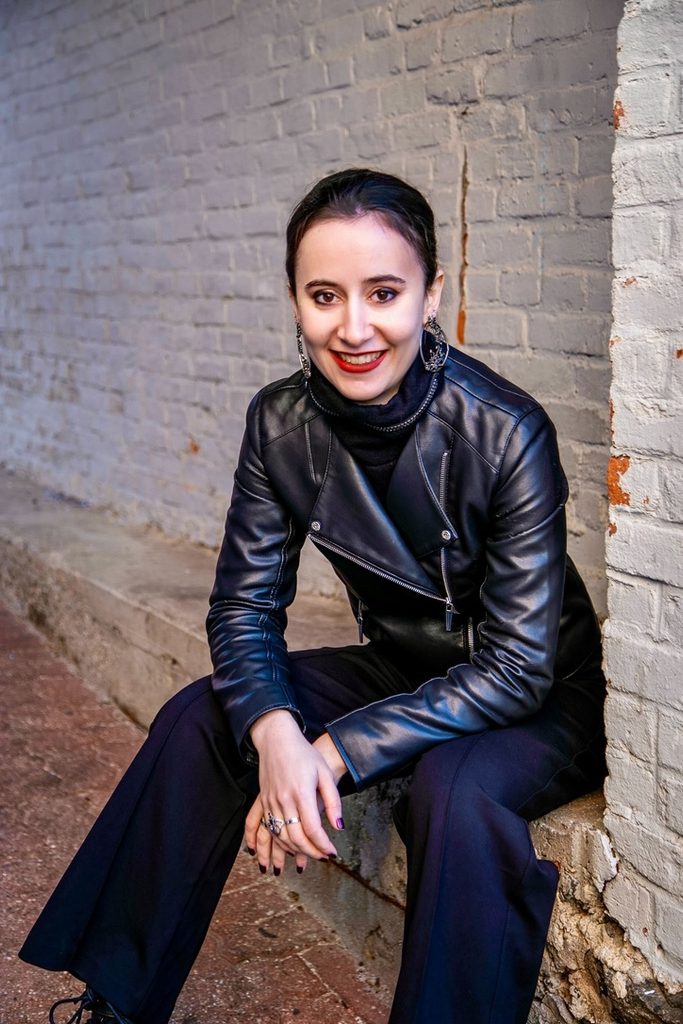
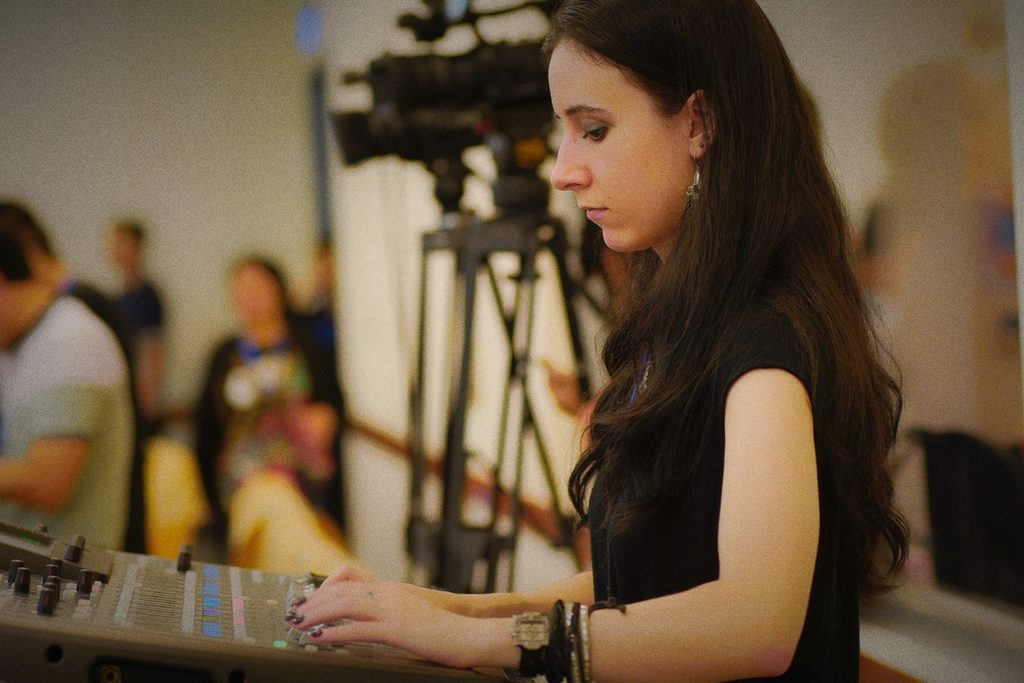
Enter Elizabeth Compère, an audio engineer, sound designer, and system consultant who has spent more than a decade navigating live performance, immersive environments, system design, and large-scale events across the U.S. and Asia. Growing up in China playing classical piano, Elizabeth initially considered a career in music before pivoting to the production side.
“I decided I didn’t want to go into music education or music performance, so I was looking through other music degrees and career paths and landed on Music Production focused on studio recording,” Elizabeth explains. “My first internship after college was in live audio, and I immediately fell in love with it. I started getting consistent positive feedback on my mixes, and realized that the combination of musical training and technical thinking suited me particularly well. Getting to see an audience responding to a show they love, and being a small part of that, is an amazing feeling.”
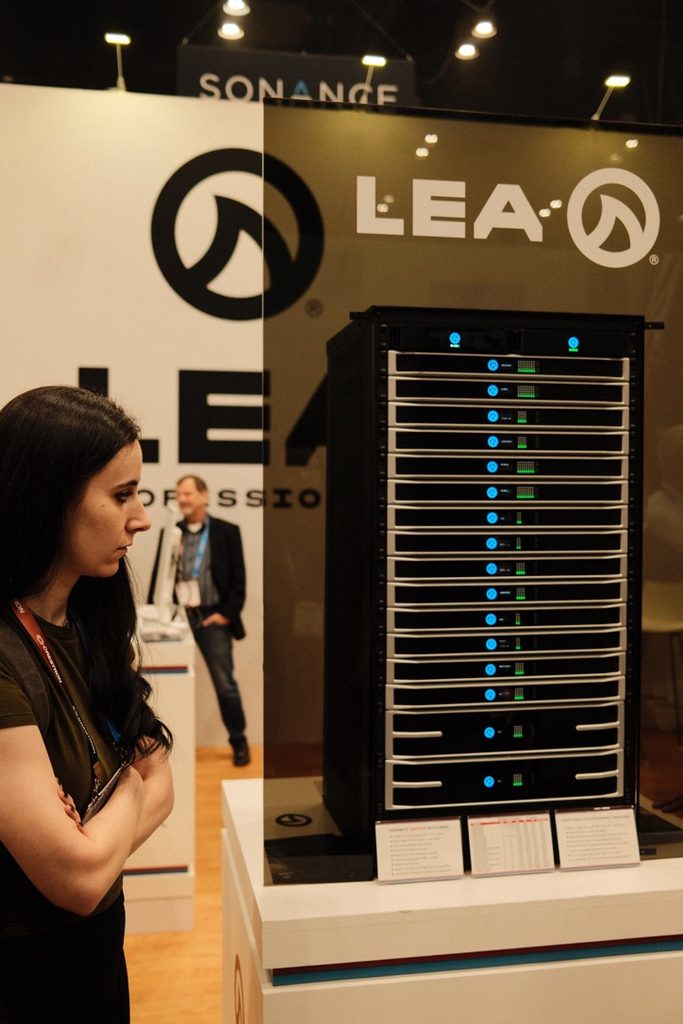
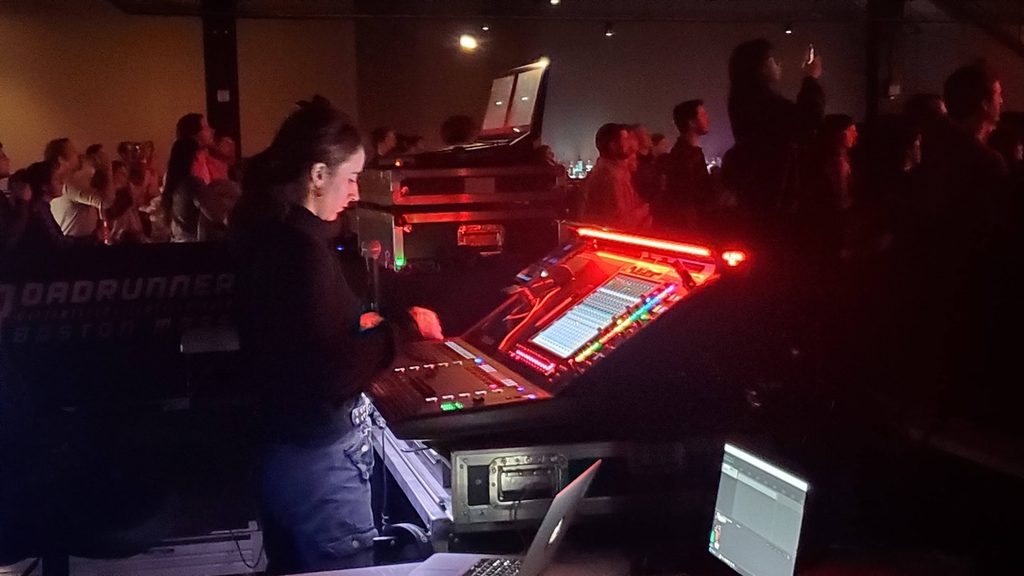
Now based in New York City, Elizabeth currently works in systems design with the company Theatre Projects on the audio, video, and intercom design team, handling loudspeaker layouts, equipment selection, power calculations, system documentation, and coordination, while continuing to freelance as a Front of House engineer, sound designer, and immersive audio consultant.
Navigating New Rooms and International Workflows
Having spent eight years working primarily in Wuhan and Shanghai, Elizabeth views her career through a global lens. However, moving her career to the United States introduced a steep learning curve in communication. “Moving into the U.S. industry also meant learning a new professional vocabulary and different workflows and conventions,” she notes. “I already knew audio; what I had to learn was how this particular industry communicated about audio. I asked a lot of questions, observed carefully, and adapted.”
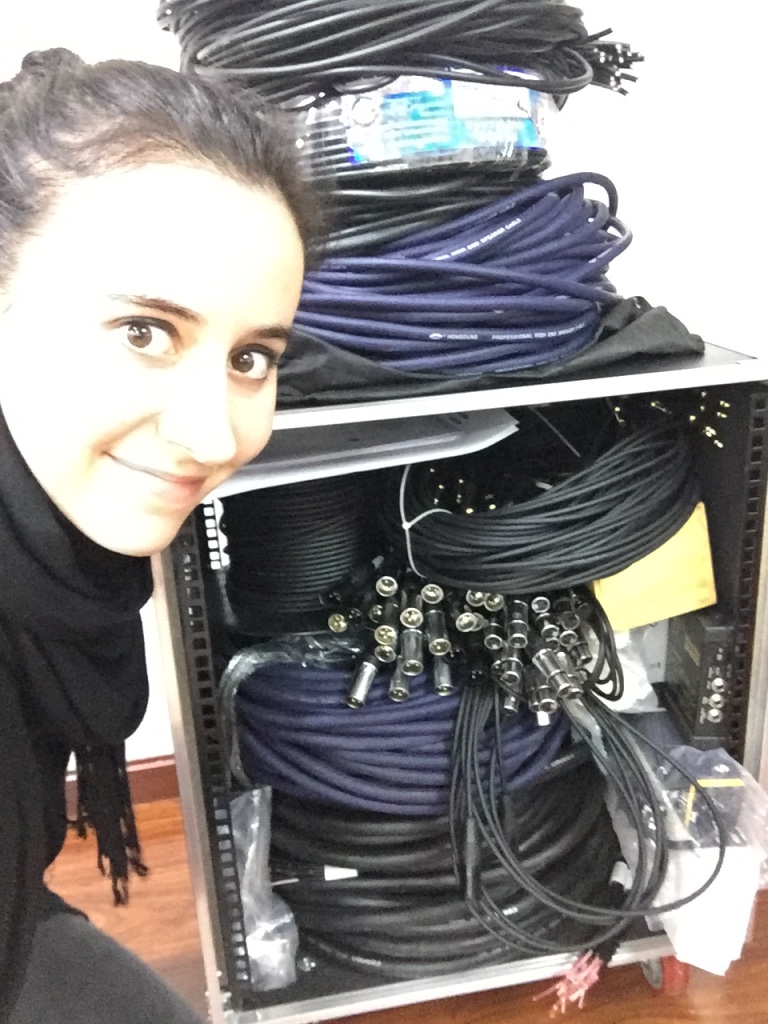
In the early stages, Elizabeth had to be highly self-reliant, which forged her problem-solving skills. “Early in my career, one challenge was that I often worked in places where I was the only audio person. I didn’t always have a more senior engineer beside me to teach me, so I became very self-directed: researching, troubleshooting, reading, experimenting, and figuring things out on my own,” she recalls. “That was difficult at the time, but it made me a very independent problem-solver.”
Over time, she learned to balance that independence with teamwork. “I’ve learned that one of the most important professional skills is knowing when to solve something independently and when to bring in the rest of the team. Audio problems are often interconnected, and asking the right person the right question quickly can be much more effective than trying to prove you can solve everything alone. Early in my career, I was on my own and learned a lot the hard way. Now that I have larger teams around me, I love going to them and learning and solving things as a team. I am blessed to have team leads, older engineers, production managers, and others who are knowledgeable and love to share information when asked. The few times I have felt like giving up are when something was going wrong, and instead of solving an issue together, I felt blamed or pushed off to the side altogether. Having a supportive team really goes a long way in solving all the problems that can come up in a show.”
The Landscape for Women in Pro Audio
When looking at the landscape for women in pro audio, Elizabeth notes a stark contrast between her international and stateside experiences. “My experience has actually been quite different in China and the U.S.,” she observes. “In China, I generally felt that work on my teams was divided according to skill. Because of my background in music and mixing, I was often handed FOH responsibilities while male colleagues took on other roles. I felt trusted for what I could do.”
In America, she faces a different set of initial expectations. “In the U.S., I have encountered more situations where I walk into a new room, and people are perfectly polite, but initially assume I am less experienced or less technically knowledgeable than I am,” she explains. “I’ve learned that I sometimes have to establish my credentials through the work before my judgment is given the same weight. Once people have heard me mix or worked through a technical problem with me, that usually changes, but I would love for women not to have to repeatedly pass that extra test.”
Elizabeth believes the industry’s culture around physical labor can obscure the true nature of the job. “I think one reason there are still fewer women in pro audio is that some parts of the industry can have a culture of proving that you can handle everything yourself. The work can absolutely be physical, lifting speakers, pushing road cases, working long hours in heat or rain, but I don’t think the physical work itself is what keeps women out. I think it’s more about how we sometimes talk about and approach that work,” she says. “There can be a tendency to make strength or toughness part of proving that you belong, when in reality good production work is about technique, safety, communication, and teamwork. Nobody should have to prove their value by moving something alone that two people should safely move together. I think emphasizing that this is skilled, collaborative work, rather than a competition over who can carry the most, would make the industry healthier and more welcoming for everyone.”
Visibility is equally crucial. “The more women people see mixing shows, designing systems, leading crews, and making technical decisions, the less unusual it becomes. And for women who are just starting out, seeing women already doing the job makes it much easier to imagine that there is a place for them in the industry too.”
The Art of Listening and the Future of Sound
To achieve great sound, Elizabeth emphasizes that auditory intuition should take precedence over gear memorization. “I wish specifically for engineers, that the industry paid more attention to how mixes sound and hire based on that,” she admits. “I do find sometimes that some people know a lot about gear, and can name off mics, and discuss plugins all day, but the mixes don’t sound great. At the end of the day, we need good ears and musical intuition behind our mixes. Technical knowledge matters enormously, but ultimately all of that knowledge is in service of listening.” She hones this intuition by observing her peers. “Asking other experienced engineers questions and watching them mix is the most valuable resource to me. There is so much to learn from other engineers in terms of mixing technique, genre specifics, and even how different countries prefer their mixes to sound.”
When advising newcomers, Elizabeth highlights three essential skills: ear training, active mixing, and regulation. “Focused ear training is not just about catching feedback frequencies. As audio engineers, it is incredibly educational to listen to music we love, picking it apart layer by layer,” she advises. “Learning to hear every single instrument and voice. Learning to differentiate between effects. Learning to listen for how each channel/track sits in the mix and works with the others. Learn how to lock in on non-lead parts of the music. This will help in live mixing to enable your ear to constantly shift between the different parts on stage and ensure they all are still in the mix and still sound good.”
She applies this same approach to the console. “Mix like you are part of the band, playing an instrument. Music is dynamic, and no amount of plugins and settings is going to mean an engineer can sit back the whole show. Studios make constant changes through a track in level, effect amounts, etc. Live should be the same. We can change the emotion of the sound along with the band to rise and fall, narrow or expand, and contribute to what the audience feels from a song.”
Finally, she notes that keeping a level head is paramount. “Being able to stay calm goes a long way in event work. Things go wrong all the time. Staying calm helps your own brain to troubleshoot more efficiently. It also helps in communicating with other team members or performers through a glitch.”
Elizabeth has applied these principles to some of her most rewarding projects, including Sleep No More Shanghai, which she calls “one of the formative professional experiences of my career.” She adds, “Learning how to work with sound in an immersive structure was challenging and incredibly rewarding. It taught me to think about sound spatially and systematically.” She also highlights a current favorite, working with drag artist Pattie Gonia.
“I met her audio engineer while working a rough corporate job in NYC. We were both A2s for the day and sitting on road cases in the back hall with nothing to do; we passed the time talking and became friends. He brought me on to be a substitute audio engineer for Pattie. The touring, Pattie, her team, and the crowds for this show are truly special to me.”
Claiming Your Space in the Room
As her career has grown, so has her confidence in her own expertise. “Another challenge has been learning to trust my own level of experience. I naturally walk into a room assuming there is something I can learn from everyone there, which I think is a good quality. But over time I’ve had to learn that carrying this perspective with me doesn’t mean I am the least knowledgeable person in the room,” she reflects. “I’ve had more than a decade of experience now, I’ve worked in very different kinds of environments, and I’ve repeatedly had colleagues and production teams trust me with significant responsibility. I can still be curious and collaborative while also recognizing the expertise I bring. I’ve also had to learn that the way I naturally express confidence isn’t always the way confidence is recognized in every workplace. I don’t think expertise has to be boastful to be real.”
Her advice for other women entering the field is direct. “Do it even if you feel under-qualified. There are so many aspects to the audio world and no one is going to be an expert in all of them. Showing up humble but confident and proving you can do your job will go a long way in opening more doors. At the same time, don’t underestimate yourself. You can know that there is always more to learn without assuming everyone else in the room knows more than you do. Don’t wait until you feel 100 percent qualified before taking the opportunity. Very few people do. Prepare, ask questions, listen carefully, do the work, and let your experience count as experience.”
Looking ahead, Elizabeth hopes to see audio teams integrated earlier into the production process. “I would like audio to be brought into the creative conversation earlier. There’s a tendency for lights and visual effects to get a lot of time and attention in the planning phase from the overall team, but audio is thought of more as a purely technical aspect (get the mics, hang the speakers, turn the sound on), and nothing more. If, as audio creatives, we also had time to experiment, try different effects, mics, placements, and other audio variables (within the planning for an event and not just on our own), I think we would see more new ways of doing sound, and have better, more interesting sounding events.”
Ultimately, the invisible beauty of sound is what keeps her behind the console. “I love creating impactful sound and seeing others respond to it. There’s a strange combination of invisibility and responsibility in audio: when you’re doing it well, an audience may never think about the engineer at all, but what you’re doing can completely change how they experience the performance. For me personally, sound is the most moving and beautiful aspect of life. Getting to regularly be a part of creating a powerful system, building a great mix, pushing buttons, choosing settings, and hitting faders at the right moments that contribute to people having an unforgettable night is everything.”
Keep up with Elizabeth Compère on LinkedIn (linkedin.com/in/ejsound) and on Instagram at @ejcompere.
To read last month’s Women in Pro Audio interview, click here.
Would you or someone you know like to be featured in our Women in Pro Audio series?
Subscribe to Our Newsletter
Get the lastest news and find out about listening events.