Women in Pro Audio: Carla Fàbregas Segismundo Women in Pro Audio: Carla Fàbregas Segismundo...
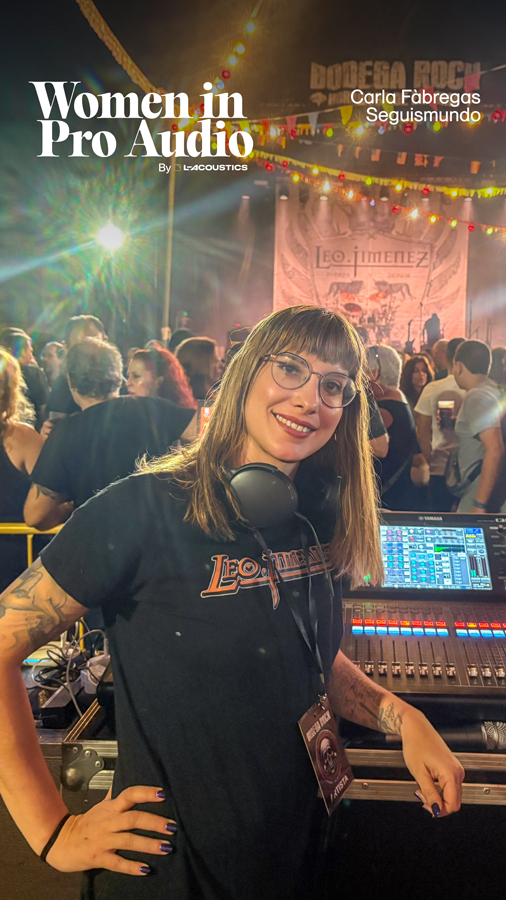
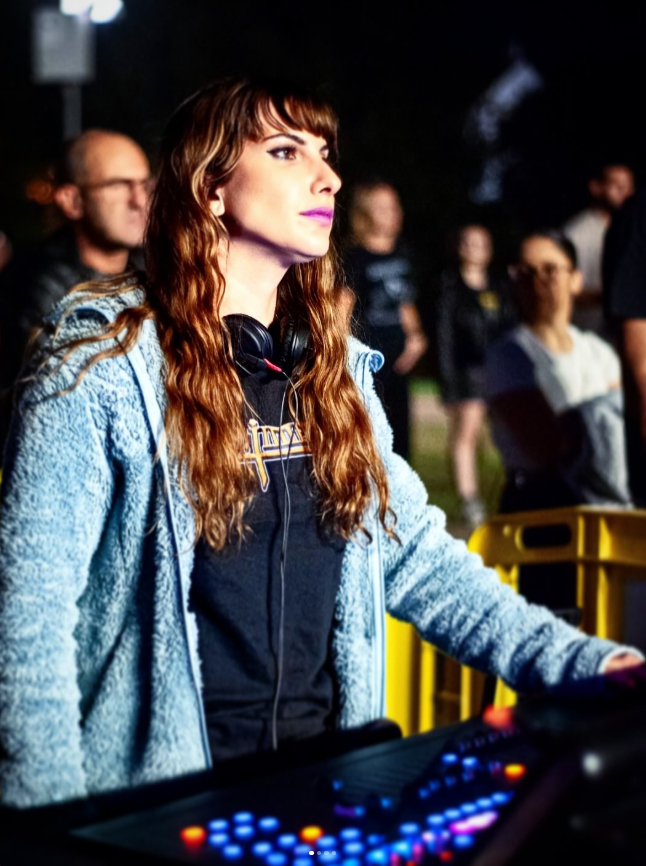
Live sound can occasionally be a grueling, unglamorous grind masked by the transient thrill of the show. And like many other tech-heavy careers, it’s an industry notoriously testosterone-heavy, light on sleep, and demanding of its road crews. But truly, the landscape of this reality is slowly shifting, and our Women in Pro Audio series spotlights those professionals who are the catalysts of this shift. Enter Carla Fàbregas Segismundo, a Front of House (FOH) and Monitor Sound Engineer who handles everything from heavy metal festivals to papal symphonies.
“I initially started in this industry as a bass player, but I studied a sound engineering course because I felt it was a good idea to know how to record and mix by myself,” Carla explains. “It turned out that I loved live sound so much that I soon started to put most of my efforts into that career, and within a few years, I ended up giving up playing bass and focused on live sound 100 percent.”
Originally from Barcelona, Carla has been based in Madrid for approximately ten years. She can operate as a P.A. system designer, but her primary focus is mixing on tours, currently working with several Spanish artists as their FOH or monitor engineer—sometimes both—including Fernando Costa, Leo Jiménez, Conchita, Los Enemigos, and some smaller metal bands because she genuinely enjoys the music. Her career has taken her across the globe, working extensively in the Middle East, Europe, and Latin America. However, her current travel schedule is dictated by a very personal priority. “Since early this year, I am not taking international long-term jobs due to the health of my beloved senior dog, who is now 16 years old,” she shares.
Finding Footing on the Fader
Starting out in Barcelona in 2008 as a junior sound tech, Carla faced an industry that demanded intense physical endurance. “This job was physically very demanding and exhausting,” she recalls. “Normal gigs could last 24 hours or more. I know this still happens sometimes, but back then, it was the real normal thing, at least in the companies where I used to work. I was young and could manage it, but it was really tough sometimes; that would be the first hurdle.”
A few years later, she found herself working as a mixing engineer without a sharply defined career path. “I moved to Madrid where I had no family, and I had to decide which kind of jobs I wanted to do and where to focus my energies,” she says. “Being a touring sound engineer is a risky option due to instability, and the fact that the job is sometimes kind of subjective; a lot of people may want to take your position, etc. But luckily for me, it turned out pretty well, at least until now.”
Despite that success, the chaotic nature of live sound guarantees moments of friction, requiring a thick skin and objective self-evaluation. “It’s impossible to fit perfectly in every crew, or to reach excellence in all your shows,” Carla admits. “There are too many variables that don’t depend on you. It’s very important to keep this in mind when something goes wrong and there are consequences. Identifying if the problem was yours, or to what extent it is or isn’t your fault, gives you the chance to objectively analyze the situation. If I could have done better, I try to apologize and learn for the next time, but there is no point in assuming mistakes that were not yours. By the way, I think that’s a very feminine trait.”
Those challenges occasionally brought her to the brink. “Yes, there were moments when I felt like giving up; some of them were my fault and some others not really,” she shares. “The industry can be difficult sometimes; it’s good to keep the perspective of all your career in mind in order not to let one bad experience ruin your mood for weeks. But to maintain this attitude, I have to make sure I am fully prepared for every job and do my best.”
Women in Pro Audio: Unplugging the Stereotypes
Women navigating an environment built by and for men still face fundamental logistical hurdles on the road. “In the first place, there is a feeling that we need—and somehow it’s true—more privacy and better hygiene conditions,” Carla explains. “I don’t think it is completely fair because every human being should have the same conditions, but imagine you are working a 16-hour shift, and you are on your period, and the toilet provided by the production is a portable toilet with no paper, no soap, no water. You have to take care of all your personal hygiene needs in addition to the work itself. Most of your male coworkers are simply going to pee on some tree.”
Accommodations present a similar friction point. “Then the accommodation: if there are no female coworkers, it’s weird to share a bedroom with a man you don’t know; the usual thing is to request a single room,” she says. “Some productions think that hiring women increases the budget because of that.”
She notes that prejudice in male-dominated jobs is moving in the correct direction, but acknowledges the reality of the global landscape. “I don’t feel this in my career anymore, but I know some younger female sound engineers are still facing this problem,” she says. “And of course, it depends a lot on the country, because yes, now it can be normal in Europe to be a woman in audio, but in regions where women’s rights are less developed, you can see it reflected in the audio industry, obviously.”
When asked why there remains a stark demographic divide across the industry, Carla is direct. “I think maybe technical jobs don’t look attractive enough to women,” she observes. “It’s male-dominated, it has tough working conditions, and has a poor work-life balance, especially touring. I think that if these aspects of the job keep improving, it will be more attractive to women. The rise of female artists in all music genres could have an encouraging effect, too.”
Her advice to other women entering the field is to refuse to compromise who they are. “I would tell them not to be afraid of getting into a male environment—most of the guys are cool—and also not to try to hide their femininity for that reason,” she advises. “I spent my early years in this job trying to act more masculine to fit better in the crews. Later, I found out there is no reason to do that; people will love you for your good work and your kindness, and if somebody has a problem with you being a woman, that’s misogyny and shouldn’t be your problem.”
Interestingly, when asked which skills women should specifically focus on, Carla firmly levels the playing field. “I cannot think about any skill that could be more useful for women than for men,” she states.
The Art of the Mix and Managing the Chaos
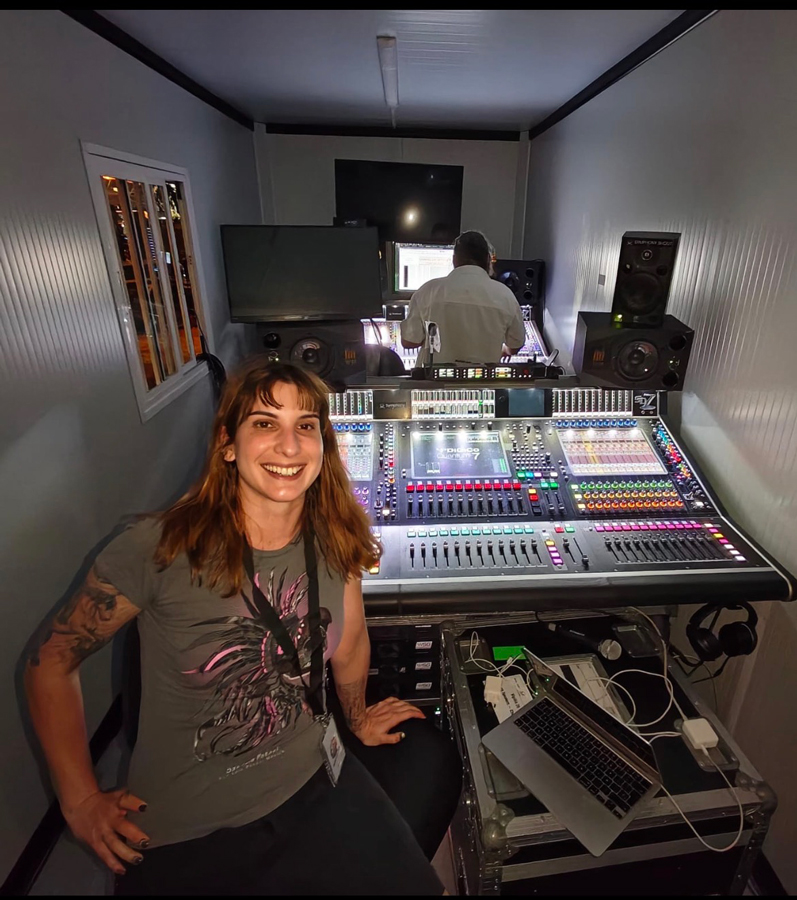
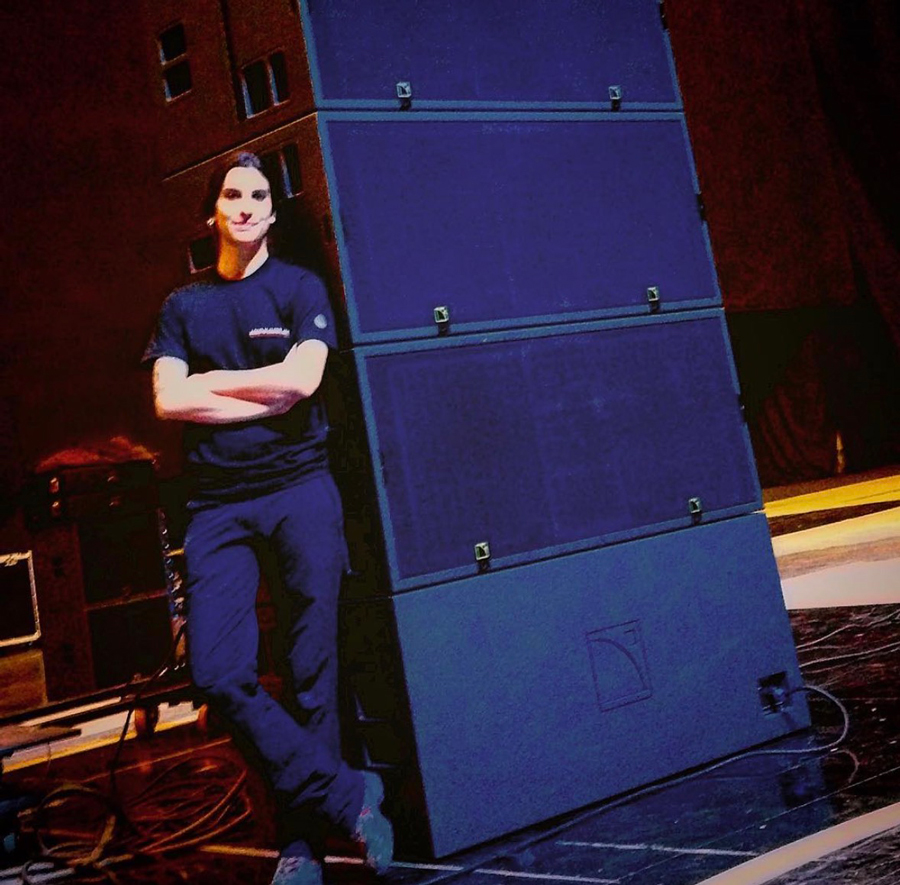
Carla’s success is rooted in the understanding that raw mixing talent is simply the baseline. “You have to be the best professional you can be, but at some level, this is taken for granted,” she explains. “They hire you because you’re supposed to be good at mixing, so that’s just what you are being paid for. To stand out past this point, I find it useful to develop some complementary skills like tuning P.A. systems, RF, or digital audio protocols, because sometimes you can help solve problems that can put the show in danger, even if it’s not your exact responsibility.”
She stresses that gear and plugins cannot replace musicality, ear training, and intimate knowledge of the setlist. “Money can buy plug-ins, but not good taste,” she says. “When it comes to mixing itself, I try to actively listen to the music I should mix until I have it fixed in my memory, so I have no doubts about the kind of processing I’m applying on the console to make it sound just as the artist would like.”
She also emphasizes deep technical fluency. “Train yourself as much as possible in all the technical knowledge you may need, even if you are not supposed to need it at this moment,” Carla advises. “You can get very nice last-minute jobs if you fit in the profile. That applies for mixers, DAWs, processors, speaker management systems, or any knowledge related to audio.”
Equally important to the gig is navigating the interpersonal dynamics of a touring crew. “Since this job demands you spend more time with your colleagues than with your own family, the personal skills are as important as the professional ones,” she emphasizes. “To make it short, just be a person the other people appreciate having around. This also works for the show itself, especially in monitor mixing. It’s unpleasant, as a musician, to ask someone they don’t like for monitor corrections. Of course, that feeling has to go both ways; you should expect to be treated well, too.”
That mutual respect extends to every interaction on site. “No matter how good you are at your job, nobody wants to work with somebody who is rude, unpunctual, or not trustworthy,” she notes. “This goes not only for your crew, but for any person you interact with throughout the day. You never know who can offer you a good opportunity in the future.”
She also heavily credits the best advice she ever received: never let anyone interfere in your decision-making unless you are explicitly asking for guidance. “I think it’s one of the best forms of insurance you can get,” Carla asserts. “If you are confident about a decision but somebody makes you change your mind, you’ll be in trouble anyway. If you made the right call, somebody else may get the credit, and you can lose trust in yourself. If you made the wrong call, the final responsibility is still yours. Unfortunately, this can happen when someone tries to advise you without being asked; the intention behind it is not good.”
Unsolicited advice is a recurring theme in live audio, occasionally culminating in bizarre encounters. Carla recalls mixing a massive production that went completely off the rails. “One time I was supposed to mix a sort of musical theatre production with an orchestra of about 100 channels. I spent some time preparing the console file, but when the sound check was about to start, some fancy guy appeared claiming he was the sound engineer,” she recalls. “I said okay, but I wish I had known it before wasting my time. He said, ‘No, you operate the console with your file; I just tell you what to do.’ And he was asking to turn up the highs on the strings all the time, but somehow when the feedback happened, it was my fault.”
Even the crew can sometimes be a liability. When asked about her craziest professional moments, Carla immediately cites a gig where standard protocol went out the window. “It was not funny at the moment, but one stage tech unplugged my monitor console to charge his mobile phone… during the show!”
High Notes, Decibel Limits, and the Road Ahead
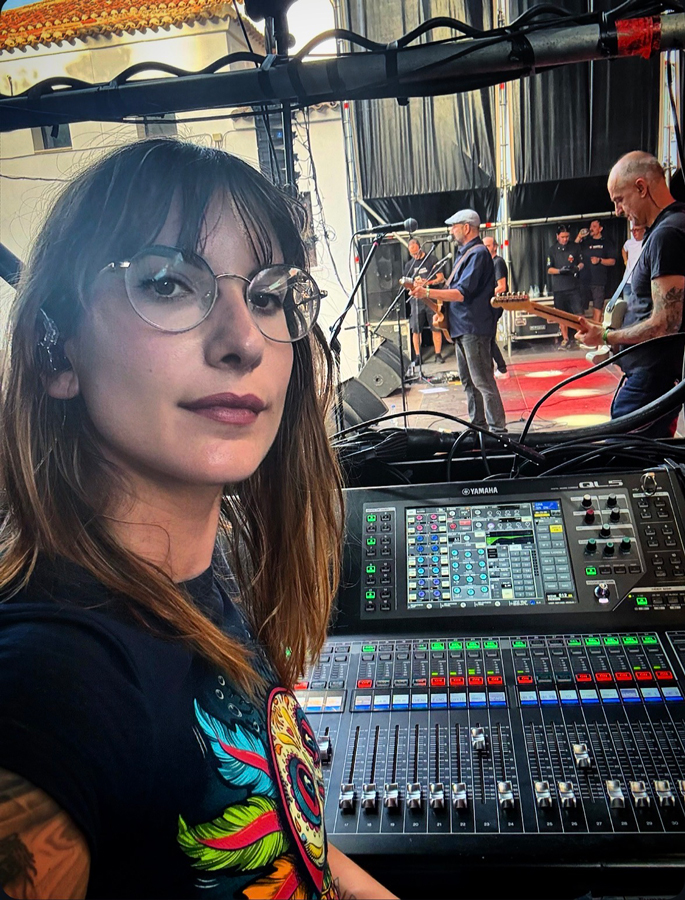
Despite the hurdles, the highs of the job keep her returning to the console. Carla’s favorite shows include any rock or metal festival anywhere in the world, specifically noting runs with Mägo de Oz in Spain, Latin America, and the USA, with Ankor in Europe, and with several bands across Spain and Portugal. She also points to mixing the symphony orchestra for the papal visit in Spain this year as a standout, amazing experience.
“I love to go to any country I’ve never been to and get to know it a little bit, even if the job seems less interesting than others,” she says. “I think my favorite moment of all time in my job is when I get to work with a band I’ve really liked since I was young. I also enjoy discovering new bands that want to work with me, and some of them are really good, and I get to listen to them when I probably otherwise wouldn’t.”
Those moments are amplified by a successful mix. “Of course, one of the best moments of pride is when you mix in a very large venue, and the sound is great, then you get compliments from the colleagues, the management, or the audience; it’s a very nice feeling,” Carla shares. “Same thing when doing monitors; the band is grateful and compliments you for your work.”
Looking forward, Carla has distinct hopes for the evolution of live events, particularly regarding how audio is regulated. “I would like to see some changes in the noise level policies,” she states. “There are too many venues, events, or festivals with a completely nonsensical limitation, sometimes even below 90dB. There is no way you can mix certain kinds of music like this. Plus, there is not enough knowledge about how sound level meters work, the different options of weightings, where to place them, etc. It’s frustrating to have a very nice P.A. and not be able to use it properly.”
Ultimately, her vision for the industry is one of personal sustainability. “I wish there were no shows past midnight so we could sleep a bit more!” she jokes. “Of course, I’m joking, sometimes live productions demand to stay awake all night, and if it’s best for the show, it’s completely fine. But I do wish for a better work-life balance, and for more importance to be placed on the physical (and mental) wellness of the crew in general, so the touring job can be a lifelong career without all the consequences that can come with staying in this job for too long.”
You can follow Carla Fàbregas Segismundo’s journey on Instagram at @carla.fabregas, or connect with her on Facebook and LinkedIn.
To read last month’s Women in Pro Audio interview, click here.
Would you or someone you know like to be featured in our Women in Pro Audio series?
Subscribe to Our Newsletter
Get the lastest news and find out about listening events.